By Zakari Yusuf Eneve
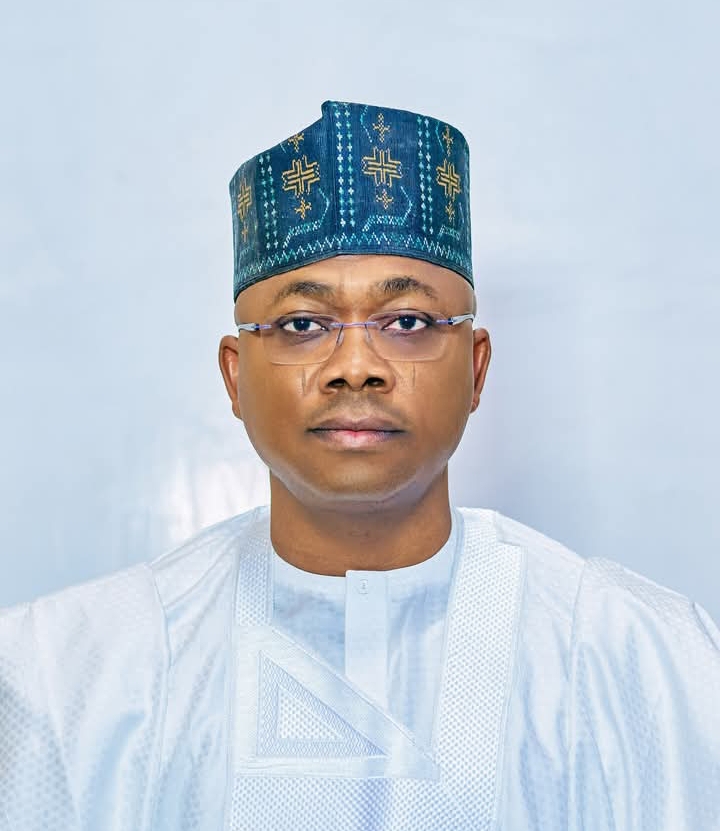
Since assuming office in January 2024, Governor Ahmed Usman Ododo has led an administration focused on consolidating infrastructural development and human capital investment in Kogi State. The government has emphasized continuity while introducing new initiatives to improve healthcare, education, workers’ welfare, agriculture, security, and overall quality of life across the state.
A major hallmark of the Ododo administration has been massive investment in road infrastructure. The government has embarked on road construction and rehabilitation in urban centres and rural communities, with township roads developed across the state’s Local Government Areas. These projects are designed to improve transportation, facilitate agricultural activities, strengthen commerce, and connect communities to essential services. The Kogi State Road Maintenance Agency, KOGROMA, has also been deployed to maintain and rehabilitate roads statewide. Given Kogi’s strategic location as a link between several parts of Nigeria, improved road connectivity remains central to the administration’s agenda.
In healthcare, the administration has recorded significant investments through the renovation, remodelling and equipping of Primary Healthcare Centres across the state. Eighty revitalized Primary Health Centres have been commissioned with facilities upgraded to include solar power, water supply, staff accommodation, medical equipment and security arrangements. Earlier targets aimed at rehabilitating more than 150 centres, while broader efforts are ongoing to upgrade primary facilities to provide services closer to secondary-care standards. With a focus on rural communities with limited access to quality medical services, the programme has expanded impact. The government also introduced a monthly ₦300,000 incentive for medical doctors and expanded health insurance initiatives. More than 76,000 pensioners, local government workers and students have reportedly benefited from the insurance scheme.
Education and human capital development have remained top priorities. The administration sustained free basic and secondary education and continued payment of examination fees for public school students. At the tertiary level, bursaries and scholarships have been provided. The governor announced that ₦316 million in bursaries was paid to more than 8,000 tertiary students. Infrastructure development in tertiary institutions has continued, including projects at the Confluence University of Science and Technology, CUSTECH, and its teaching hospital. Recently, the state government reported that 728 public schools are undergoing renovation under the Adolescent Girls Initiative for Learning and Empowerment, alongside teacher recruitment and financial assistance to encourage enrolment and retention.
Related News
The administration has also pursued improvements in medical and tertiary institutions by consolidating efforts of the previous government. A key achievement is the revival and accreditation of the medical programme at Prince Abubakar Audu University, Anyigba. The establishment and development of teaching hospital facilities at CUSTECH and Prince Abubakar Audu University are expected to strengthen medical training and healthcare delivery, and reduce dependence on other states for specialised services.
Workers’ welfare and pension reforms have received notable attention. The Ododo administration implemented a ₦72,500 minimum wage, introduced a ₦10,000 pension harmonisation allowance, and maintained regular salary and pension payments. It has ensured cash-backed promotions, paid annual leave bonuses, and continued provision for gratuities to local government retirees. Timely payment of salaries and pensions has helped boost household purchasing power and economic activity in the state.
Agriculture and food security occupy a central place in Kogi’s economy. The government has supported farmers, encouraged agro-processing, and promoted value addition as part of an agricultural transformation agenda. The objective is to move farmers from subsistence production to entrepreneurship and commercial agriculture, increase local food production, reduce dependence on food imports, and create employment across the agricultural value chain.
Security remains fundamental to development. The administration has strengthened collaboration among security agencies and community-based structures through stronger community policing, regularisation of vigilante services, and involvement of local hunters. Technology has been deployed to improve surveillance and response. The recent procurement of drones and armoured vehicles underscores the Governor’s commitment to securing lives and property. The Governor has maintained a firm stance against negotiating with criminals and has demonstrated renewed capacity to make the state a no-go area for terrorists.
In urban infrastructure, the construction of an ultra-modern market in Lokoja is underway to replace an ageing and hazardous market environment with a more organised setting for traders and commercial activities. The project is listed among the administration’s major infrastructure interventions alongside roads and healthcare facilities, and is expected to improve trading conditions and urban organisation.
One of the most ambitious projects is the proposed Kogi International Airport. The state government describes it as a strategic project leveraging Kogi’s geographical position, proximity to the Federal Capital Territory, and mineral resources. Consultants have completed design stages and procurement processes are ongoing. While capital-intensive, the airport is expected to strengthen connectivity and support investment, tourism, agriculture and mining when completed.
The administration has also prioritised improved governance and financial management. Measures have been introduced to improve internally generated revenue, reduce leakages and strengthen accountability across government institutions.
Since 2024, Governor Ahmed Usman Ododo’s administration has recorded broad interventions with infrastructure, healthcare, education, agriculture, workers’ welfare and security as principal focus areas. The approach reflects simultaneous investment in physical infrastructure and human development: roads and markets on one hand, and schools, healthcare centres, bursaries and workers’ welfare on the other. The government says it remains committed to implementing an agenda aimed at building a more secure, united, prosperous and economically productive Kogi State.