From David Onuoja, Abuja
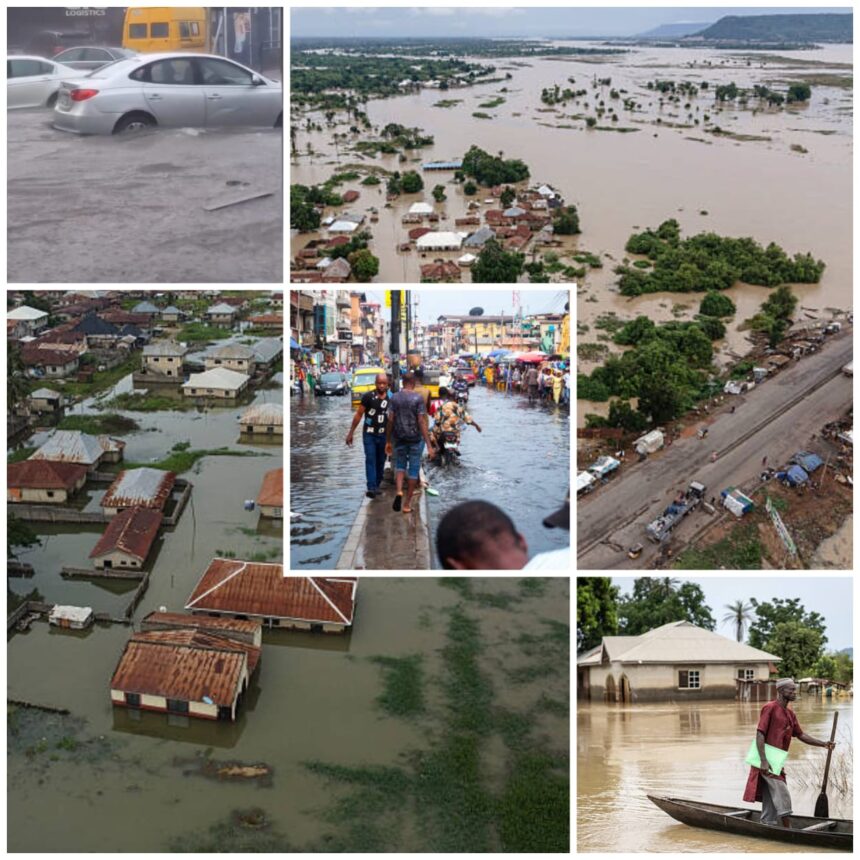
Flooding is now Nigeria’s most predictable disaster. Every rainy season, from Lagos to Lokoja, Maiduguri to Makurdi, the story is the same: submerged roads, paralysed traffic, destroyed markets and displaced families.
The 2026 Annual Flood Outlook by the Nigeria Hydrological Services Agency (NIHSA), lists 14,118 communities in 266 Local Government Areas, across 33 states and the FCT, as high flood risk areas. The scale confirms that flooding is no longer an episodic emergency but a structural national crisis.
The Nigerian Meteorological Agency (NiMet), attributed the 2026 escalation to climate change and aggravated soil conditions, with intense rainfall hitting dry, hardened soil to create dangerous run-off and flash floods. But experts are unanimous: rain alone does not cause the disaster.
Blocked drainages, building on waterways, loss of wetlands, indiscriminate waste disposal and poor urban planning are what turn heavy rain into catastrophe.
Related News

The challenge therefore requires two approaches: immediate amelioration to reduce suffering this season, and permanent solutions to ensure future rains nourish rather than destroy.
*Understanding The Root Causes
First, hydrological and climatic factors. Nigeria lies within intense monsoon belts, with coastal lowlands in Lagos, Delta, Bayelsa and Rivers exposed to sea-level rise and storm surges. NiMet predicts above-normal rainfall for these states in 2026. Inland, the Niger and Benue rivers overflow annually, worsened by water releases from the Lagdo Dam in Cameroon.
Second, human-induced vulnerability. Lagos generates about 13,000 tonnes of waste daily, much of which ends up in drains. In Abuja, officials blame illegal construction on waterways, where developers constrict box culverts and block natural discharge. Wetlands that once absorbed floodwater have been reclaimed for estates, while drainage channels are undersized or left desilted.
Third, institutional failure. Building codes exist but are weakly enforced. Early warnings from NIHSA and the National Emergency Management Agency (NEMA) rarely translate into evacuation.
*Immediate Amelioration: What Can Be Done Now
1. Desilting and Waste Clearance: The single most cost-effective intervention. The Federal Capital Territory Administration’s (FCTA) city-wide desilting along the Airport Expressway and Lagos State’s intensified drainage clearing provide a model. This must become a pre-rainy season routine in all high-risk states, not an emergency response.
2. Household Preparedness: Following NIHSA’s April 15 alert, households were advised to clear surrounding drainages, pack waterproof emergency bags, elevate appliances 40cm above floor level, protect documents in ziplock bags or cloud storage, and identify high-ground evacuation points.
3. Early Warning to Early Action: Forecasts must be translated into local languages and disseminated via radio, town criers, religious institutions and SMS. NEMA’s July 2026 directive for intensified community awareness through State Emergency Management Agencies (SEMAs), Local Emergency Committees and traditional institutions is critical.
4. Emergency Logistics: NEMA’s engagement with the Nigerian Army for engineering assets and search-and-rescue illustrates needed integration. Pre-positioning boats, mobile clinics and relief materials in corridors like Lokoja, Makurdi and Bayelsa before peak rains saves lives.
*The Permanent Solutions
1. Modernize Drainage Infrastructure:
Cities need wide, deep and well-located drains. This requires master-planned primary, secondary and tertiary networks with maintenance budgets; replacement of stolen metal gully covers with non-recyclable materials; and adoption of sustainable urban drainage such as permeable pavements, rainwater harvesting tanks and retention ponds.
2. Enforce Urban Planning and Protect Natural Buffers:
Flood resilience must begin on the drawing board. Government must strictly prohibit building on waterways, floodplains and wetlands, backed by demolition of offending structures. Officials who grant illegal approvals must be sanctioned. Building codes must mandate elevated foundations, flood-proof electrical systems and minimum green spaces in flood-prone zones. Wetlands in Lagos, Port Harcourt and the Niger Delta must be legally protected and restored.
3. Integrated Watershed and Dam Management:
Nigeria needs a binding transboundary agreement with Cameroon on coordinated releases from Lagdo Dam with advance notification. The River Niger and Benue channels should be dredged, the long-proposed Dasin Hausa Dam in Adamawa completed as a buffer, and large-scale reforestation undertaken in upper catchments to slow run-off.
4. Revolutionize Solid Waste Management:
Functional door-to-door collection must be established, especially in low-income areas. Plastic recycling economies must be developed to turn waste to resource. Monthly sanitation exercises should be reintroduced with community ownership, and dumping in waterways must attract heavy, enforceable fines.
5. Climate Adaptation, Technology and Finance:
Drawing lessons from Bangladesh, Kenya and Pakistan, Nigeria must invest in dense hydrological sensors, real-time flood maps, climate literacy in school curricula, and reform of the Ecological Fund to ensure transparency. Flood insurance and resilient housing finance should be introduced to help victims rebuild better.
*Governance and Community Ownership
Government efforts will only succeed with responsible citizen action. Local Emergency Committees, traditional rulers, market associations and youth groups must be empowered as first responders and environmental stewards.
*Conclusion: From Reaction to Prevention
Flooding cannot always be prevented, but disasters can be minimized through planning, preparedness, engineering and strong institutions.
Nigeria stands at a crossroads: continue the annual cycle of alerts, displacement and palliatives, or invest decisively in drainage, planning discipline, wetland restoration and climate-smart infrastructure. The Dutch did not stop the sea by praying against it; they engineered coexistence.
With 14,118 communities at risk in 2026 alone, inaction is no longer an option. The rains will come next year as they did this year. Whether they become nourishment or nightmare depends on decisions made long before the clouds gather.