By Joy Salami
The Kogi State Government has urged residents, traditional rulers, civil society organisations and other stakeholders in Kogi West Senatorial District to take part actively in preparing the 2027 budget.
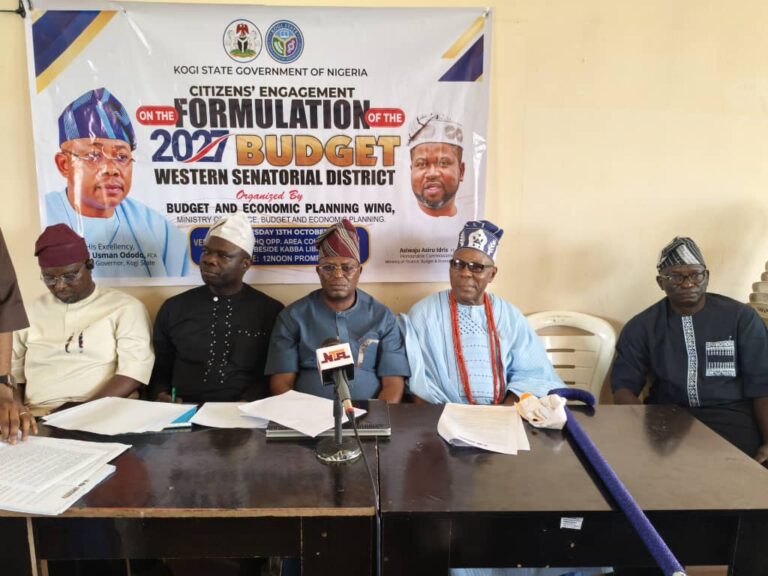
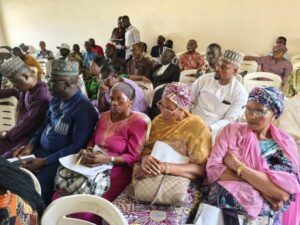
The citizens’ engagement and budget sensitisation exercise, held in Kabba on Tuesday, is part of efforts to promote transparency, deepen public participation in governance and ensure that allocations reflect community needs.
The Commissioner for Finance, Budget and Economic Planning, Hon. Asiwaju Ashiru Idris, FCA, was represented by the Special Adviser I to the Governor on Budget and Economic Planning, Mr Olajide Samuel. He said the exercise was designed to bridge the gap between government planning and citizens’ expectations.
According to him, the budget is more than a financial document. It is a development instrument through which the government turns its policies into programmes and projects that improve people’s living conditions.
Related News
He stressed that citizens have a role in identifying pressing community needs, contributing practical ideas during budget preparation and monitoring approved projects.
The commissioner also emphasised the need to move from appropriation to measurable results, noting that a budget’s real value lies in the tangible benefits it delivers. He reaffirmed the government’s commitment to responsible fiscal management and urged participants to make meaningful contributions.
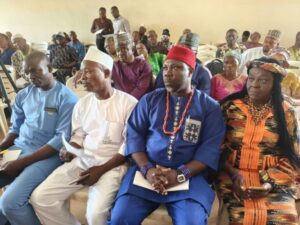
The Chairman of the Kogi NGOs Network (KONGONET), Barr. Hamza Aliyu, said budget transparency goes beyond publishing financial documents. Citizens, he added, must understand budget provisions, take part in decision-making and monitor implementation.
Aliyu urged the government to sustain the engagement, strengthen channels for public input and make it easier for residents to track public expenditure. He said closer collaboration with civil society would improve accountability and ensure that public resources address the actual needs of communities.
In his paper presentation, Ambassador Idris Ozovehe Muraina underscored the importance of citizens’ engagement in promoting inclusive governance and ensuring that development priorities reflect grassroots realities.
He encouraged stakeholders to use the platform to voice their concerns and offer practical recommendations, and called for stronger collaboration among government institutions, traditional rulers, civil society and community members.
Speaking on behalf of traditional rulers and chiefs, the Obaro of Owe Land, HRH Oba Olusegun Areh, commended the state government for giving traditional institutions and other stakeholders a say in the 2027 budget.
Areh endorsed the shift from appropriation to results, arguing that a budget’s success should be measured by its impact on ordinary citizens, not by the completion of its preparation and approval.
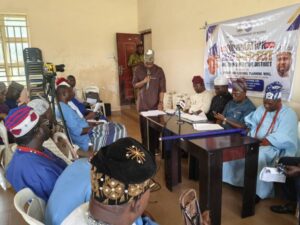
The monarch urged the government to prioritise food security, improved rural roads to ease the movement of farm produce to markets.
He appreciated Governor Ahmed Usman Ododo and the commissioner for the initiative.
The Kabba engagement is part of the government’s wider effort to extend budget sensitisation and citizens’ participation across the state’s three senatorial districts, giving stakeholders a chance to influence a budget that reflects local realities and strengthens accountability in project implementation.