From Joseph Adahnu, Yola
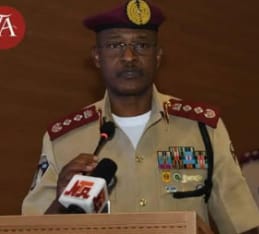
Sector Commander of the Federal Road Safety Corps (FRSC), Adamawa State, Sadiq Ibrahim, has said every road crash is a human story first, beyond damaged vehicles and blocked roads.
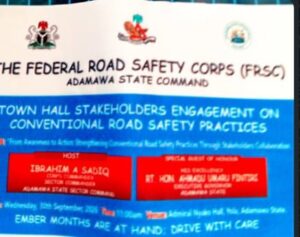
Ibrahim spoke recently at a town hall meeting held at Nyako Hall, State Secretariat, Yola. The meeting, organised by the RS3.1 Adamawa Sector Command with the theme “From Awareness to Action,” brought together government officials, transport unions, community leaders, security agencies and the media.
He said road safety must move past slogans and campaigns into practical, measurable work that results in fewer crashes and lives saved.
Related News

“Awareness has already been done for years. What is missing is performance,” he said, urging stakeholders to shift “from promises to performance, from discussions to implementation, and from awareness to measurable action,” with human life at the centre of every decision.
Ibrahim outlined the Corps’ mandate of public enlightenment, traffic enforcement, emergency response and inter-agency collaboration, but stressed that safer roads cannot be achieved by the FRSC alone.
He called on the state government and development partners to sustain funding for safer roads, emergency systems and responsible transport programmes. He urged security agencies and transport unions to strengthen cooperation with the FRSC against dangerous practices.
Transport operators were told to make safety a business rule through roadworthy vehicles, properly licensed drivers and compliance with regulations, while drivers and motorcycle riders were warned against speeding and phone use.
He also charged passengers not to remain silent when a vehicle is overloaded or a driver is reckless, and urged community leaders to take ownership of road safety by reporting hazards and supporting enlightenment campaigns.
According to him, the media and schools have a long-term role in sustaining the message and shaping road behaviour among young people.
“Every life saved on our roads is a victory for our families, our communities and our state,” he said, noting that success should be judged only by crashes prevented and lives saved.
In a technical presentation, Deputy Vice Chancellor (Academic), Modibbo Adama University, Yola, Professor Iliya Audu, emphasised responsible road user behaviour, effective enforcement of traffic regulations, public education, proper road infrastructure, vehicle roadworthiness and stronger inter-institutional coordination.
Prof. Audu also highlighted evidence-based approaches and community participation in developing sustainable safety measures.
Stakeholders at the meeting called for sustained road safety education in schools, motor parks, markets, religious institutions and communities.
They urged transport unions to strengthen internal monitoring of members, promote driver discipline, vehicle maintenance and compliance with traffic laws, and called for closer cooperation among the FRSC, security agencies, health institutions, transport operators, traditional leaders and communities, especially in emergency response.
Participants further recommended regular engagements between the FRSC and the Adamawa State House of Assembly to review road safety challenges and the establishment of a mechanism to monitor implementation of resolutions.
The FRSC restated its commitment to strengthening partnerships to promote responsible road use and reduce crashes across Adamawa State.