By Joy Salami
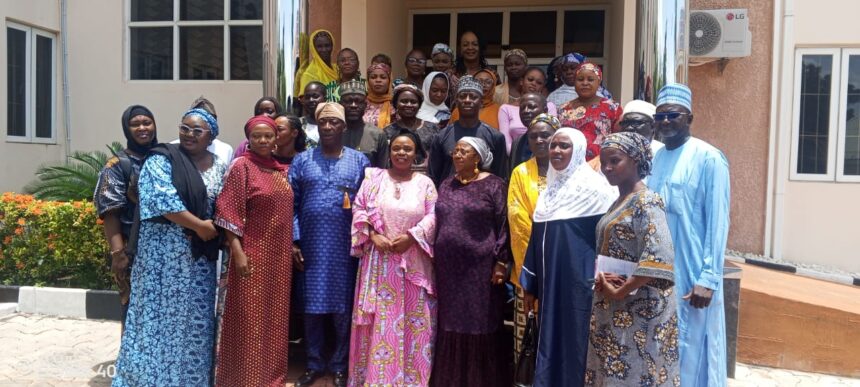
The International Women Communication Center (IWCC), in collaboration with the Independent National Electoral Commission (INEC), has trained and deployed community volunteers across five local government areas of Kogi State, Ankpa, Dekina, Ibaji, Kabba/Bunu and Ofu, to promote women’s participation in the electoral process ahead of the 2027 general election.
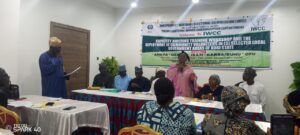
The four-day capacity-building workshop and deployment of community volunteers, organised under IWCC’s Women’s Voter Education, Sensitisation and Mobilisation Programme, was recently held in Lokoja in partnership with INEC.
Speaking at the event, the Executive Director of IWCC, Dr Limota Goroso-Giwa, commended the INEC Chairman, Professor Joash Amupitan, for what she described as his commitment to gender inclusiveness and efforts to involve grassroots women in the electoral process, particularly in hard-to-reach communities across Kogi State.
Related News
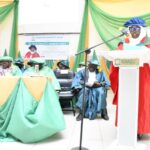
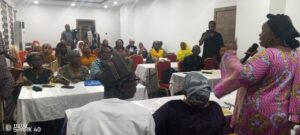
According to her, the INEC chairman had directed that the sensitisation should reach communities considered difficult to access, citing Ibaji, a riverine community in Kogi State, as an example. Women from Ibaji, she noted, travelled to the training venue by boat despite the distance, demonstrating their commitment to the programme.
“We are so grateful to the chairman of INEC, who has deemed it necessary to ensure that grassroots women are carried along. He told us to go to communities that are not easily accessible, like Ibaji, which is a flooded community. He said we should also go to Baruten and Kaiama, which are very far away in Kwara State, to mobilise the vulnerable communities,” Dr Goroso-Giwa said.
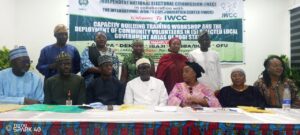
IWCC’s mobilisation drive, she disclosed, was not limited to Kogi State, the organisation had also gone to Kwara State and other parts of the country to encourage women to obtain their Permanent Voter Cards (PVCs) and participate in the 2027 general election.
Dr Goroso-Giwa also announced a new campaign slogan, “No woman, no election,” which she said would be used to mobilise women across the communities and encourage them to demand inclusion in the electoral process from the outset.
Turning to the National Assembly, she renewed calls on politicians to implement affirmative action and pass the long-pending gender bill, stressing the need for greater representation of women in policy and political decision-making. Women’s participation and representation in Nigeria, she lamented, remained below the desired level.
“What is good for the boy is good for the girl. We are saying that this time around, politicians should take the issue of women seriously. We want affirmative action to be implemented, and we want the gender bill to be passed and implemented at the grassroots level”, she further added.
The training, she explained, was designed to teach women not only how to vote, but also how to contest elections and be voted for, while also building their capacity to reject electoral vices such as thuggery, vote buying, voter apathy and drug abuse.
The trained volunteers, according to her, would return to their respective communities to conduct training-of-trainers exercises and use posters, banners and other sensitisation materials to mobilise more women.
Asked about the criteria used in selecting the volunteers, Dr Goroso-Giwa said participants were drawn from local government areas designated by INEC as difficult to reach. IWCC, she added, has worked with INEC for more than 30 years, including as a member of the Transition Monitoring Group (TMG), the Situation Room and the West Africa Election Observers Network (WAEON), and was well positioned to reach such communities through its grassroots leadership structure.
She advised parents to caution their children against electoral thuggery and drug peddling during the election period, and warned against vote buying, urging women and other members of the public to reject practices capable of undermining the credibility of elections.
Also speaking at the workshop, the Head of Department, Voter Education and Publicity, Gender and Inclusivity, INEC Kogi State, Mrs Godwin Maryam Bulus, who represented the commission, commended IWCC for organising the intervention and described the partnership as critical to deepening electoral awareness at the grassroots ahead of the 2027 general election.
The programme, she noted, addressed key areas of the electoral process, including inclusivity and mobilisation, to ensure that women participate not only as voters but also as decision-makers, while helping combat voter apathy through direct community engagement and expanding INEC’s grassroots reach by focusing on designated local government areas.
Mrs Bulus charged the newly trained community volunteers to carry out their sensitisation duties with integrity, neutrality, transparency and a strong sense of civic responsibility, urging them to ensure that women in their communities understand their civic rights and the power of their votes, and to serve as a link between INEC and their communities, reaffirming the commission’s commitment to a transparent, inclusive and credible electoral process.
Presenting a paper titled, “Voter Education as a Prerequisite for Strengthening Women’s Political Participation and Engagement in Grassroots Communities,” Mrs Bulus identified barriers many women continue to face, including limited access to information, cultural and traditional restrictions, economic dependence, low political awareness, misinformation and electoral violence.
Sustained, community-based voter education, she argued, would help address these challenges by creating awareness of women’s electoral rights, promoting informed decision-making, building leadership capacity and encouraging women’s engagement beyond election day, including holding elected representatives accountable. Voter education, she stressed, should not be treated as a one-off activity during elections but as a continuous investment in women’s political empowerment.
She called on traditional and religious leaders, civil society organisations, political parties and the media to support the process by communicating in local languages and through channels accessible to women.
One of the trained volunteers, Hajia Fatima Abdulkarim, who represented Ibaji community, said the workshop had deepened her understanding of grassroots voter mobilisation.
In her words, “what they taught here is, it’s all about women connecting to the grassroots, connecting to the voters and learning how we can stand up for ourselves, because without women, there will be no election”.
She said the volunteers, many of whom are themselves prominent community and political figures, would return to sensitise women in their various communities on their voting rights.
“The women are ready to vote this time around for gender inclusiveness”, she added.
The workshop, according to the organisers, is part of continuing efforts by IWCC and INEC to strengthen women’s participation in elections and promote safer, more inclusive and credible elections ahead of the 2027 general election.