From Taiye Joseph, Ilorin
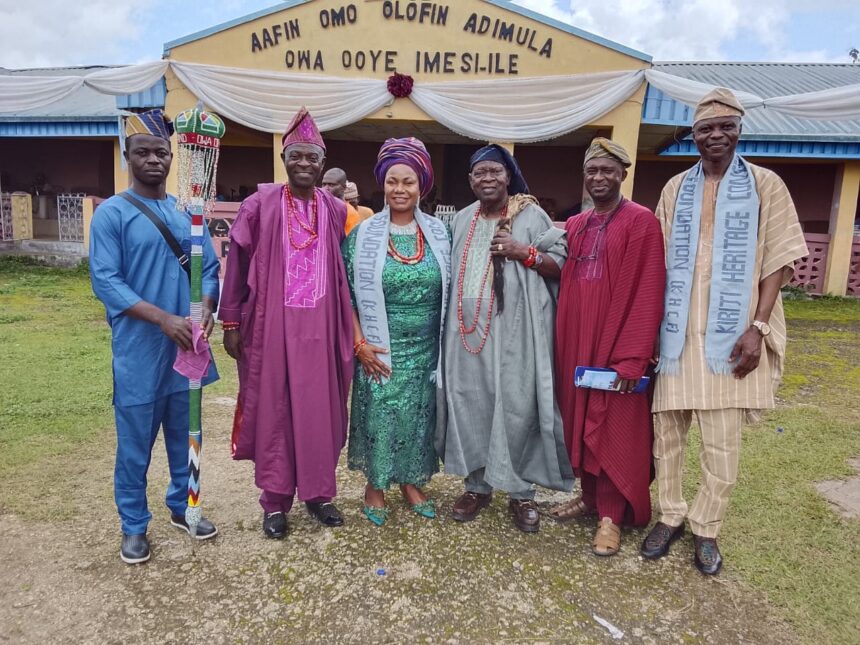
One hundred and forty years after the historic Kiriji Peace Treaty, the Owa of Igbajo, His Royal Majesty Oba Ademola Stephen Kayode Makinde, Onigemo I, has called on the Yoruba people to turn the painful memories of the past into a foundation for lasting peace, unity, cultural preservation and economic cooperation.
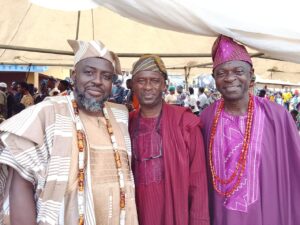
The monarch made the call in his goodwill message at the 140th anniversary of the Kiriji Peace Treaty held at the International Conference Centre, University of Ibadan, on September 21, 2026.
For Oba Makinde, the significance of Kiriji goes beyond the nine-year conflict that pitted Yoruba communities against one another between 1877 and 1893. He said the greatest lesson lies in the decision of the protagonists to eventually abandon warfare and embrace dialogue and reconciliation.
Related News
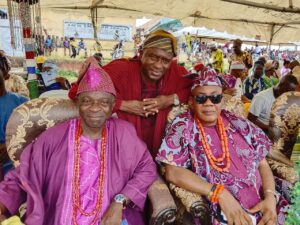
“For Igbajo, the Kiriji story is not a distant historical account. It is woven into the ancestral memory of our people and the history of the Yoruba nation,” the monarch said.
He described the conflict as a product of a complex combination of political rivalry, the collapse of the old Oyo political order, struggles for power and the administration of conquered territories, noting that the activities of Ibadan representatives, known as Ajeles, generated resentment in some communities.
According to him, the 1877 confrontation involving Fabunmi and Awopetu, an Ibadan Ajеле at Imesi-Igbodo, became one of the major triggers of the revolt that eventually brought the Ekiti and Ijesa communities together under the Ekitiparapo alliance.
The Owa explained that Igbajo’s involvement in the conflict was also shaped by its own history of attacks and its search for security.
“On the side of Igbajo, it was a spirit of independence and self-assertion, especially from Ilesa, who had incessantly attacked the town to subdue it,” he said.
He noted that Igbajo’s strategic hills and fortified terrain subsequently made the town important to the Ibadan military campaign and one of the major theatres of the Kiriji War.
While reflecting on the historical significance of the battlefield, Oba Makinde said the site should not be viewed as the exclusive heritage of one community.
He argued that the conflict was fought around the boundary between Igbajo and Imesi-Ilé and that the historic site should therefore be jointly preserved and developed.
The monarch also challenged historical accounts concerning the final resting place of the renowned Yoruba military commander, Aare Latosa, saying the warrior died at his camp in Igbajo before his remains were taken to Ibadan for burial.
He said artefacts associated with Latosa were historically kept by the Owa of Igbajo before their subsequent transfer in connection with the installation of Samuel Ladoke Akintola as Aare Ona Kakanfo.
Beyond the historical disputes, however, Oba Makinde said the central message of Kiriji should remain the triumph of reconciliation over division.
“The significance of Kiriji, therefore, goes beyond the battlefield. It lies in what happened after the battle—when our forebears recognised that no community could permanently prosper through division and that the survival, dignity and progress of the Yoruba people demanded reconciliation,” he said.
He urged the present generation to learn from the experience of their ancestors, stressing that disagreements over interests and perspectives should not become permanent barriers to cooperation.
The Owa called for greater investment in the preservation of Yoruba history, saying young people must be taught the causes and consequences of historical conflicts to prevent similar mistakes from being repeated.
He advocated the institutionalisation of Yoruba history in schools and cultural centres, stronger traditional institutions, regular dialogue among traditional rulers, cultural exchanges and closer relationships between communities that once stood on opposing sides.
He also proposed an annual Kiriji Peace Summit, to rotate among communities connected with the war and provide a platform for historical lectures, cultural exhibitions, youth engagement and renewed commitments to peace.
Oba Makinde urged the Federal Government as well as the Osun and Ekiti State governments to collaborate with affected communities to transform Kiriji-related sites into historical and tourist attractions.
He specifically proposed the establishment of a Kiriji/Ekitiparapo War and Peace Museum where war relics, historical artefacts and other materials connected with the conflict could be preserved.
The monarch also suggested that the tombs of Aare Latosa at Latosa Village in Igbajo and those of Isola Fabunmi and Ogedengbe in Ilesa should be preserved as historical monuments and incorporated into educational and cultural tourism programmes.
He said developing the sites would not only preserve history but could also create economic opportunities for communities while helping younger generations understand the human cost of conflict.
The Owa extended the message of economic cooperation to the wider Yoruba region, advocating joint agricultural projects, trade fairs and infrastructure development as practical ways of building interdependence among communities.
He also called for justice, accountability and good governance, noting that oppression, marginalisation and abuse of power could create conditions for conflict if left unaddressed.
Reflecting on the relationship between Igbajo and Ibadan after the peace agreement, Oba Makinde expressed appreciation to Ibadan for providing a home and economic opportunities for members of the Igbajo community.
He said Clause Four of the Kiriji Treaty provided for Igbajo, Ada, Iresi and Otan to become part of Ibadan’s territories, adding that Igbajo people subsequently established a flourishing lumbering business in Ibadan.
According to him, the community moved from its early settlement at Oke-Bola to its permanent settlement at Iso-Pako Igbajo, Sango, further strengthening the historical relationship between both communities.
The monarch said the 140th anniversary should therefore be more than a commemoration of an event that happened in the past, but an opportunity to renew relationships and build a future based on cooperation.
He urged traditional rulers, governments, community leaders and citizens to preserve the memory of Kiriji while ensuring that its lessons remained relevant to contemporary society.
He concluded with the enduring motto of Igbajo’s Kiriji Memorial College, established in 1952 in memory of the war: “Let us be one.”