By David Onuoja, Abuja⁸
It is no longer news that the challenges in Nigeria’s power sector have always been national in nature with local impact or effects.
For decades, electricity was treated as a federal monopoly operated via a single grid that could not meet the needs of the 36 states of the Federation each with very different resources, industries, and populations.
That changed in 2023 when the Electricity Act, 2023, was signed into law on the 8th June, 2023. The act repealed the 2005 Electric Power Sector Reform and created a new legal framework that explicitly decentralizes power. For the first time, states can make their own electricity laws, license companies, and regulate markets within their borders.
If states can act decisively, this law can be the biggest lever for improving citizens’ daily lives and strengthening state economies. The fact there is that first, States have to understand what the 2023 Electricity Act gives to States.

The Act does not remove the Federal Government from power. NERC remains the principal federal regulator and still licenses interstate generation, transmission, and supply. The federal government also retains exclusive control over interstate and international electricity activities.
Only what the Act does is to create a parallel path which the key provisions includes: State legislative power. With this, States can pass laws on generation, transmission, distribution, and system operation within their territory, whether or not covered by the national grid.
Another thing is the State electricity markets and regulators which Section 230(2) of the Act allows states to establish state electricity markets and regulatory authorities. Lagos, Edo, Kogi and Kaduna are already moving in this direction. The Act gives room for collaboration for access. The states can also collaborate with the Federal Government and local governments for rural electrification, electricity access, and investment promotion.
Talking about the Policy frameworks: this framework decentralized electricity with each state regulations and market framework, makes states to develop what is called Integrated Electricity Policy and Strategic Implementation Plans, SIEPSIP.
The Act also created a smaller licensing thresholds that permits anyone who can construct, own or operate generation not exceeding 1MW or distribution not exceeding 100KW without a license to operate optimally.
Notwithstanding, until a state passes its own law and sets up a regulator, NERC will still continues to regulate businesses of electricity in a state that doesn’t. The opportunity, therefore, is for states to know their rights and take ownership.
The 5th Alteration in the Act of 2023 also amended the Constitution to expand the legislative powers of states on electricity. This constitutional backing means state laws will not be seen as an overreach.
One may asked, how does States ownership of electricity or regulations improves citizens’ lives. Electricity is not an end in itself. People care about light at night, refrigeration for food, water pumping, clinics with power, and phones that charge. State regulation can directly target these outcomes.
The involvement of States in electricity market is already a tailored solutions for unserved and underserved areas. Reason is, the national grid cannot reach everywhere quickly or affordably. The Act’s decentralization allows states to focus on mini-grids, embedded generation, and off-grid systems for rural communities. Because state regulators will oversee a smaller territory, they can respond faster to outages, theft, and service complaints. This flexibility is critical for capturing unserved areas.
States can also identify “anchor customers” in each Local Government Areas; examples are Schools, Primary Health Cares, Water Boards, and Markets, by prioritizing these loads, states will ensure that public services, function even before full residential coverage.
State participation in electricity market also brings nearer avenue for consumers protection’s right to the people; as the Act mandates NERC to develop standards for fair pricing, accurate billing, complaint handling, and disconnection procedures. States that set up their own commissions can go further by creating state consumer protection units, mobile complaint apps, and local ombudsmen. Faster dispute resolution means fewer households lose power over billing errors.
Moving into the market by the power of this act, can also mandate time-bound complaint resolution. For example: “all metering complaints can be resolved within 7 working days”. That kind of accountability is hard at federal scale but doable at state scale.
The decentralization of electricity market from the Federal down to states level is equally targeted at subsidies through the Power Consumer Assistance Fund(PCAF). The Act has establishes the PCAF to subsidize underprivileged consumers. Here also, states can design their own eligibility criteria and work with DisCos to ensure the subsidy reaches artisans, low-income households, and public facilities like primary health centers and schools. This prevents a situation where only large commercial users benefit.
Another benefit of this is that states can also run “lifeline tariffs” for the first 50kWh per month, funded partly by state budgets and partly by PCAF. This keeps basic services affordable while allowing cost-reflective tariffs for higher users.
The issue of renewable energy and clean cooking can never be overemphasized as licensees now have renewable purchase obligations. States with strong solar, hydro, or biomass resources can set higher state-level targets in their SIEPSIP. For citizens, this means more stable daytime power for SMEs and reduced diesel costs for households is possible.
In northern states for example, solar-plus-storage can power irrigation. While in southern states, gas and small hydro can support clusters. The Act allows states to tailor the energy mix.
Through this also, states can grow and boom its economy, making the center less bordered and focused federal level. Reliable power is the single biggest enabler of productivity. When states regulate their own markets, they can align electricity policy with economic strategy.
Another biggest opportunity for State that embrace this 2023 electricity act opportunity, is the attractiveness of investment which it will have with clear state rules. Investors avoid uncertainty. A state that passes an electricity law, publishes tariffs, and sets up an independent regulator signals stability. States can offer standardized Power Purchase Agreements, land for solar farms, and fast-track permits. The Act already allows states to license private investors to build power plants and mini-grids.
A clear rules also reduces litigation. When developers knows licensing timelines, tariff review cycles, and dispute mechanisms upfront, capital flows in.
Any state that invested in this market will reap the dividends as it will support manufacturers and agro-processing in its state. Most Nigerian SMEs run on diesel, which can be 3x the cost of grid power. State regulators can create special industrial tariffs, ring-fenced feeders for industrial clusters, and captive power rules.
For example, a state with a large cassava or rice value chain can mandate dedicated 5-10MW embedded generation for processing hubs. Lower energy costs translate directly to cheaper goods and more jobs. States can also create “24-hour power zones” around markets and industrial layouts.
Creating of jobs in the power value chain is not left out. As state market needs meter installers, solar technicians, linesmen, customer service agents, and energy auditors. By licensing more players and enforcing local content in state regulations, governments can build a workforce. The REA’s expanded mandate for rural electrification also opens opportunities for state partnerships with private developers.
Even those in Technical colleges can be linked to the sector through apprenticeships. That will also turns power reform into youth employment.
Operating electricity market at the State level will equally reduces fiscal pressure. Reason is that, States that are currently spending billions on diesel for government buildings and streetlights will benefit. Because with authority to procure power directly, states can aggregate demand and buy cheaper bulk power, or build their own 1-10MW plants where Savings can be redirected to health and education. It can also monetize government rooftops for solar leasing, earning revenue while cutting bills.
Below are some of the practical 5-Step Roadmap for States in this. First, to convert the Act from paper to power, states should follow these concrete steps: one, enact a State Electricity Law and Establish a Regulator: This is the gateway. The law should define licensing, tariffs, safety, and consumer rights. Section 230(2) provides the basis.
The regulator must be independent, well-funded, and staffed with technical capacity. Without this, NERC will continues to regulate. One of the best practice is to mirror NERC’s structure but keep it lean. Include consumer representatives and technical experts on the board.
The 2023 electricity act gave states power to develop a State Integrated Electricity Policy and Strategic Implementation Plan, SIEPSIP. On this, the Act anticipates state-level planning, similar to the federal NIEPSIP. The SIEPSIP should map demand by LGA, identify anchor loads like hospitals and markets, and prioritize technologies: solar for the north, gas for the south, hydro where possible.
The plan should also set targets such as “100% PHCs with power by 2028” or “Reduce SME diesel use by 40% by 2030.”
States can use their collaboration Clauses to Unlock Funding. Section 2(2)(d) allows states to collaborate with federal and local governments. States should partner with Rural Electrification Agency (REA) for rural projects, and with the Ministry of Power for transmission reinforcement. They can also blend state budgets with donor funds and private equity. States can also join regional power pools with neighbors to share generation.
In this aforementioned market, the designation of Pro-Business Tariff and Licensing Regimes will equally help States to set simpler licensing for 1MW generators and create franchise models for DisCos in underserved LGAs. Tariff methodologies must balance provider viability with affordability, while Transparent, published tariffs reduce regulatory risk.
Franchising is another opportunities for the market as that will allows a private operator to take over a poorly served LGA under a performance contract. That brings in capital without selling state assets.
This Act equally encourages laws for security of electricity infrastructure and punitive measures against theft. State task forces, working with community leaders, can reduce vandalism and losses, which directly improves revenue and service quality. Community-based policing of transformers and lines has worked in several states. Tie it to the local incentives would give it the unique opportunities to control the market at the State Levels.
On the independent transmission and distribution networks: the Act gives NERC power to issue independent transmission licenses, and states can regulate intrastate networks. States can equally build state-owned transmission to connect industrial parks without waiting for TCN. This is a very robust opportunity every state should have.
Another benefit is the creation of data-driven regulation which can make state regulator serving 5-20 million people to collect real-time data on outages, voltage, and customer complaints more easily than a national regulator. This data can inform investment decisions and hold DisCos accountable.
Using Innovation sandboxes is another thing, as publishing dashboards monthly will build public trust. States can also pilot pay-as-you-go solar, peer-to-peer trading, and smart metering in one city before scaling. The smaller regulatory space in this will enhances flexibility and accountability.
One of the early movers of this example is Lagos State who have drafted a Lagos Electricity Law and is setting up the Lagos Electricity Regulatory Commission with the Focus on embedded generation for Lekki, Ikeja, and industrial zones, plus solar for public buildings. Edo State has equally partnered with a private developer for a 55MW plant and is pushing mini-grids for rural communities. The state is using the Act to license smaller players directly. Kaduna is another State who is working on a state policy that prioritizes industrial clusters and agricultural processing. It is also exploring franchise areas for underserved towns. These states show that political will plus technical planning can unlock results quickly.
Notwithstanding, there are challenges to watch because the Act is not a blank check. One of this is the Interstate limits: State-granting licenses cannot permit interstate or transnational distribution. States that need power from neighbors must still coordinate with NERC. It should be noted that federal oversight remains, as NERC retains powers over mini-grids and networks in states without frameworks.
What of the capacity gaps: Many states lack the technical and financial capacity to set up a full regulator immediately. Phased implementation and technical assistance will be needed by such state. The constitutional constraints is another challenges as the federal government retains exclusive power over interstate transmission which can limit integrated regional projects.
On the proposed amendments to the 2023 Act, which state regulators have recently raised concerns about 17 contentious provisions in a proposed 2026 amendment bill that could undermine state powers. States must engage the National Assembly to protect the decentralization gains. States and NERC will also need to manage the relationship between federal and state markets carefully to avoid regulatory conflict.
I can not end this without mentioning of what success, this may looks like in the next 5 Years. If states use the Act well, we should be expecting to see the following. Citizens will have 4-6 more hours of power daily in state capitals, functional primary health centers with 24-hour power, reduced household spending on fuel, and streetlights that work apart from the jobs it will create.
On the state economy: New agro-processing plants locating in states with reliable power, lower cost of goods due to reduced diesel use, and thousands of jobs in solar installation and maintenance will boost the economy. While for governance: States competing to provide better power, just as they compete on education and roads will benefit a lot. Lagos, Edo, and Kaduna’s early moves will provide models others can copy.
The Act also creates mechanisms for monitoring market development and States that publish annual performance reports will attract more capital. States involvement in electricity market will give a metrics to track, that is, average hours of supply, average cost of power for SMEs, number of licensed state players, reduction in outage duration, and customer satisfaction scores.
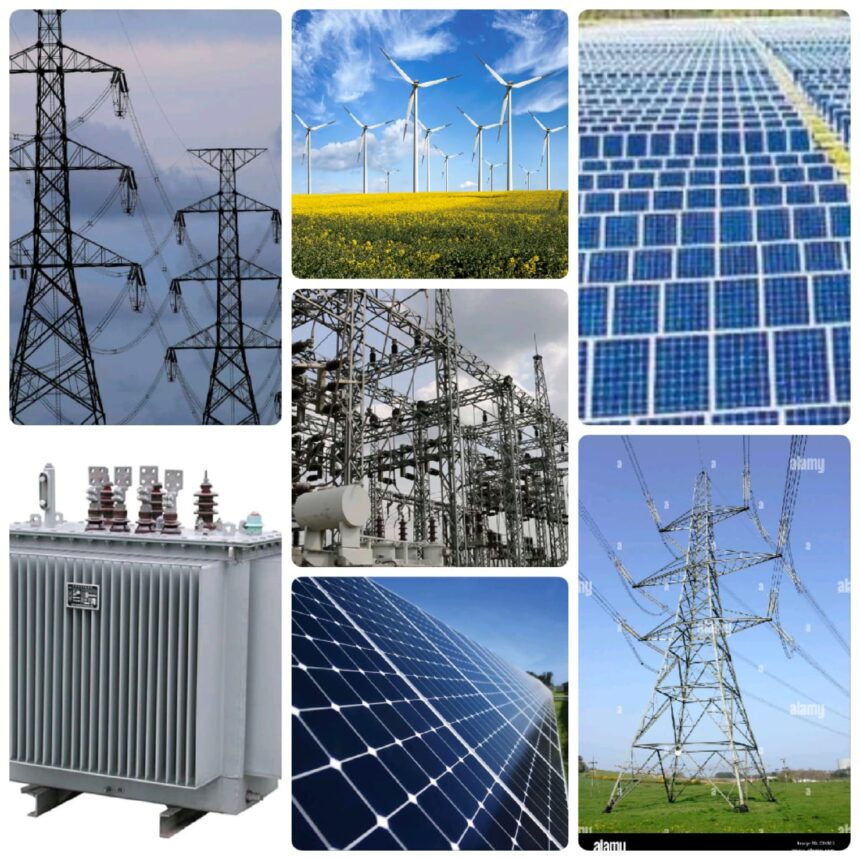
Another area of energy generation most Nigerians don’t take it seriously is the “Wind energy”. In Nigeria, all source of energy you can talk about or looks for can be gotten but the political will, leadership foresight and commitment is what is lacking. In the United States of America for example, about 8% of the energy generating capacity comes from the wind turbines. That is more than any other renewable resource; and wind power has more than tripled over the past decade in U.S.
This wind energy, more than half of that capacity comes from just five states: that is Texas, Iowa, Oklahoma, California, and Kansas. According to the American Wind Energy Association, there are over 56,000 wind turbines across the country that provide a capacity of 96,000 megawatts, enough to power more than 15 million homes. According to the Department of Energy in the USA, projected that, by 2050, that wind capacity will increase to more than 400 gigawatts.
How can you get in on this growing wind energy action? Many electric utilities allow you to tap into wind and other renewable sources of power if you pay a little bit more for a “green” option. More consumers signing up for green energy means those utilities will work to procure more of it. Let’s take a look at how wind turbines work and some of the potential pros and cons. How does wind turbines work? Wind power actually starts with the Sun. In order for the wind to blow, the Sun first heats up a section of land along with the air above it. That hot air rises, since a given volume of hot air is lighter than the same volume of cold air. Cooler air then rushes in, to fill the void left by that hot air and voila: a gust of wind.
No wonder, the Office of Energy Efficiency and Renewable Energy in the US described a wind turbine as “the opposite of a fan.” Simply because the turbine takes the energy in that wind and converts it into electricity. It will do Nigeria and Nigerians good if this type of energy is also embraced. Especially the northern part of the country where a lot of SUN energy can be gotten easily.
In conclusion, the Electricity Act, 2023 fundamentally rebalances power in Nigeria’s power sector. It moves from one-size-fits-all federal control to state-led innovation. For citizens, this means electricity policy can finally reflect local realities: the market woman in Kano, the welder in Aba, and the clinic in Bayelsa. In terms of the economy, it means states can treat electricity as economic infrastructure, not just a social service.
The law has given states the tools, legislative power, market creation authority, and room to collaborate. What happens next depends on political will. States that move quickly to pass laws, set up regulators, and publish clear investment rules, will see lights turn on, factories run, and incomes rise.
Nigeria’s electricity future will not be built only in Abuja. It will be built in 36 state capitals, one regulation at a time.