From Taiye Joseph, Ilorin
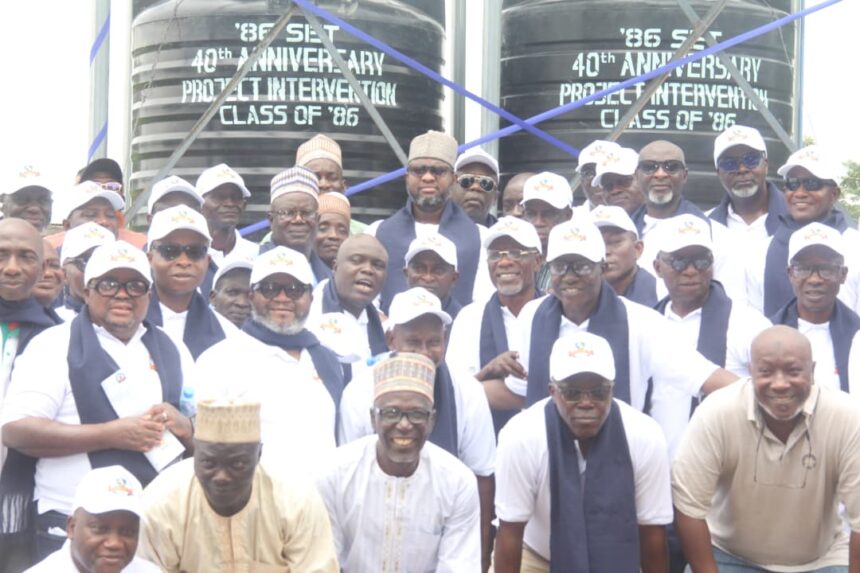
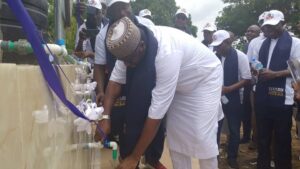
The 40th anniversary reunion of the 1986 set of Government Secondary School (GSS), Ilorin, has renewed calls for urgent government intervention to preserve the 112-year-old institution, even as the old students unveiled a solar-powered automated borehole for the school’s staff quarters.
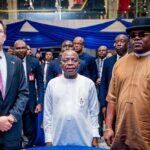
The reunion, held on Saturday in Ilorin, Kwara State, brought together members of the 1986 set, national executives of the GSS Ilorin Old Boys Association (GSSIOBA), government officials and other stakeholders, with speakers highlighting the need for stronger collaboration between alumni and government to restore the school’s historic status.
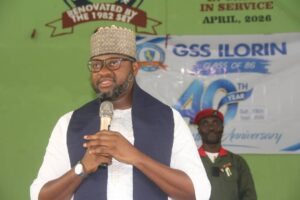
President of the 1986 set, Alhaji Kayode Aremu, said the solar-powered borehole, fitted with two overhead tanks, was one of several interventions undertaken by the set to improve the welfare of students and staff.
Related News

Aremu said the project was designed to address the water needs of staff and their families in the quarters, who, according to him, had previously faced the difficulty of trekking to the far end of the school premises in search of water.
He disclosed that the 1986 set had also provided 12 marker boards for five classrooms, two storage tanks and a water-fetching point for the junior section, as well as a printer to facilitate the production of examination materials.

Beyond school projects, Aremu said the set had provided financial assistance to members requiring medical treatment, describing such interventions as evidence that members had maintained their bond despite spending decades apart.
He urged members to sustain the spirit of giving and move beyond occasional participation by contributing their resources, ideas, expertise and time to projects capable of improving the school and members’ welfare.
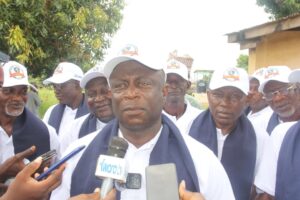
The national president of GSSIOBA, Chief Olasheni Ibiwoye, SAN, used the occasion to appeal to the Kwara State Government to give GSS Ilorin special administrative and developmental attention.
Ibiwoye specifically called for the deployment of adequate and qualified teachers to cover core subjects and the construction of a comprehensive perimeter fence around the school.
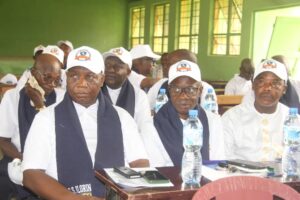
He urged the Ministry of Education, the State Universal Basic Education Board (SUBEB) and the Teaching Service Commission (TESCOM) to work towards addressing the challenges confronting the institution.
Ibiwoye also appealed to Governor AbdulRahman AbdulRazaq, to take decisive steps to address encroachment and other challenges affecting the school.
He described GSS Ilorin, established in 1914, as “a living monument, a sacred trust, and a proud heritage”, noting that the institution had produced governors, senators, academics, legal practitioners, military commanders, administrators, captains of industry and other professionals who had contributed to the development of the state and country.
The national president said the association remained committed to mobilising private resources and working with government and other stakeholders to improve the institution, but stressed that sustaining a school that had existed for more than a century required continued public support.
He recalled the 2005 rehabilitation programme under the administration of former Governor Bukola Saraki, when GSS Ilorin was among six flagship secondary schools selected for comprehensive rehabilitation.
Ibiwoye, however, said the age of the institution and continued wear and tear had made further interventions necessary.
He commended alumni and various class sets for their contributions, including the renovation of classrooms and hostels and the provision of boreholes, desks, mattresses and learning materials.
Also speaking, the Kwara State Commissioner for Education and Human Capital Development, Dr Lawal Olalekan Olohungbebe, commended the old students for complementing government efforts through their interventions in the school.
Olohungbebe said government alone could not provide all the resources required to transform the education sector, making the contributions of alumni associations and other stakeholders important to improving infrastructure and learning conditions.
He acknowledged the interventions of GSS Ilorin Old Boys Association, saying such initiatives had helped improve facilities and create a better learning environment for students.
The commissioner congratulated the 1986 set on its 40th anniversary and urged the old students to see the reunion as more than a social gathering, but also as an opportunity to renew their commitment to the development of the institution and the education of younger generations.
The reunion therefore combined celebration with a renewed commitment by the old students to their alma mater, while the association’s leadership used the occasion to seek stronger government partnership to protect the school’s heritage and improve its present condition.
Aremu, while thanking members for their contributions to the 1986 set’s projects, called for greater unity and sustained participation.
He said the set should continue to be identified with “compassion, service and positive impact”, and concluded with the association’s familiar pledge: “GSS Ilorin is great. I will make it greater. We will make it the greatest.”