From Taiye Joseph, Ilorin
The Chairman of the Economic and Financial Crimes Commission (EFCC), Ola Olukoyede, has called on political actors, security agencies, the media, civil society groups and other stakeholders to unite against vote buying and electoral corruption ahead of the 2027 general elections.
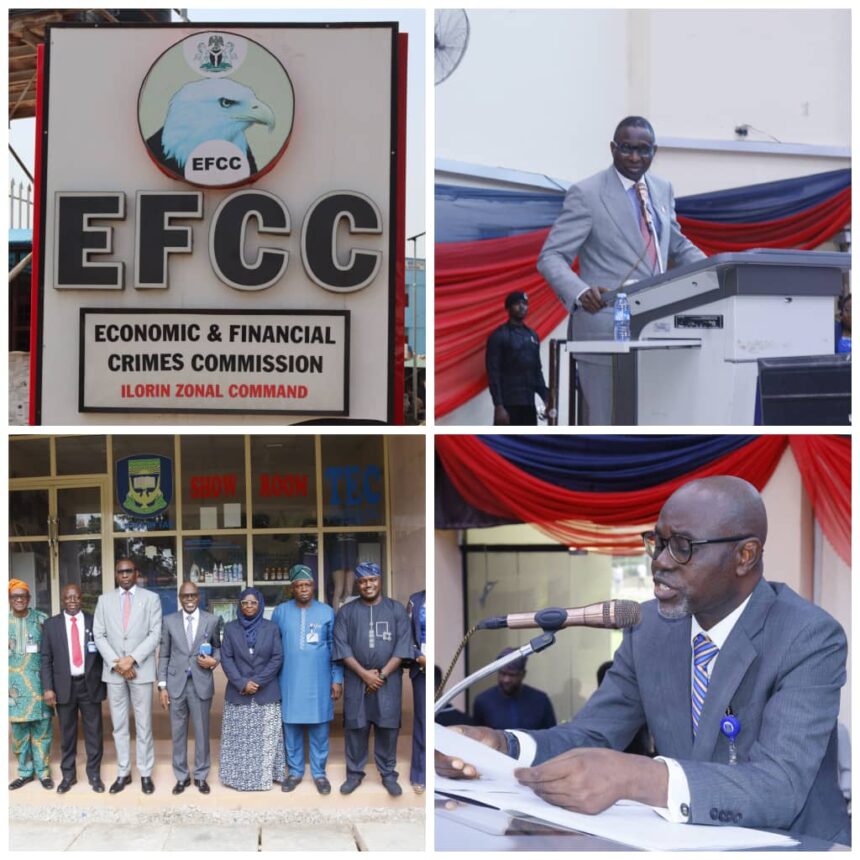
Olukoyede made the call while delivering the inaugural lecture of the High-Level Guest Speakers’ Series organised by the Centre for Peace and Strategic Studies (CPSS), University of Ilorin. The lecture was titled, “Mobilising Critical Stakeholders for Setting the Agenda for Peaceful and Credible 2027 Elections in Nigeria.”
Speaking on the growing threat posed by the monetisation of the electoral process, the EFCC boss warned that vote buying and other forms of financial inducement continue to undermine democratic values and good governance in the country.
According to him, politicians who secure electoral victories through financial influence often prioritise recouping their spending rather than delivering on their mandate to the people.
Related News

“The Commission remains resolute in combating vote buying, vote selling and every form of financial inducement capable of compromising the integrity of elections,” he said.
Olukoyede disclosed that the anti-graft agency had recorded several arrests, prosecutions and convictions involving politicians, electoral officials and voters linked to electoral offences in recent years.
He assured Nigerians that the EFCC would intensify its surveillance and enforcement activities ahead of the 2027 elections.
“Vote buying is a financial crime and we will continue to prosecute offenders without fear or favour,” he stated.
The EFCC chairman further revealed that perpetrators of electoral corruption had become more sophisticated in their operations, employing coded communications, covert transactions and off-site arrangements to influence voters.
“We are aware of these antics and are prepared to safeguard the integrity of our elections,” he said, cautioning politicians against adopting what he described as a “cash-and-carry approach” to winning elections.
Olukoyede stressed that credible elections could only be achieved through stronger collaboration among key stakeholders, strict enforcement of electoral laws, issue-based campaigns and responsible conduct by political parties.
He also urged political actors to reject divisive rhetoric and inflammatory campaigns, noting that such actions had contributed to violence during previous elections.
The EFCC boss challenged media organisations to expose vote-buying networks and other forms of electoral corruption, while calling on security agencies to remain professional and impartial throughout the electoral process.
“Proactive and coordinated security arrangements will significantly reduce electoral risks and boost public confidence in the democratic process,” he added.
Earlier, Director of the Centre for Peace and Strategic Studies, Prof. G.A. Animasawun, said the lecture series was established to create a platform for identifying and addressing threats to Nigeria’s democratic process before the 2027 elections.
He noted that the centre was committed to generating practical solutions that would strengthen electoral integrity, promote peace and enhance national security.
In his remarks, the Vice-Chancellor of the University of Ilorin, Prof. Wahab Egbewole (SAN), described electoral corruption as a major threat to national security and called for stronger institutional partnerships to curb electoral malpractice.
Egbewole commended the EFCC’s preventive approach to tackling electoral corruption and proposed collaboration between the Commission and the CPSS in the areas of research, training and policy development.
The event attracted representatives of electoral bodies, security agencies, civil society organisations, academics, media practitioners and other stakeholders seeking to strengthen Nigeria’s democratic institutions ahead of the 2027 general elections.