From David Onuoja, Abuja
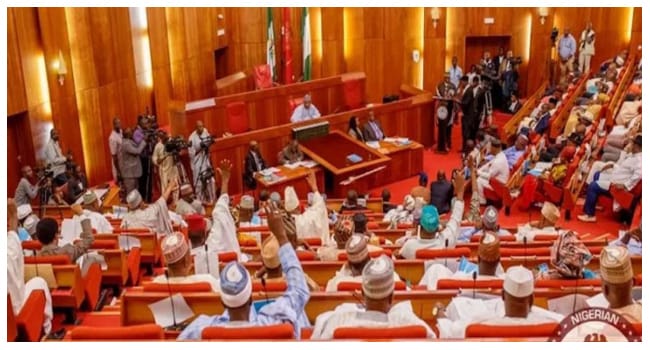
The Senate, has began an ambitious legislative push that could fundamentally alter the relationship between Africa’s largest digital economy and global technology companies, advancing with a bill that would compel multinational social media platforms, data controllers and digital service providers to establish physical offices in Nigeria or face regulatory sanctions, including possible restrictions on their operations.
This proposal, is targeted at the major technology companies including Meta, X, TikTok, Google, YouTube, Snapchat and other global digital platforms serving millions of Nigerians.
These digital Companies dominated the proceedings at a public hearing organised by the Senate Committee on ICT and Cyber Security on Thursday, where lawmakers, regulators, industry experts, civil society organisations and technology stakeholders converged to debate what many described as one of Nigeria’s most significant digital economy reforms in recent time.
At the centre of the debates was “A Bill for an Act to Alter the Nigeria Data Protection Act, 2023, to Mandate the Establishment of Physical Offices within the Territorial Boundaries of the Federal Republic of Nigeria by Social Media Platforms and for Related Matters (SB.648),” sponsored by the Senator representing Delta North, Senator Ned Nwoko.
Related News

The proposed amendment seeks to compel social media companies, data controllers and data processors providing services to Nigerians to establish operational offices within Nigeria, a move lawmakers believe will improve regulatory oversight, strengthen data protection, enhance national security, create thousands of jobs, increase tax compliance and ensure that multinational technology firms become more accountable to Nigerian laws.
Declaring the public hearing open on behalf of the President of the Senate, Senator Godswill Akpabio, the Deputy Senate Leader described the exercise as another critical step in the Senate’s effort to strengthen Nigeria’s digital regulatory framework in line with emerging global realities.
He commended stakeholders who travelled from different parts of the country to participate in the hearing, expressing confidence that their technical submissions and recommendations would enrich the committee’s work before the proposed legislation returns to the Senate for further consideration.
Following the opening remarks, the Chairman of the Senate Committee on ICT and Cyber Security, Senator Shuaib Salisu, formally commenced the technical session, assuring participants that the committee had approached the assignment with an open mind and without predetermined conclusions.
He observed that the unusually large attendance, reflected the importance Nigerians attach to the country’s rapidly expanding digital economy and the increasing relevance of technology regulation to national development.
Drawing from more than four decades of experience in Nigeria’s information and communications technology sector, Sen Salisu said, he fully, understood both the enormous opportunities presented by digital innovation and the complex regulatory challenges associated with the rapidly evolving technology ecosystem.
He recalled participating in several initiatives that contributed to the development of Nigeria’s ICT architecture over the years, explaining that such experience reinforced the need to maintain a careful balance between innovation, digital freedom, responsible regulation and investor confidence.
Sen Salisu assured participants that every memorandum submitted to the committee would receive careful consideration, adding that the committee’s responsibility was to aggregate diverse opinions before making recommendations to the Senate.
Defending the bill, Senator Ned Nwoko, mounted a comprehensive defence of the proposed legislation, describing it as a defining intervention that would reshape Nigeria’s digital economy and strengthen the country’s technological independence.
According to Sen Nwoko, the amendment is not merely about compelling multinational companies to establish offices but about protecting Nigeria’s digital sovereignty, economic interests, national security and the rights of over 220 million Nigerians who interact daily with global technology platforms.
He listed Meta-owned Facebook, Instagram and WhatsApp, X, TikTok, YouTube, Snapchat and several other global digital platforms among companies serving millions of Nigerian users while maintaining little or no operational presence within the country.
“Nigeria is not a small market,” he said. “We are Africa’s largest digital population and one of the biggest users of social media anywhere in the world. Yet, despite the enormous value Nigeria contributes to these global platforms, they continue to operate in our airspace without maintaining meaningful physical offices here”.
The bill further proposes that any company who failed to comply within 30 days after the law comes into force could face regulatory sanctions, including prohibition from carrying on business within Nigeria.
Nwoko noted that countries including Ireland, India, Singapore, South Africa, Australia, Japan, Brazil, the United Arab Emirates and the United Kingdom have successfully attracted regional headquarters, engineering centres, legal compliance offices and customer support hubs belonging to global technology companies.
Ireland, he observed, transformed itself into one of Europe’s leading technology destinations after attracting major operations belonging to Meta, Google, LinkedIn, TikTok and X, thereby creating thousands of jobs while strengthening regulatory engagement.
Beyond employment, he said physical presence would stimulate technology transfer, deepen collaboration with Nigerian universities and technology startups and accelerate indigenous innovation within the country’s rapidly expanding digital ecosystem.
Drawing comparisons with multinational corporations already operating successfully in Nigeria, Sen Nwoko cited MTN, Shell, Chevron, Nestlé, TotalEnergies and DStv as examples of companies whose physical investments have generated employment, tax revenues, skills development and broader economic growth.
He insisted that multinational digital companies should equally be encouraged to become long-term corporate citizens by establishing meaningful operations within Nigeria rather than servicing the country entirely from foreign jurisdictions.
National security featured prominently in Senator Nwoko’s defence of the proposed legislation as he argued that Nigeria’s current arrangement with global technology companies has created operational challenges for law enforcement agencies responding to criminal activities conducted through digital platforms.
He cited recent incidents in which suspected kidnappers allegedly used TikTok Live and other social media platforms during criminal operations, saying such cases underscored the urgent need for stronger institutional engagement between multinational technology firms and Nigerian security agencies.
According to him, the absence of operational offices within Nigeria often delays communication between law enforcement authorities and the companies during criminal investigations, making it difficult to obtain timely information capable of aiding investigations or preventing crimes.
Sen Nwoko maintained that requiring social media companies to establish offices in Nigeria would create direct institutional channels through which security agencies could rapidly engage technology firms in tackling cybercrime, kidnapping, terrorism financing, online fraud and other digital offences.
Beyond security concerns, the Lawmaker raised issues surrounding data privacy and consumer protection, arguing that millions of Nigerians currently surrender vast amounts of personal information to foreign technology companies without sufficient local accountability.
Saying, the amendment would strengthen compliance with the Nigeria Data Protection Act by making it easier for regulators to investigate complaints, enforce directives and ensure that companies handling Nigerians’ personal data remain fully accountable to domestic laws.
Sen Nwoko dismissed concerns that the legislation was designed to censor Nigerians or restrict freedom of expression on social media.
Following Senator Nwoko’s presentation, the committee proceeded to receive memoranda from dozens of organisations representing government institutions, professional bodies, civil society organisations, digital rights advocates, policy groups, technology experts and industry stakeholders.
Earlier in his opening remarks, Senator Salisu had assured participants that every submission would receive equal attention regardless of whether it supported or opposed the proposed legislation.
Sen Salisu thanked stakeholders for what he described as an overwhelming demonstration of civic responsibility, noting that the large turnout reflected increasing public interest in Nigeria’s digital economy and the future regulation of multinational technology companies.
As proceedings drew to a close, participants expressed divergent opinions on aspects of the proposed amendment but generally agreed that Nigeria’s rapidly expanding digital economy requires a stronger regulatory framework capable of addressing emerging technological realities.
The Committee subsequently adjourned the public hearing to enable its secretariat collate memoranda and evaluate recommendations received from stakeholders before presenting its report to the Senate.
If eventually passed by the National Assembly and assented to by President Bola Ahmed Tinubu, the legislation would mark one of the most far-reaching regulatory interventions in Nigeria’s digital economy, compelling multinational social media platforms and technology companies to establish a permanent corporate presence in Africa’s largest economy.