From David Onuoja, Abuja
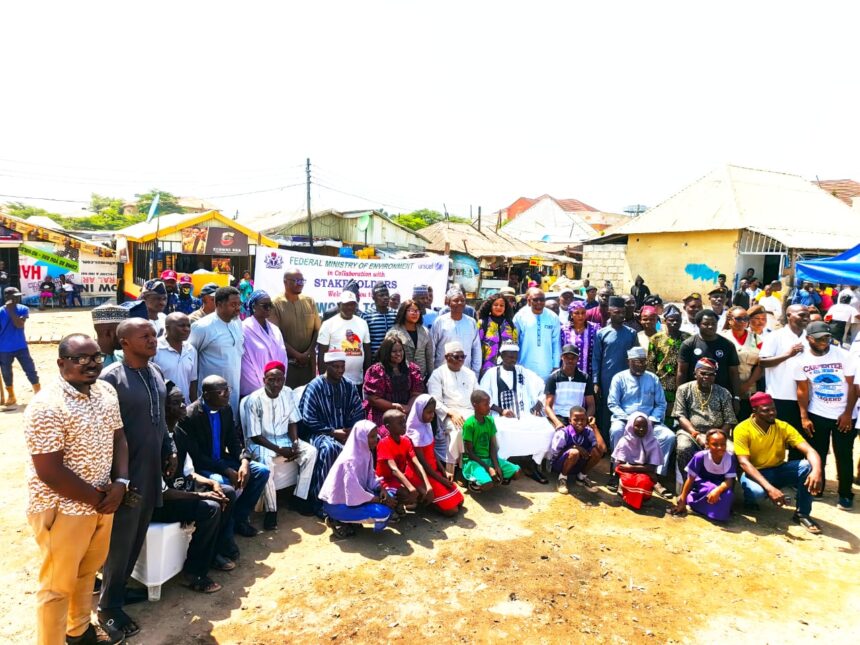
The 19th of November every year, is designated by the United Nations as World Toilet Day, to raise global awareness and stimulate action towards addressing the sanitation crisis. But this year’s commemoration took a different turn as residents of Kpadna Community in Jabi, Abuja cried out over lack of toilets for pupils and students in the area.
Speaking at the World Toilet Day event held at the Chief’s Palace, Kpadna-Jabi, Abuja, the Chief, popularly known as Sarki, Chief Sunday Bitrus, lamented that pupils and students in the area are exposed to open defecation due to lack of proper and clean toilets in the school, putting the students, especially the females, at risk of health hazards and other dangers.
He complained that even the one the school had been managing had been completely locked up for lack of water supply, a situation that put pupils and students at risk, especially the females.
The Chief appealed to the Government to provide good public toilets, improve drainage systems and establish a primary healthcare facility in the community.
Related News

Bitrus thanked the Government for selecting Kpadna Community to host this year’s event, adding that the gesture had made residents feel recognised and happy.
This year’s theme, “Sanitation and Gender Equality,” was selected to address the issue of gender inequality in Nigeria.
Speaking on the school toilet situation, the Minister of Environment, Balarabe Lawal Abbas, who was represented by the Director, Erosion, Flood and Coastal Zone Management Department, Mr Usman Abdullahi Bokani, expressed worry over the humiliation suffered by pupils and students, promising to engage other stakeholders to ensure that the needful is done immediately.
He said the lack of water supply and maintenance had rendered even the existing toilets in the school unusable.
Balarabe Abbas added that the Inter-Ministerial Committee for the 2026 World Toilet Day, in collaboration with the FCT Administration, Area Council Authorities, Water Supply Agencies and Development Partners, would come together to find solutions to the existing problem.
These include an urgent audit and restoration of locked and dilapidated school toilets, restoration of reliable water supply, rehabilitation of existing toilet facilities, establishment of sustainable sanitation management arrangements, and introduction of environmental health education with regular monitoring.
According to him, “Today’s occasion is particularly significant as it provides us with an opportunity not only to raise awareness about the importance of safe sanitation, but also to reflect on the realities confronting our country.
“Distinguished ladies and gentlemen, this year’s theme, Sanitation and Gender Equality, with the campaign tagline ‘Safe Toilets Equal Future’, reminds us that access to safe and functional toilets is much more than a sanitation issue. It is fundamentally a matter of human rights, public health, environmental protection, human dignity and social justice. The theme draws our attention to the disproportionate burden that inadequate sanitation places on women and girls, particularly in schools, markets, workplaces and public spaces.
“The absence of safe, private, accessible and gender-responsive toilets exposes women and girls to health risks, insecurity, embarrassment and indignity. For schoolgirls, inadequate toilet facilities and the absence of appropriate menstrual hygiene infrastructure can affect school attendance, participation and academic performance,” he said.
Citing the 2024 Nigeria Demographic and Health Survey, Lawal said approximately 20 per cent of Nigeria’s households still practise open defecation.
He said this can cause the spread of typhoid, malaria and cholera, among other bacterial infections, which can contaminate surface and underground water.
Also speaking at the event, the Director of Pollution Control and Environmental Health, Mrs Omotunde Adeola, said the Nigerian Government is committed to ending open defecation, stressing the need for collective action, community participation and improved access to functional toilets.
Mrs Adeola commended the community for cooperating with the government and expressed confidence that the engagement would strengthen collaboration between the Federal Ministry of Environment, relevant government agencies, development partners and residents towards promoting sustainable sanitation practices.