From David Onuoja, Abuja
The Federal Government, has renewed its commitment to ensuring every Nigerian has access to safe, dignified and sustainable sanitation facilities as the country joins the rest of the world to commemorate the 2026 World Toilet Day.
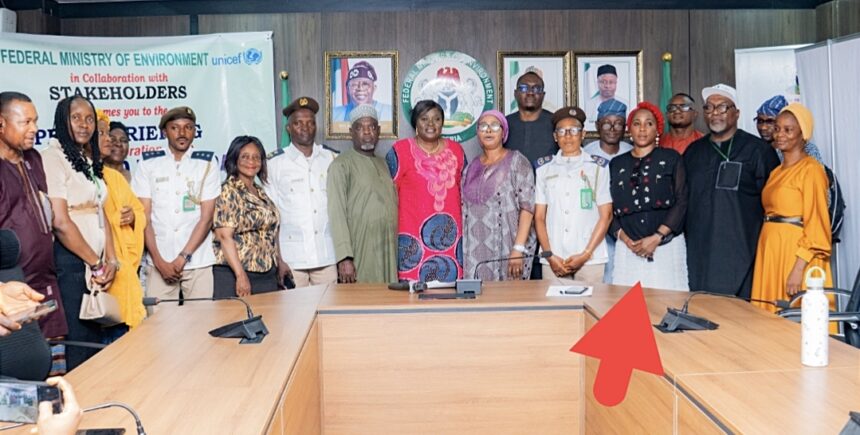
Speaking at a ministerial press briefing in Abuja on Tuesday, the Minister of Environment, Mallam Balarabe Abbas Lawal, represented by the Director, Pollution Control and Environmental Health, Mrs. Omotunde Adeola, said this year’s theme, “Sanitation and Gender Equality,” with the tagline “Safe Toilets. Equal Futures,” highlights the need for safe toilets, access to soap and water, and adequate menstrual hygiene facilities to protect the health, safety and dignity of women and girls.
The Minister noted that sanitation goes beyond household convenience, describing it as an essential public health intervention, environmental safeguard and fundamental requirement for human dignity.
He said globally, about 4.5 billion people still lack safely managed sanitation, while 892 million continue to practise open defecation, underscoring the urgency of achieving SDG 6 on Clean Water and Sanitation, SDG 5 on Gender Equality, SDG 3 on Good Health and SDG 11 on Sustainable Cities by 2030.
Related News
In Nigeria, he said, access to safe sanitation remains a major challenge, with access to improved sanitation below 36 per cent for the majority of the population, according to the National Demographic and Health Survey. Many public places, including markets, motor parks, schools and communities, still lack adequate and functional toilets, contributing to open defecation, contamination of food and water sources, and spread of diseases such as cholera and typhoid. He added that the consequences are particularly severe for women, girls, children, older persons and persons living with disabilities.
Lawal listed the Ministry’s interventions to include capacity building for Environmental Health Officers on faecal sludge management, integration of sanitation into climate adaptation and circular economy initiatives, the Clean and Green Programme, the Community-Based Waste Management and Open Defecation Control Programme, and partnerships with the private sector for environmentally friendly facilities through public-private arrangements.
As part of the commemoration, the Ministry will hold a Community Engagement and Sensitisation Campaign at Kpadna Community, Utako, Abuja, on November 19, 2026, and a National Dialogue on Faecal Sludge Management workshop on November 23, 2026, involving seven selected states from the six geopolitical zones and the FCT.
He said the 2026 celebration will be hosted by Kpadna Community and is also being commemorated simultaneously across all states through sensitisation, advocacy and sanitary inspection of public places.
The Minister also called on state and local governments to strengthen faecal sludge and wastewater management, urging communities to embrace proper toilet use and handwashing, the private sector to invest in affordable and innovative sanitation technologies, and development partners to sustain support for advocacy and infrastructure, particularly in underserved communities.
He stressed that women and girls must not merely be beneficiaries but active participants in designing and monitoring sanitation solutions.