By Joy Salami
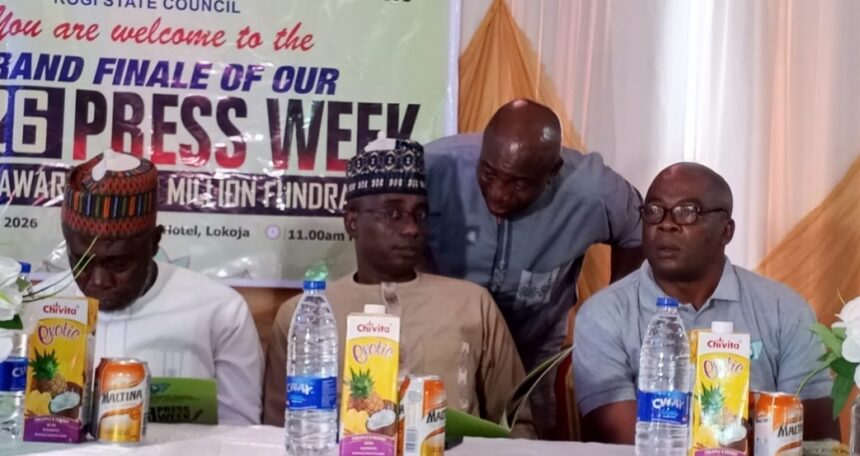
The Correspondents’ Chapel of the Nigeria Union of Journalists (NUJ), Kogi State Council, has held the grand finale of its 2026 Press Week with a pledge of deeper media partnership by Kogi State Government.
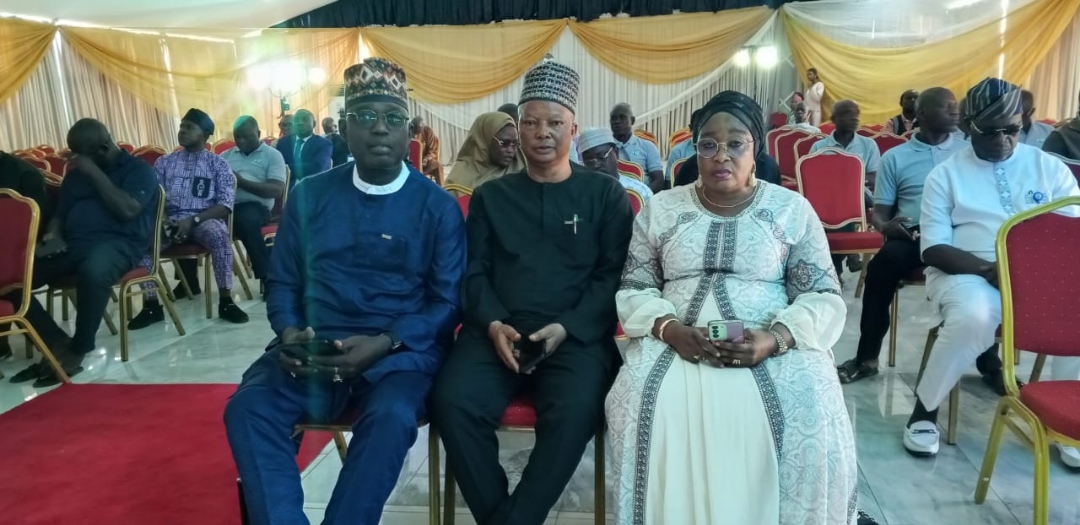
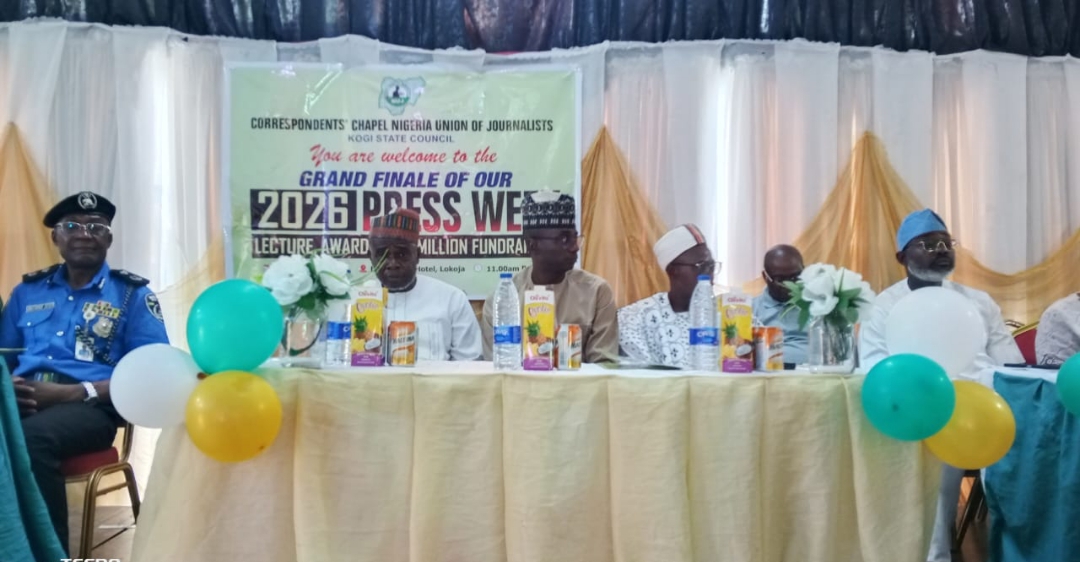
The colourful ceremony held at Edge-Drive Hotel, Lokoja, brought together government officials, media practitioners, business leaders, and other stakeholders for lectures, awards, and fundraising activities.
Governor Ahmed Usman Ododo, the Distinguished Special Guest of Honour, was represented by the Commissioner for Information and Communications, Hon Kingsley Fanwo, who struck a collegial tone in his address, declaring that he had come not as a special guest but as “a friend and beneficiary of your professionalism.”
Related News
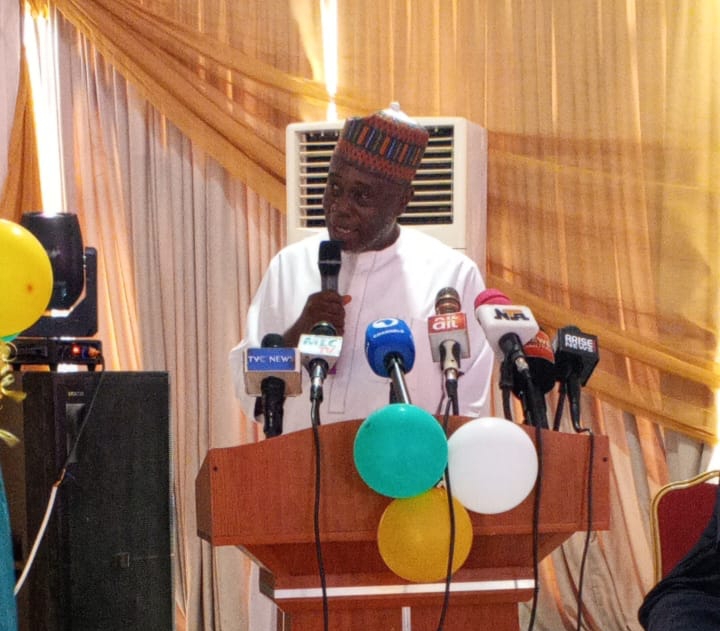
He lauded the correspondents for two years of “remarkable professionalism, patriotism, and a strong sense of responsibility,” describing them as a credible and indispensable bridge between the government and the citizens it was sworn to serve.
The Governor reaffirmed the administration’s commitment to an open and vigorous press, while urging journalists to exercise responsibility. Drawing on the popular adage that the pen is mightier than the sword, he cautioned against misuse of the privilege.
“We do not seek a media that withholds the truth. Doing so would be like switching off the light while picking stones from beans,” he said. “We desire a media that has the courage to point out our shortcomings and the commitment to partner with us in finding solutions.”
The governor described Kogi as “a land of peace and harmony” and “a hidden treasure” rich in natural resources, citing the confluence of River Niger and River Benue at Lokoja, two major cement factories, and the state’s status as Africa’s largest cassava producer.
He disclosed the administration had invested heavily in security and was recording encouraging results, while acknowledging that more work remained.
He expressed gratitude to President Bola Ahmed Tinubu for fiscal reforms that had unlocked greater resources for state governments, enabling investments in education, healthcare, road infrastructure, and food production, and pledged the state’s support for the continuation of those reforms beyond the current electoral cycle.
The Chairman of the Correspondents’ Chapel, Comrade Segun Salami, used his welcome address to reflect on the vital role of journalism in democracy and to highlight the chapel’s aspiration to build a befitting secretariat to serve as a centre for professional engagement, training, and collaboration among media practitioners.
He described the gathering as not merely a celebration of journalism but of “service, sacrifice, and commitment to advancing humanity,” and commended members for their resilience and dedication to truth and balanced reporting.
With Nigeria approaching an election cycle, Salami urged journalists to uphold the highest ideals of the profession in their coverage, called on political actors to play by the rules, and charged the Independent National Electoral Commission (INEC) to guarantee a level playing field for all contestants.
The lecture segment featured a paper delivered by Chief Femi Ajisafe, PhD, President of the Kogi Chamber of Commerce, Industry, Mines and Agriculture (KOCCIMA), who argued for the development of Nigeria’s inland waterways as an urgent alternative to the country’s deteriorating road network.
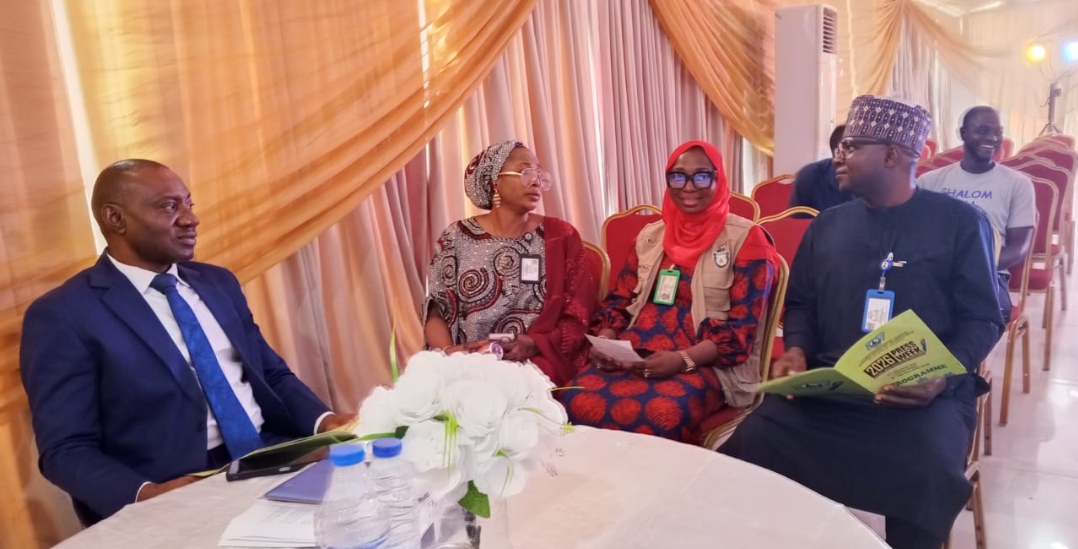
Titled “Bad Roads: Looking for Alternative Mode Through the Inland Waterways Corridor,” the paper noted that Nigeria’s road network of about 195,000 kilometres was vastly inferior to South Africa’s 750,000 kilometres, with only about 30 per cent of Nigerian roads paved, according to data from the Infrastructure Concession Regulatory Commission (ICRC).
Ajisafe argued that the country’s inland waterways, stretching over 8,000 kilometres, with River Niger and River Benue forming the backbone, offered a largely untapped, cost-effective, and eco-friendly alternative.
He said river transport was approximately 20 to 30 per cent cheaper than road transport for bulk goods, and proposed a phased implementation roadmap covering feasibility studies, dredging, port upgrades at facilities such as Laba, Makurdi, and Onitsha, and the introduction of barges with capacities of 1,000 to 3,000 metric tons.
Alh Momoh Jimoh Adeiza, Vice President of NUJ Zone D and Chief Host of the event, commended the Kogi State Government for what he described as a markedly improved relationship with the press since the current administration took office.
He urged the government to do more, specifically requesting that vehicles and working equipment be provided to journalists at the state broadcasting corporation and publishing house, noting that existing vehicles were over a decade old. “Please let something be done so that at least we can get to do our work better,” he appealed, adding that a similar gesture extended to another state’s NUJ by the national chairman should be replicated in Kogi.
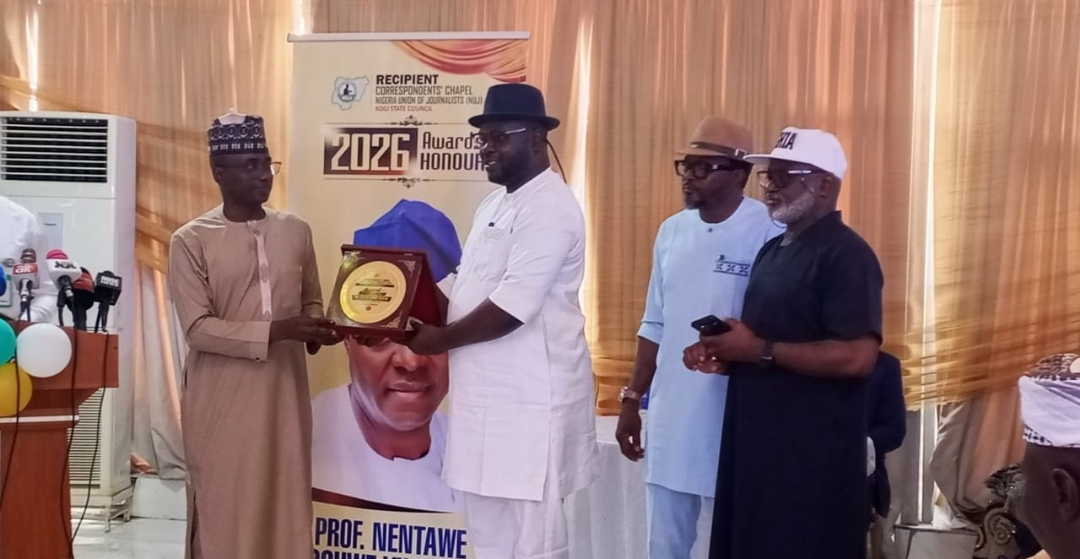
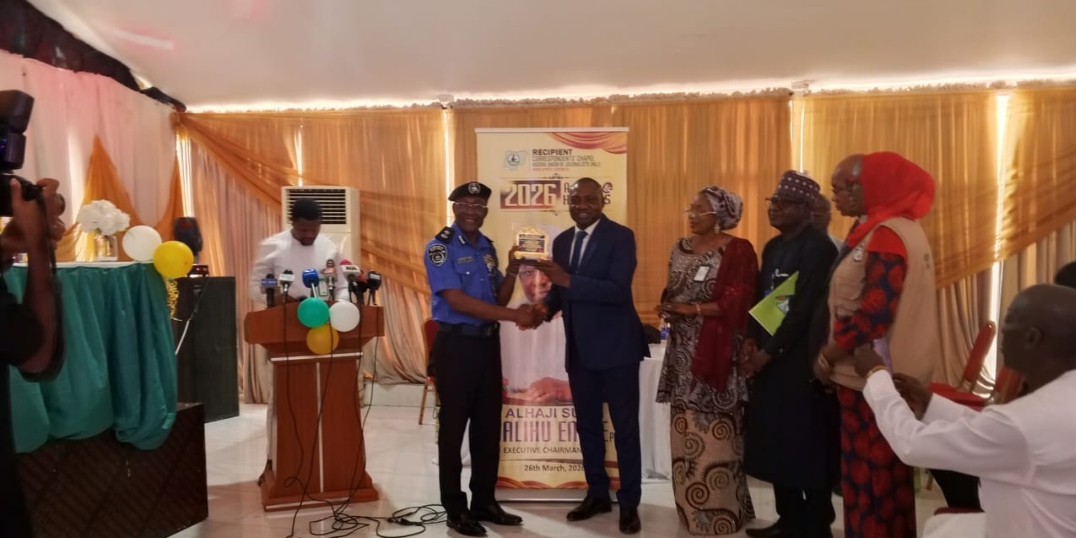
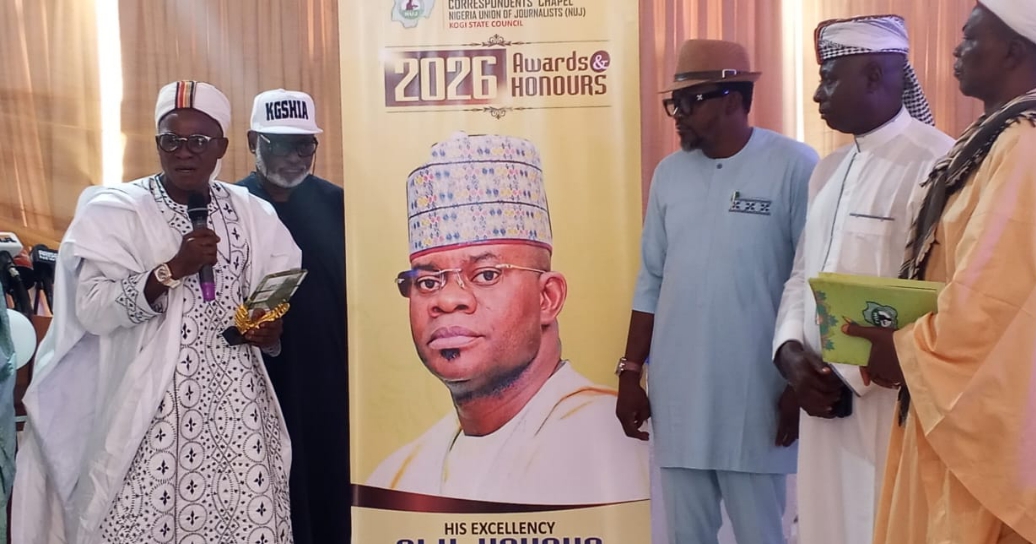
A highlight of the occasion was the presentation of awards to individuals recognised for outstanding contributions to public life, academia, governance, and innovation. Former Governor Alh Yahaya Bello received the Statesmanship Award for Public Service, Security and Youth Employment. Alh Sule Salihu Enehe, PhD, was honoured for Fiscal Innovation, while Prof Akinwumi Olayemi received the Trailblazer Award in Academic Excellence. Nentawe G. Yilwatda was recognised for National Political Leadership and Party Stewardship Excellence, Hon Leke Joseph Abejide received the Award for Icon of Grassroots Representation, and Omylele Daramola was honoured for Excellence and Impact in Innovation and Digital Solution.