From David Onuoja, Abuja
China has sought the cooperation of the international community in tackling grave challenges confronting global development, just as it has called for support to fast track the United Nations Sustainable Development Goals (SDGs) agenda.
The call was made during the fifth anniversary of China’s Global Development Initiative (GDI)
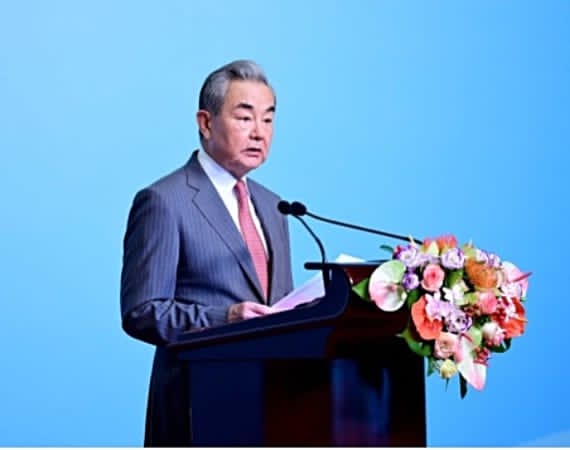
Speaking, Chinese Foreign Minister, Wang Yi outlined a four-point proposal to accelerate the United Nations Sustainable Development Goals (SDGs), with emphasis on unity, implementation, innovation, and global governance during the fifth anniversary High-Level Meeting on the Global Development Initiative (GDI) in Beijing .
The Chinese Foreign Minister, Mr Wang who spoke on behalf of President Xi Jinping, announced that the GDI has mobilized more than $23 billion China-UN Peace and Development Fund.
Related News

This, Wang said the funding has backed over 1,800 livelihood projects and delivered technical training to more than 200,000 professionals across more than 120 countries. Among the flagship efforts he highlighted were poverty reduction programs using juncao grass technology, synchronized data sharing through the Sustainable Development Science Satellite 1, or SDGSAT-1, and disaster prevention support delivered via the MAZU meteorological platform.
According to him, the initiative’s footprint has widened sharply since 2021, as more than 130 countries and international organizations have expressed support for the GDI, with nearly 100 signing formal cooperation documents with Beijing. The Group of Friends of the GDI now includes 88 member countries.
At the UN, a dedicated Task Force on Leveraging Partnerships Toward the 2030 Agenda brings together more than 20 development agencies, while China has set up over 30 specialized cooperation platforms focused on capacity building in the Global South.
Despite the expansion, Wang warned that progress toward the UN Sustainable Development Goals has faced severe delays, and the economic gap between developed and developing nations continues to widen. He called for closer alignment between the GDI and UN development frameworks to accelerate implementation ahead of the 2030 deadline.
To address the setbacks, Wang outlined a four-point strategy for global growth. First, promote peace and stability by upholding the UN-centered international system and pushing UN reform to better serve developing nations. Second, to accelerate SDG progress by reallocating resources to development, with China pledging to share financial and technological support through bilateral, multilateral, and trilateral partnerships.
Thirdly he said, is to close technological divides by fostering open collaboration in digital and artificial intelligence, citing the recent joint launch of the World Artificial Intelligence Cooperation Organization, or WAICO, with 28 other nations. Fourth, reform global governance by overhauling international financial institutions and urging developed countries to meet existing development financing commitments before negotiations on the post-2030 agenda begin.
On the domestic front, Wang said China recorded 4.7% GDP growth in the first half of 2026, despite pressures from global energy markets and ongoing supply chain disruptions. He linked the result to the start of China’s 15th Five-Year Plan.
He reiterated that Beijing intended to align its national economic planning under the new five-year plan with broader international development goals, positioning the GDI as a central vehicle for that coordination in the years ahead.