From Taiye Joseph, Ilorin
As Nigeria intensifies efforts to reduce cancer-related deaths among women, a new partnership between the National Institute for Cancer Research and Treatment (NICRAT) and the Kwara State Government, is bringing free cervical cancer screening closer to women, with 200 beneficiaries targeted in the state’s pilot programme.

The initiative, which integrates cervical cancer screening into existing family planning services at primary healthcare centres, is designed to address one of the major challenges confronting women’s healthcare in the country: late detection of a disease that medical experts say is largely preventable when identified early.
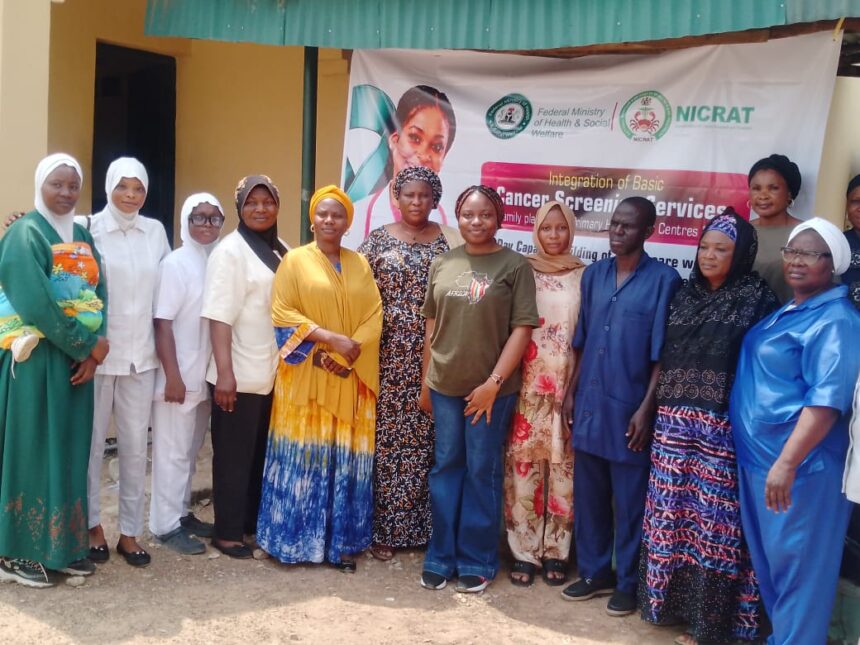
At the Primary Health Centre, Okele, Ilorin, the intervention is already offering women an opportunity to know their health status without the financial burden associated with privately accessing cancer screening services.
Related News


The programme is part of a nationwide pilot being implemented in six states representing the country’s six geopolitical zones, with Kwara serving as the North-Central state. Beyond the immediate target of screening 200 women in each participating state, NICRAT says the initiative is expected to expand to reach more than 100,000 women as implementation progresses.
For many women, the integration of cancer screening into family planning services could make a significant difference, as it allows them to access preventive healthcare during routine visits to health facilities rather than making separate appointments for cancer-related investigations.
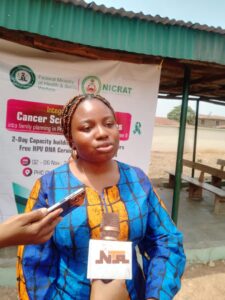
Representing NICRAT’s Director-General and Chief Executive Officer, Prof. Usman Aliyu, the institute’s Senior Scientific and Partnership Liaison Officer, Deloraine Dennis, explained that the programme was conceived to strengthen cancer prevention and early detection by taking essential services closer to women.
She said the second phase of the initiative specifically focused on incorporating cervical cancer screening into family planning programmes, thereby making preventive healthcare more accessible to women of reproductive age.
According to her, the institute is also promoting the use of its National Cancer Screening Registry, a digital platform being piloted to facilitate access to screening services and improve cancer prevention efforts across the country.
Dennis described the increasing incidence of cancer as alarming, stressing that awareness, routine screening and early intervention remained critical to reducing the number of women dying from preventable or treatable conditions.
She urged women to become more conscious of their health, familiarise themselves with the warning signs of common cancers, including breast, cervical, liver and colorectal cancers, and visit the nearest primary healthcare centre for screening.
“Every Nigerian woman should get checked, get screened and be aware of the signs and symptoms of these cancers. We encourage women to locate their nearest primary healthcare centre and access screening services,” she said.
She particularly highlighted the importance of regular cervical cancer screening among women living with HIV, noting that they face an increased risk of developing the disease and should commence screening earlier and maintain regular checks in line with medical advice.
On the screening method adopted for the exercise, Dennis identified Human Papillomavirus (HPV), DNA testing as the gold standard for cervical cancer screening, explaining that women could undergo the test through self-sampling or with the assistance of trained healthcare providers.
She, however, cautioned against the misconception that testing positive for HPV automatically meant a woman had cervical cancer.
“Being positive for HPV does not mean you have cervical cancer. There are other methods we use to confirm whether it is cervical cancer, and where it is confirmed, there are treatment options available,” she explained.
For the Consultant and Team Lead of NICRAT in Kwara, Dr Yahaya Makanta, the programme represents an important step towards reducing the barriers preventing women from accessing cancer screening services.
Makanta disclosed that the institute had assessed selected primary healthcare facilities during the first phase of the intervention to determine their readiness to accommodate cancer prevention services, while the second phase commenced with cervical cancer screening.
He said at least 200 women of childbearing age were being targeted in Kwara, with samples collected by trained healthcare workers and subsequently forwarded to laboratories for HPV DNA testing.
He explained that NICRAT had organised capacity-building sessions for counsellors, community mobilisers, health educators, records officers and family planning service providers to ensure effective implementation of the programme.
According to him, women who test negative would receive counselling to repeat screening after 10 years, while those with positive results would be linked to appropriate treatment services with the support of NICRAT.
The intervention, he added, was not limited to testing women but also included counselling, referral and access to treatment for those requiring further medical attention.
Providing the medical perspective, a gynaecologist and facilitator of the programme in Kwara, Dr Sibril Abdullahi Daniyan, described cervical cancer as a major public health challenge that continues to claim thousands of women’s lives annually despite being largely preventable.
Daniyan disclosed that Nigeria records more than 10,000 cervical cancer cases annually, resulting in over 7,000 deaths, figures he said underscored the urgent need to strengthen vaccination, public enlightenment and screening programmes.
He explained that persistent infection with the Human Papillomavirus accounts for more than 70 per cent of cervical cancer cases, noting that the disease generally takes between 10 and 15 years to develop after initial HPV infection in the general population.
The lengthy period, according to him, provides a critical opportunity for healthcare professionals to identify and treat precancerous conditions before they develop into full-blown cancer.
“Once somebody gets infected with the Human Papillomavirus, it takes about 10 to 15 years in the normal population before it transforms and becomes cancer. So, you have a very long time within which you can catch it and prevent it,” he said.
He stressed that the objective of the screening programme was to identify women at risk before the disease progresses to an advanced stage, adding that several treatment options were available for those diagnosed with precancerous conditions.
Daniyan noted that the intervention aligned with Nigeria’s cervical cancer elimination strategy, which seeks to vaccinate 90 per cent of eligible girls, screen 70 per cent of women aged 35 and above, and ensure that 90 per cent of women identified with precancerous conditions receive appropriate treatment by 2030.
He disclosed that Nigeria commenced HPV vaccination in 2023 and had vaccinated more than 18 million girls below the age of 15, describing the expansion of screening services as another important component of the national elimination drive.
“The most important thing here is to avail all women the opportunity to carry out this screening. It is very, very important because cancer is preventable. It is not right for us to sit back and allow it to kill our women,” he said.
At the state level, the Kwara Government says the partnership will strengthen its existing efforts to improve women’s reproductive healthcare and expand access to preventive services.
The State Family Planning Coordinator in the Ministry of Health, Hajia Bashirat Jattu, described the collaboration with NICRAT as a significant development, noting that it was the first time the institute’s cancer screening services were being integrated into family planning programmes in the state.
She said the government had consistently organised annual cervical cancer screening exercises, alongside other healthcare interventions targeting women of reproductive age, but the new partnership would extend the reach of such services across primary healthcare facilities.
Jattu disclosed that community mobilisation and sensitisation activities had commenced ahead of the exercise, with health educators and community mobilisers visiting households to encourage women to participate.
She emphasised that the screening was free, urging women to take advantage of the opportunity rather than allow financial constraints or fear of medical investigations to prevent them from knowing their health status.
For beneficiaries, the initiative is more than a government healthcare programme; it is an opportunity to access a potentially life-saving medical service that many women might otherwise find difficult to afford.
Their testimonies reflect the importance of making preventive healthcare affordable and accessible, particularly in communities where limited awareness, financial constraints and fear of diagnosis may discourage women from seeking medical attention.
However, health experts insist that the success of the intervention will depend not only on the number of women screened but also on sustained awareness, proper follow-up and access to treatment for those who require further medical care.
With cervical cancer continuing to claim thousands of lives in Nigeria, the NICRAT-Kwara partnership offers an opportunity to move the conversation beyond treatment to prevention, early detection and sustained healthcare access.
For the 200 women targeted in Kwara, the screening exercise could be the first step towards preventing a disease that often develops silently over several years. For the country, the broader ambition is to ensure that no woman loses her life to cervical cancer simply because she could not access timely screening, diagnosis and treatment.