From Taiye Joseph, Ilorin
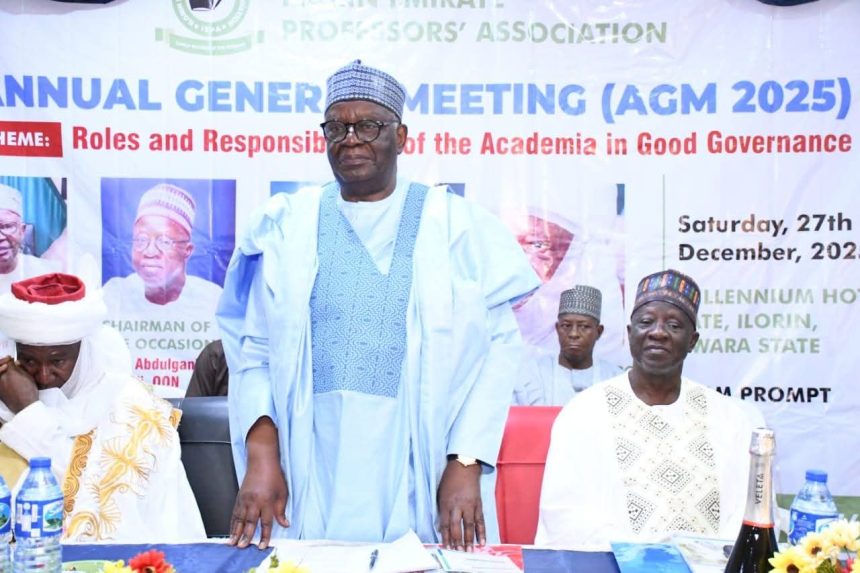
Former Chief of Staff to President Muhammadu Buhari, Professor Ibrahim Gambari, has called on Nigerian academics, to go beyond teaching and research by taking a more active role in governance and policy formulation, warning that disengagement could deepen the country’s democratic and institutional challenges.
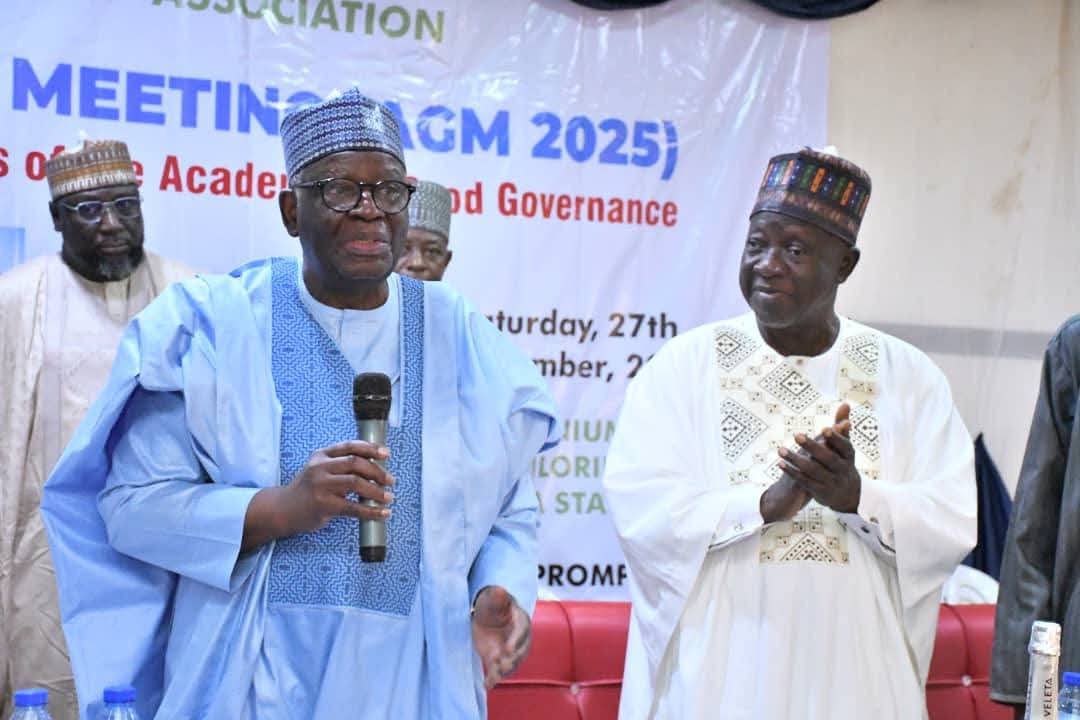
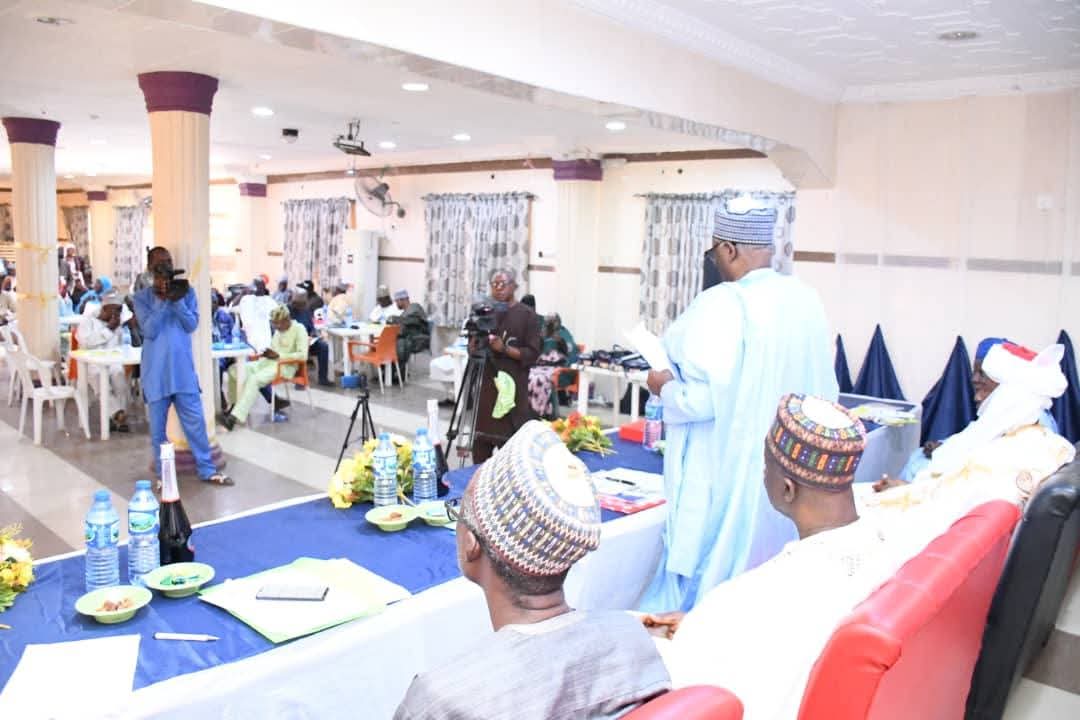
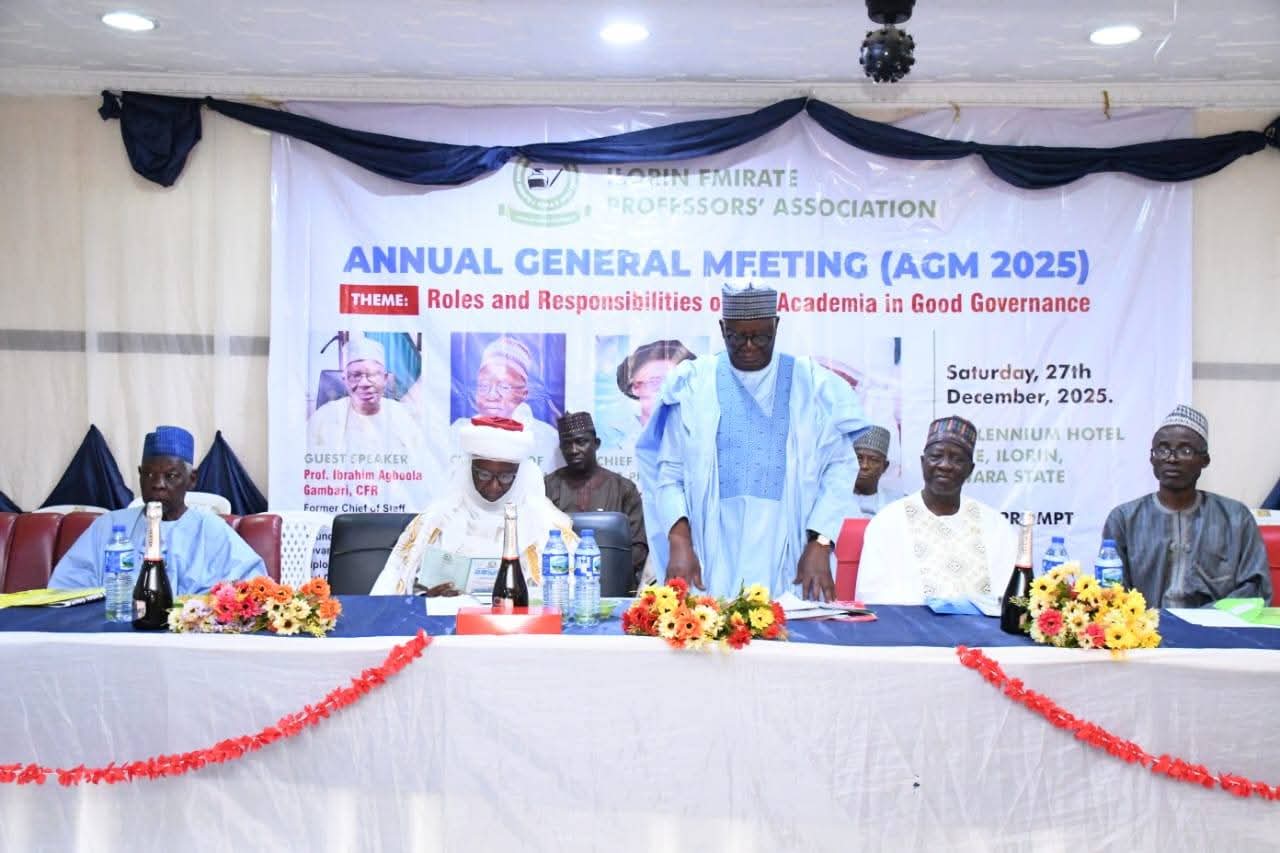
Speaking at the Annual Meeting of the Association of Ilorin Emirate Professors in Kwara State, Gambari, emphasised that universities and research institutions are critical partners in national development.
Drawing on decades of experience as a diplomat, former Minister of Foreign Affairs, Nigeria’s Permanent Representative to the United Nations, and Chief of Staff to late President Muhammadu Buhari, he said: “I have seen up-close where government works and where it fails. In both instances, academia had a role to play in the final outcome. Scholars must see themselves as custodians of truth, fairness and societal conscience.”
Related News


Gambari stressed that academics have a duty to caution political leaders that power is fragile when it is not shared, citing Kwara’s political history as a lesson.
He recalled how the ruling establishment in the old Ilorin Province lost control to the Ilorin Talaka Parapọ̀ in 1957, the defeat of Governor Adamu Atta in 1983, and the 2019 “O to gẹ” movement that delivered a sweeping victory for the opposition APC at all levels of government.
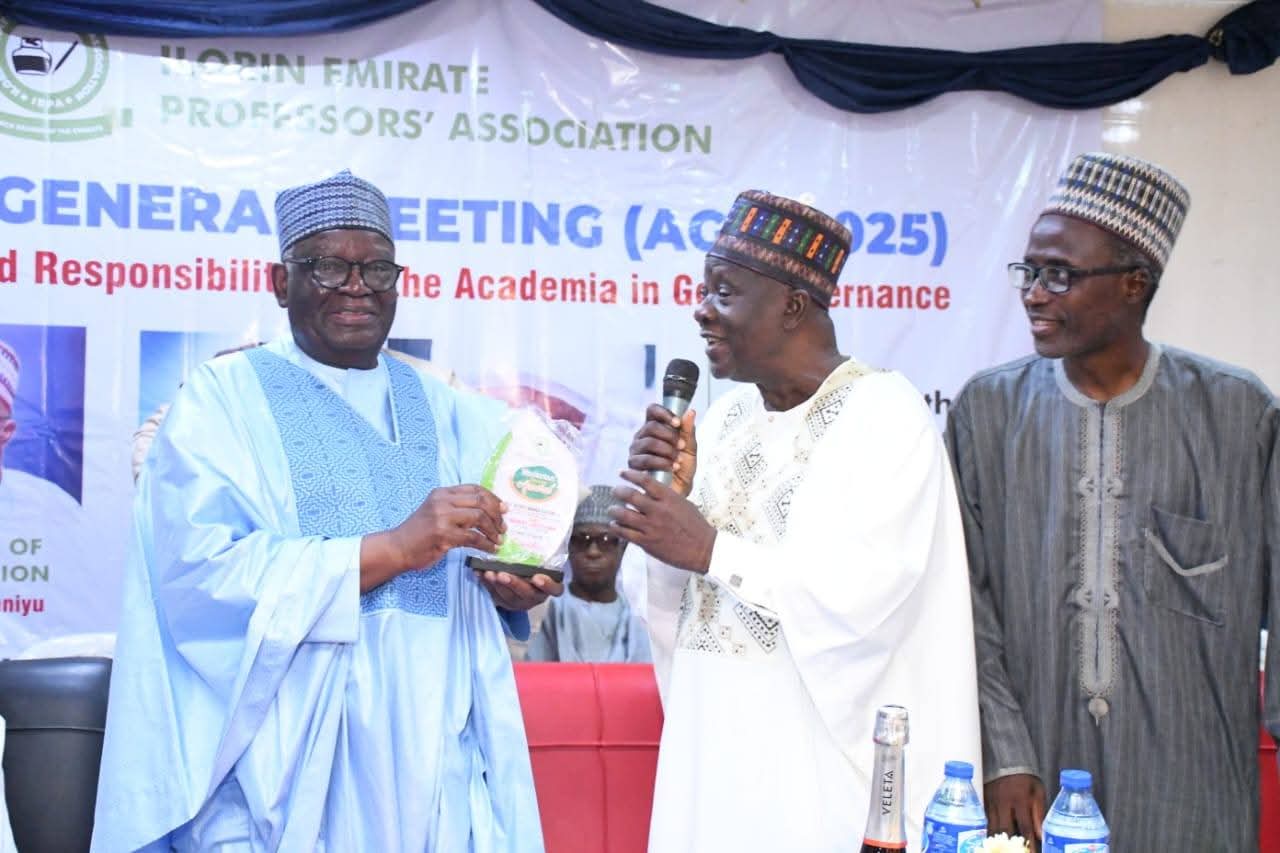
Highlighting Nigeria’s youthful population, growing social pressures, and governance deficits, Gambari urged universities and research institutions to lead in evidence-based policymaking, civic engagement, and capacity building.
He identified areas for academic intervention, including legislative research, public sector training, anti-corruption frameworks, digital governance, crisis management, and climate resilience.
He warned that traditional methods of engagement are no longer sufficient in a society shaped by technology, youth activism, and rapid political change. “Academics must maintain independence while speaking truth to power,” he said.
Gambari also outlined the core principles of good governance—ethics, transparency, accountability, rule of law, participation, equity, efficiency, and sustainability—arguing that governance is legitimate only when these values are visible and measurable to citizens.

Situating Nigeria’s challenges within a global context, he pointed out that governments worldwide face geopolitical instability, technological disruption, climate change, and resurging nationalism. “Successful democracies rely heavily on academic institutions for policy clarity, data-driven decisions, and ethical guidance,” Gambari noted, urging Nigerian scholars to play similar roles to prevent societal distrust and institutional breakdown.
He further called for interdisciplinary collaboration, noting that modern governance challenges are too complex for single-discipline solutions. Gambari urged academics to leave their “ivory towers” to engage the public through constructive dialogue while protecting intellectual integrity.

“When this ecosystem between academia and governance is in balance, we see policy effectiveness, democratic accountability, and social development. When it is not, the result is chaos, distrust, and societal breakdown,” he warned.
The lecture concluded with a call for sustained scholarly engagement at national and international levels to strengthen governance systems and rebuild public trust in leadership.