…urges government to take decisive action to prevent, serve as deterrent
From David Onuoja, Abuja
The Transmission Company of Nigeria (TCN), has decried what it described as frequent situation where vandalism suspects are quickly freed without measurable punishment.
It also called on government, urging them to take a decisive action and take the bull by the horn to serve as deterrent saying, if not, the issue of vandalism in Nigeria will not end soon.
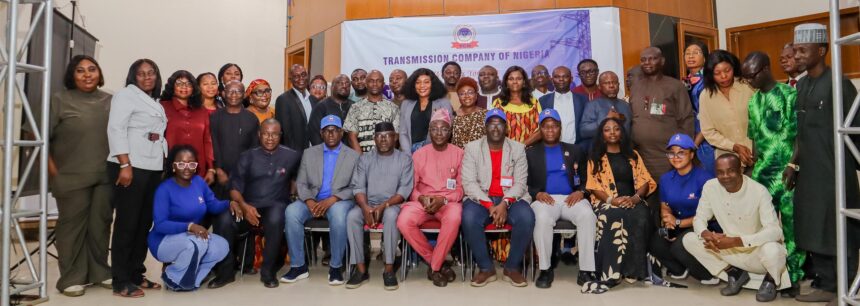
In a training workshop organized for Abuja Power Correspondents Association (PCAN), this week, the TCN Executive Director, Transmission Service Provider, Engr. Oluwagbenga Ajiboye, described the scenario as pathetic. Lamenting why someone who hhas vandalized national endowment (electricity equipments), be free within a shortest time of arrest.
Related News
According to him, TCN have over 8,700 Megawatts of electricity available simultaneously but are unable to wheel due to the lower demand. “When we’re talking about the transmission relay capacity, we stand at 8,700. It has not been physically tested but it has been simulated. So presently, that is where we are.
“Where we have all the facilities, if the Disco are ready to pick load here, we can conveniently wheel 8,700. But we have a caveat. Distribution Companies have this problem with us. They claim that where they want power is not where TCN have the capacity.
“I keep on asking one question. Who in Nigeria doesn’t deserve to have power? Why is it that you don’t want to take power to some places? These are the probe and the question we should be asking ourselves especially Discos. Who doesn’t deserve power? Who doesn’t deserve it in Nigeria?
“And to be able to confirm that we are able to hold this power. In 2025, when things were okay, we were able to wheel 5,801.84 megawatts across the grid. That is the peak we have ever gone.
“Not because this industry doesn’t have the capacity, but because distribution companies are claiming that this is business now. If they are not getting their revenue, they are not ready to take the power. So that is limiting us”, he said.
Buttressing this, the TCN says it now has a transformation capacity of over 8,500MVA, with about 89 power transformers added to the grid in the last period. According to officials, the expansion was supported by about 1.4 billion Dollars secured in the past 12 months from multilateral and development partners, including the World Bank, AFDB, JICA and AFD. The funding is being used for new substations, rehabilitation and equipment upgrades aimed at strengthening bulk supply to distribution companies.
Officials argue that expansion must come before development, not after, and that only government and donor-backed investment can fill the gap where private capital will not go. They described power as fundamentally a business but said TCN, as a government agency, still balances commercial and social priorities. The challenge, they noted, is political, as concentrating investment in high-demand corridors like Lagos would be faster to recover but unfair to other regions such as Damaturu, Abakaliki, Gombe and Zamfara.
To improve reliability, TCN said it is focusing on redundancy, preventive maintenance and modernization through SCADA integration that gives NISO visibility over substation operations. Reforms that separated NISO, as a quasi-regulator from TCN, as a market participant were also cited as steps toward transparency.
Recent projects include a 300MVA transformer commissioned in Abuja that raised Katampe substation from 450MVA to 750MVA, similar 300MVA additions in Benin and Lagos, a 75MVA unit in Ebonyi and further capacity in Damaturu for redundancy.
The company also said, it is deepening partnerships to sustain investment and is positioning to increase power exports to the West African Power Pool beyond the current 240MW. It also responded to the recent claims by some Discos that TCN was constraining supply, insisting all lines to Abuja and Jos are in service and that limits are tied to generation and market allocation, not transmission.
They added that human capital development remains central, with continuous training on high-voltage equipment, noting that electricity, like fire, is a good servant but a dangerous master.