From Joseph Adahnu, Yola
Adamawa State is strengthening routine immunisation through the ROK/UNICEF Zero-Dose Project, a partnership between the Republic of Korea, the Nigerian Government, and UNICEF.
The project targets underserved, hard-to-reach, and insecurity-affected communities.
The main goal is to reach zero-dose children for over 11 months who have never received any vaccine — and under-vaccinated children who have not completed their immunisation schedule.
Speaking at a media briefing in Yola on Monday, UNICEF Health Officer at the Bauchi Field Office, Mr. Patrick Akor, said the intervention was designed after assessments showed how COVID-19 disrupted healthcare delivery systems.
Related News
“The Republic of Korea initiated support to help restore essential health services disrupted by the pandemic,” Akor said. “The project is designed to reinforce healthcare systems by strengthening routine immunisation in selected states.”
He explained that in Adamawa, the initiative specifically focuses on zero-dose children above 11 months and under-vaccinated children, particularly in communities affected by insecurity. The project also aims to ensure vaccine availability, train healthcare workers, improve data collection, and respond to outbreaks of diseases like cholera and measles.
Adamawa State Immunisation Officer, Mr. Umar Bahuli, said the programme has already delivered measurable results in areas that previously had low routine immunisation coverage.
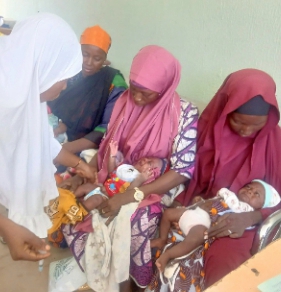
“As of the most recent monthly review, the project has reached 1,212 previously unvaccinated children between 12 and 59 months,” Bahuli said. He added that the intervention uses an integrated approach, combining immunisation with other essential services. Children and families also receive malnutrition screening, while eligible girls aged 9 to 14 are offered the Human Papillomavirus (HPV) vaccine.
Bahuli described the nine-month initiative as a critical tool for improving vaccine access and mobilizing eligible children across participating communities.
Local Immunisation Officer, Mr. Mohammed Goni, commended UNICEF, the Republic of Korea, and other development partners for their sustained support. He noted that one major achievement has been maintaining adequate vaccine supplies throughout the intervention.
“No vaccine stock-outs have been recorded at ward or health facility levels,” Goni said. “This has helped healthcare workers maintain consistent service delivery.”
The initiative is currently active in nine Local Government Areas, 96 wards, and 200 health facilities across Adamawa State. The participating LGAs are Yola South, Hong, Gombi, Maiha, Lamurde, Mubi North, and Mubi South.
Key achievements so far, shows that it has
reached 1,212 previously unvaccinated children aged 12 to 59 months,
maintained consistent vaccine supply with no stock-outs at ward or facility levels and
integrated immunisation with malnutrition screening and HPV vaccination for girls aged 9 to 14
Strategies used include; strong community engagement involving traditional rulers, religious leaders, and local influencers to drive awareness and participation.