By Abubakar Abraham
In a significant push towards strengthening primary healthcare delivery at the grassroots, Kogi State Ministry of Health, in collaboration with Kogi State Primary Health Care Development Agency (KSPHCDA) and the World Bank IMPACT Project, have held a two-day Strategic Local Government Authority (LGA) Dialogue.
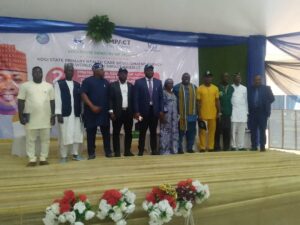
The initiative held at Reverton Hotel, Lokoja, is designed to accelerate its grassroots healthcare drive through stakeholders engagement.
The dialogue focused on health coverage expansion, LGA ownership, accountability, and sustainable results in primary healthcare delivery, as the World Bank IMPACT Project prepares to wind down its operations in December 2026.
Related News
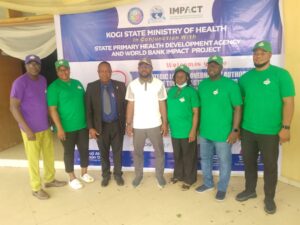
Speaking while flagging off the programme, Governor Ahmed Usman Ododo, described Primary Health Care (PHC) as the bedrock of the state’s healthcare system and economic development, stressing that policies formulated in Lokoja must translate into tangible actions at the community level.
Represented by the Secretary to the Government of Kogi State (SGS), Dr. Mrs. Folashade Arike Ayoade, his message was centered around “The Role of Strategic Leadership in UHC: From Policy to Local Action.”
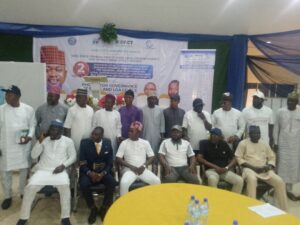
He used the occasion to conveyed his administration’s unwavering commitment to the health and well-being of all citizens.
“Strategic leadership at the local level requires a mindset shift rooted in three uncompromisable pillars: Absolute Ownership, Strict Accountability, and an Uncompromising Focus on Results,” he stated. Ododo urged LGA leaders to own PHC facilities, account for every resource, and deliver measurable outcomes such as reduced maternal and infant mortality.
The Governor expressed gratitude to the Ministry of Health, KSPHCDA, and the World Bank IMPACT Project for their collaborative efforts.
On his part, Commissioner for Health, Dr. Abdulazeez Adeiza, called on citizens and leaders to take primary healthcare development seriously. He stressed daily monitoring of PHC activities, regular interaction between LGA leadership and facilities, and the need for communities to feel the impact of government interventions.
“PHCs are under the control of the Local Governments, backed by laws and acts,” Dr. Adeiza noted. He added that all 21 LGAs must provide conducive working environments to improve the state’s health indices, declaring that “health is everything.”
Earlier,the Programme Manager of the IMPACT Project in Kogi State, Mr. Olurunmaiye Theophilus, opened the proceedings by outlining the objectives and expected outcomes. He emphasized the need to sensitize the 21 Local Government Chairmen to fully embrace their responsibilities in healthcare development, ensure health workers’ accountability, and prepare for the post-project era.
Contributing , the Executive Director of KSPHCDA, Dr. Musa Muazu, disclosed that over ₦500 million had been disbursed to LGAs as performance incentives to support operational costs, including the engagement of skilled birth attendants and medical record officers. He highlighted improved LGA-led supervision and service utilization through a performance framework.
Dr. Muazu praised Governor Ododo’s leadership, stating that Kogi State is leading in primary healthcare development in Nigeria despite challenges faced by other states, such as limited LGA involvement and human resource gaps. He affirmed that LGA leadership was now taking full responsibility for effective results across the 21 local governments.
President of the Association of Public Health Physicians of Nigeria, Dr. Terfa Kene, delivered the first keynote address on “The Role of Strategic Leadership in UHC: From Policy to Local Action.” He referenced the World Health Organization’s definition of health and outlined the core components of primary healthcare, including quality care, financial risk protection, and affordable medicines.
On the second day, Professor Simon Akogu , Provost of the College of Health Sciences, PAAUTH Anyigba, presented on “PHC System Governance at the State and LGA Levels.” Drawing from his experience as a clinician and administrator, he discussed the three dimensions of Universal Health Coverage and critical elements of strategic leadership such as vision, coordination, accountability, resource mobilization, and institutional strengthening.
He highlighted recent progress, including the revitalization of 80 PHC facilities with solar power, water supply, staff accommodations, and medical equipment.
Dr. Emmanuel Bola, State SWAP Officer, presented on Basic Emergency Obstetrics and Newborn Care (BEMONC), addressing infrastructure deficits, skill gaps, and logistical challenges in maternal and newborn healthcare.
The event featured breakout sessions, group presentations, a robust questions-and-answers segment, and an emphasis on the importance of accurate data. The Commissioner for Health cited an incident where erroneous data reporting of maternal deaths triggered a national investigation, underscoring the need for data integrity.
The dialogue culminated in the presentation of a communique by the drafting committee. All 21 Local Government Chairmen signed a commitment board, pledging sustainable primary healthcare service delivery and ownership of the facilities in their domains.
The two-day engagement is expected to mark a turning point in grassroots healthcare governance in Kogi State, ensuring that gains from the IMPACT Project are consolidated and sustained beyond 2026.