By Joy Salami
The Kogi State Government, has approved new fees for political parties and candidates seeking to advertise and campaign in the state ahead of the 2027 general elections.
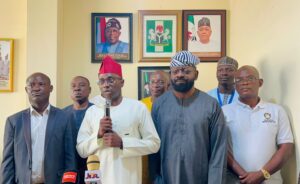
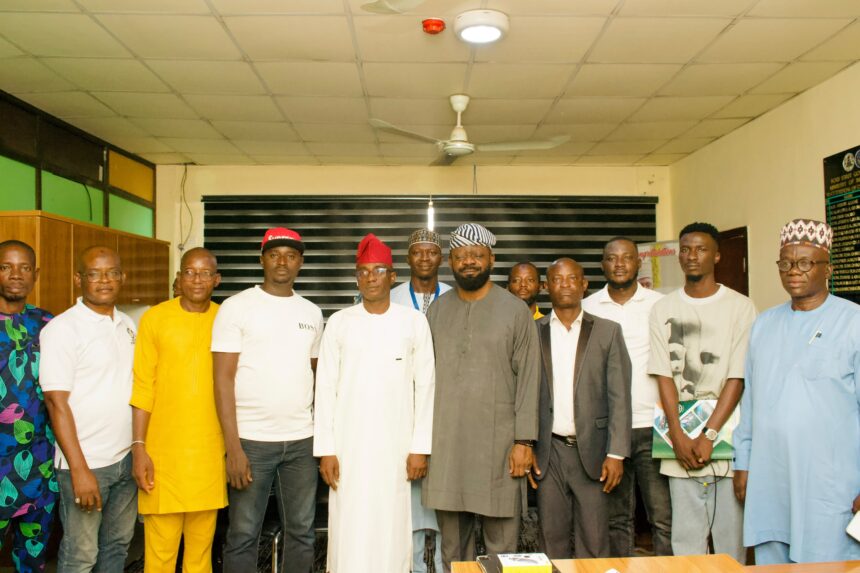
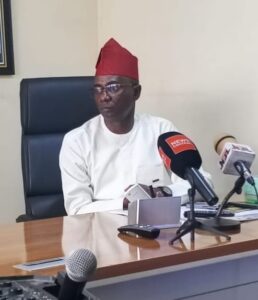
The Commissioner for Information and Communications, Hon Kingsley Fanwo, disclosed this during a stakeholders’ meeting involving the Kogi State Signage and Advertisement Agency (KOSSAA), Advertising Regulatory Council of Nigeria (ARCON), political parties, billboard owners and other advertising practitioners.
Fanwo said the fees were arrived at after consultations and a peer review of what obtains in other states, stressing that the policy was aimed at regulating political advertising, generating revenue for the state and maintaining a clean environment during the electioneering period.
Related News
According to him, the approved fee for presidential candidates is N150 million, while senatorial candidates will pay N50 million.
He added that candidates contesting the House of Representatives seats would pay N30 million, while House of Assembly candidates would pay N5 million.
For the forthcoming local government elections, the commissioner said chairmanship candidates would pay N2 million, while councillorship candidates would pay N300,000.
He explained that the governorship election was not included because the campaign period for the governorship election had not commenced.
“Where there is no law, there is no sin. Kogi State has a law regulating signage and advertisement in the state, and in accordance with that law, we have come forward with recommendations that have been approved by the stakeholders,” Fanwo said.
He stressed that the fees would apply to campaign materials including billboards, posters, T-shirts, face caps, branded vehicles and other promotional materials used by political parties and candidates.
Fanwo warned that any candidate or political party that violates the regulations would face prosecution, noting that enforcement would not be limited to political candidates alone.
According to him, printers, welders, billboard owners and other persons who facilitate the erection or display of unauthorised campaign materials would also be held liable.
It is a criminal offence for any candidate who has not paid this fee to campaign in Kogi State, either to place billboards or posters. It is not only the candidates that will be penalised. The welder that has done something for the candidate to perpetrate illegality will also be liable. The printer that has helped a candidate print a poster to be placed before payment of our dues is also liable, he said.
The commissioner further warned property and billboard owners against displaying campaign materials for candidates who had not complied with the regulations.
He said even campaign materials displayed on private buildings or walls would be subject to the regulations.
Even if you place a flex design publicising a candidate that has not paid on your own wall, the wall of your house, you are still liable and you will be prosecuted, Fanwo warned.
He also explained that political rallies would be regulated under the new arrangement, stressing that candidates could organise rallies but would not be allowed to distribute or display campaign-branded materials without first complying with the payment requirements.
Fanwo assured opposition political parties that the policy was not targeted at any political party, saying the State Government was committed to providing a level playing field for all political actors.
“Governor Ahmed Usman Ododo is a governor that has given everybody peace and unity in the state. We are not intimidating any opposition party. We want opposition parties to come and advertise and pay this money so that revenue will come into our revenue service,” he said.
He added that the revenue generated would support government services and the cleaning and sanitation of public spaces following political rallies and other campaign activities.
The commissioner urged billboard owners and their associations to strictly adhere to the new regulations, warning that unauthorised billboards and other campaign materials would be removed.
Earlier, the General Manager of KOSSAA, Hon Richard Osaseyi, explained that the stakeholders’ meeting was convened to ensure that political parties, candidates and advertising practitioners understood the rules before the commencement of the electioneering season.
Osaseyi said the agency had learnt lessons from previous elections, particularly instances where campaign materials were erected without the necessary vetting and approvals.
He disclosed that enforcement would begin in full from the following week, and urged political parties, candidates and campaign promoters to register with KOSSAA before displaying any campaign materials.
Osaseyi said campaign materials would be subject to appropriate assessment and approval, adding that the agency would issue certificates of no objection for approved billboards.
He explained that KOSSAA would also assess proposed billboard locations to ensure that they did not obstruct traffic, businesses or other public activities.
According to him, the agency would conduct environmental impact assessments and soil tests where necessary before billboards are erected, to ensure public safety and compliance with standards.
The KOSSAA boss also announced plans to phase out the use of certain billboard structures, particularly holding billboards, and encouraged practitioners to adopt standard one-legged billboard structures.
He said the agency had taken into consideration the cost of billboards, campaign materials, environmental assessments and post-campaign cleaning while arriving at the approved fees.
Osaseyi further called for closer collaboration between KOSSAA and the Advertising Regulatory Council of Nigeria (ARCON), particularly in the vetting of political messages, images and other campaign materials.
He urged political parties and advertising practitioners to ensure that campaign materials complied with existing laws and regulations to avoid situations that could lead to sanctions.
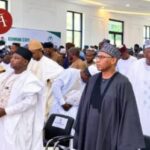
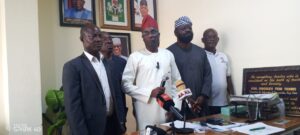
The meeting was attended by representatives of political parties, ARCON, billboard owners, advertising practitioners and other stakeholders in the state’s political advertising ecosystem.