By Joy Salami
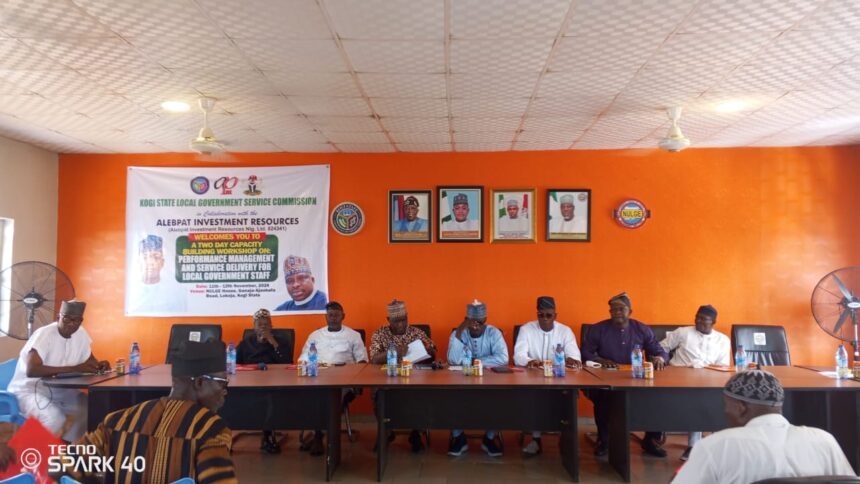
The Kogi State Local Government Service Commission has begun a two-day capacity-building workshop on Performance Management and Service Delivery for Directors of Personnel Management (DPMs) from the 21 local government areas of the state.
Organised by the Commission in collaboration with Alebpat Investment Resources Nigeria Limited, the workshop is aimed at strengthening the administrative capacity of local government personnel, improving productivity and enhancing service delivery at the grassroots.
Declaring it open on behalf of the Commission’s Chairman, Alhaji Adam Adabenege, the Commissioner for Training, Hon. Babadoko Suleiman, described the training as timely, given the critical role of local governments in grassroots development.
Related News

He said performance management goes beyond monitoring attendance, writing reports or conducting annual appraisals. According to him, it involves setting clear expectations, monitoring performance, identifying challenges, building capacity and ensuring that every staff member contributes meaningfully to the state government’s development goals.
The chairman noted that DPMs occupy strategic positions in keeping the workforce competent, disciplined, motivated and productive.
“You are not just custodians of personnel records; you are key drivers of human resource development and institutional efficiency,” he said.
He reaffirmed the Commission’s commitment to a professional, disciplined and result-oriented local government service, one in which the right people with the right skills perform the right jobs and deliver the expected results. He urged participants to apply the knowledge acquired to improve administrative efficiency in their councils.
Earlier, the Commission’s Permanent Secretary, Elder Sunday Odeh, described DPMs as critical officers in the local government structure, whose strategic responsibilities make continuous training necessary.
He explained that DPMs are custodians of personnel administration, administrative processes and institutional structures, adding that any lapse on their part could affect the overall performance of local government administration.
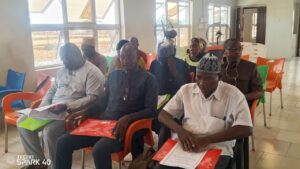
Odeh urged participants to listen attentively to the facilitators, ask questions and ensure that the training translates into improved practices. He stressed that the Commission had done its part by organising the programme, and that participants must now demonstrate measurable improvement on returning to their duty posts.
The Commissioner in charge of Establishment, Administration and Public Services, Hon. Peter Elisha Folorunsho, said the training was part of the Commission’s regular staff development programme.
He disclosed that the Commission holds training programmes monthly for different categories of local government workers, with two groups benefiting each month. While the current programme is for DPMs, he added, the next will focus on Clerks of Local Government Legislative Houses.
Folorunsho thanked the state government for providing the financial support needed to run the programmes.
“To whom much is given, much is expected. When we train principal officers, we expect them to go back to their various local governments, gather their subordinates and train them so that there will be improved performance at the grassroots,” he said.
The first facilitator, Dr. Alfa Ebune, in his paper titled “Leadership, Staff Motivation, Capacity Building and Human Resources Development for Improved Performance,” stressed the importance of effective leadership and continuous staff development in local government administration.
He explained that leadership shapes employees’ attitudes to work, motivates staff and creates an enabling environment for productivity. Ebune added that motivation should not be limited to financial incentives, but should also include recognition, professional development, effective communication and a conducive working environment.
He urged the DPMs to lead by example, promote teamwork and ensure that their staff are adequately motivated to achieve the objectives of their local governments.
The second facilitator, Dr. Uguru Ibor, presented a paper titled “Performance Management and Effective Service Delivery in Local Government Administration of Kogi State.”
He called for a result-oriented administrative system in which performance is properly monitored, assessed and improved. According to him, performance management should be continuous, involving clear targets, performance indicators, regular assessment and constructive feedback.
Ibor said DPMs bear significant responsibility for ensuring that workers understand their duties, meet targets and remain accountable, noting that this would strengthen efficiency, promote accountability and ensure services meet the needs of people at the grassroots.
Participants, including the DPM of Omala Local Government Area, Haruna Hope; his counterpart in Kogi Local Government Area, Alhaji Shuaibu Tatu; and Awe Temitope of Yagba West Local Government Area, also made remarks. They spoke on the relevance of the training to their duties and on lessons learnt in leadership, staff motivation, human resource development and performance assessment.