By Joy Salami
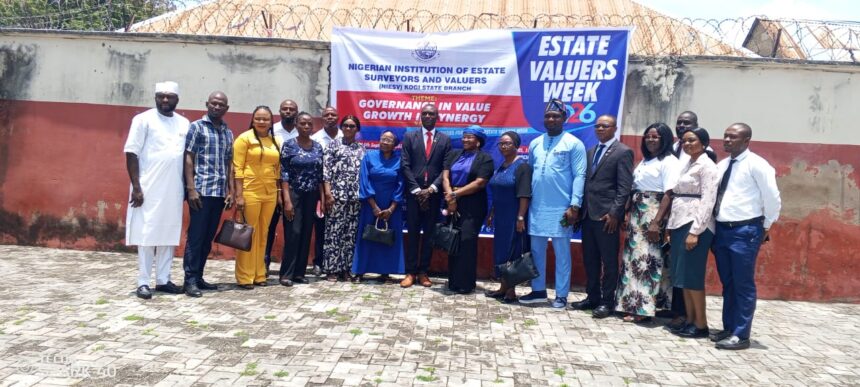
The Nigerian Institution of Estate Surveyors and Valuers (NIESV), Kogi State Chapter, has called for the inclusion of registered estate surveyors and valuers in the planning, registration and management of government land and other assets to promote sustainable development in the state.
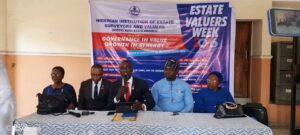
The Chairman of the Kogi State Chapter of NIESV, ESV John Eniwaiye, made the call at a press briefing in Lokoja to announce activities for the institution’s week-long Estate Valuers Week programme.
Eniwaiye said the programme, themed “Governance in Value, Growth in Synergy,” was designed to reposition the role of estate surveyors and valuers in the development of Kogi State.
Related News

He said Kogi was at a turning point, endowed with land suitable for agricultural and industrial purposes, while its urban centres required renewal and proper planning.
According to him, the state also had infrastructural projects that required proper planning, funding and asset management, stressing that policies alone could not drive development without professional practice.
Good governance must create value, and value properly measured and managed is what drives growth, he said.
Eniwaiye explained that estate surveyors and valuers, as professionals in land, property and asset management, provided the data, valuation, feasibility studies and management expertise required to translate government plans into viable projects and sustainable returns.
He identified four major pillars for the week-long programme: awareness, advocacy and public education; professional development and continuous professional education; members’ growth and performance; and government and stakeholder engagement.
He said the awareness and advocacy component would include strategic meetings, media engagements and school outreach aimed at educating the public on land value, fair compensation, property rights and responsible development.
On professional development, Eniwaiye said training sessions, technical workshops and certification updates would be organised to equip members with current standards in valuation, feasibility studies, property management and digital tools.
He added that physical wellness activities, mentorship and networking forums would form part of efforts to improve members’ growth and performance, noting that a fit and engaged professional body would be better positioned to serve the public and contribute meaningfully to the state’s development.
Eniwaiye also called for stronger engagement between estate surveyors and valuers and government ministries, departments and agencies, local governments, traditional institutions, developers, financiers and civil society organisations.
He said the government, being both the policymaker and the largest asset owner, needed to engage registered estate surveyors and valuers from the early stages of planning, adding that professionals are involved early, and projects avoid costly disputes and overruns. This proactive approach strengthens governance, ensures transparency and builds public trust.
The NIESV chairman said estate surveyors and valuers could provide evidence-based advice on the highest and best use of land, accurate valuation for taxation and acquisition, feasibility studies and professional management of public assets, adding that their involvement would ensure that decisions on land and property were grounded in professional standards and economic realities.
Eniwaiye further called for the involvement of professionals in government asset registration, stressing that the exercise should go beyond landed property.
He said government assets cut across several categories of properties and holdings belonging to government institutions and state-owned bodies, adding that estate surveyors and valuers were available to partner with the state government in identifying, documenting, valuing and managing such assets.
“Professionals should be carried along from the inception to avoid conflicts and the inability to actualise projects”, he said.
He urged the state government and other stakeholders to partner with the institution in achieving the objectives of the Estate Valuers Week, stressing that the institution remained open to collaboration.
Eniwaiye further urged developers and investors to work with approved plans and engage professionals in valuation and other areas of property development, saying such collaboration would reduce risks, improve returns and promote orderly urban development.
He also stressed the importance of traditional institutions and communities in land documentation, dispute resolution and ensuring that development projects respected cultural values.
The chairman urged members of the public to understand their rights and obligations, as well as the economic value of land and property, saying public awareness would help reduce conflicts and encourage compliance.
As part of measures to sustain the initiative beyond the Estate Valuers Week, Eniwaiye proposed the establishment of a Kogi State Development Advisory Forum on Land and Assets.
He also called for the inclusion of registered estate surveyors and valuers on the governing boards or councils of land-related ministries, departments and agencies in the state.
According to him, the proposed forum would meet quarterly and bring together government, estate surveyors and valuers, developers, communities and other stakeholders to review policies, align projects with professional standards and track implementation to ensure accountability, adding that the collaboration would help bridge the gap between government policy and professional practice.
He noted that proper land and asset management could contribute to improved housing, functional infrastructure, job creation and increased internally generated revenue, stressing that the objectives of the Estate Valuers Week were centred on promoting good governance through proper valuation and management of assets and fostering synergy among professionals, government and other stakeholders.
He therefore appealed to the Kogi State Government to carry professionals along in relevant areas of land and asset management, assuring that the institution was ready to contribute its expertise to the development of the state.
“Our doors are open. We are ready to partner with the state government to ensure that we achieve the growth of the state”, Eniwaiye said, while calling on stakeholders to support the institution’s efforts, stressing that sustainable development could only be achieved through collaboration between government, professionals, investors, communities and the public.