By Joy Salami
The Kogi NGO Network (KONGONET), has called for stronger and sustained collaboration between government, civil society organisations, electoral institutions, the media, academia and citizens to deepen democracy and promote accountable governance in Kogi State and Nigeria.
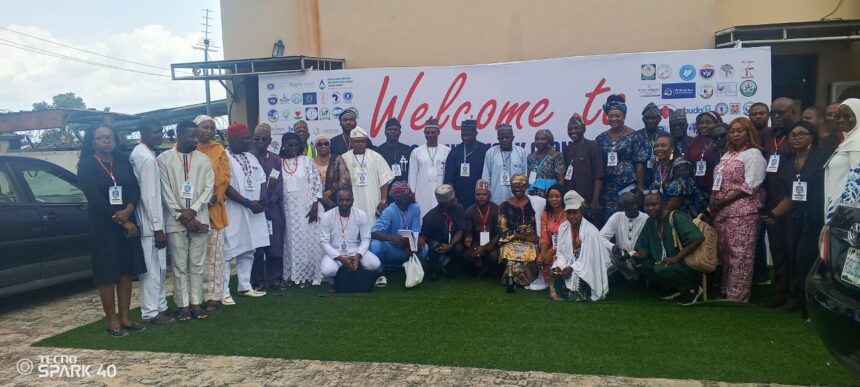
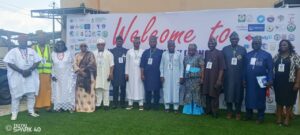
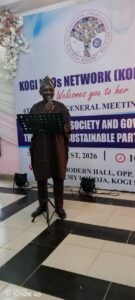
The call was made at the 2026 KONGONET Annual General Meeting (AGM), held at New Age Modern Hall, Lokoja, with the theme, “Election, Civil Society and Governance: The Need for Sustainable Partnership.”
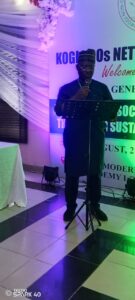
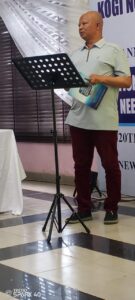
In his welcome address, Chairman of KONGONET, Hamza Aliyu, said the annual general meeting was one of the network’s statutory activities designed to review its achievements and challenges during the year and develop solutions for the future.
Aliyu said the theme was particularly relevant because Nigeria was approaching another election cycle, stressing the need for stakeholders to examine issues affecting elections, governance and citizens’ participation both in Kogi State and at the national level.
He acknowledged what he described as improved engagement between the civil society space and the Kogi State Government, noting that the government had shown greater willingness to partner with and engage civil society organisations.
According to him, the progress was a “work in progress” that needed to be accelerated for citizens to derive greater benefits from government policies and programmes.
“Kogi State has a 32-year development plan, and that is one of the things we give this government credit for. Having a long-term plan is a good thing, but the only way we can achieve that plan and other long-term development plans is through continuous collaboration and engagement”, Aliyu said.
He emphasised that the government could not achieve sustainable development alone, urging civil society organisations to see themselves as partners in development rather than adversaries of government.
Aliyu said civil society organisations were neither political parties nor alternatives to government, but partners whose responsibility included identifying challenges affecting citizens and drawing government’s attention to them.
He urged the government to view constructive criticism from civil society as part of the democratic process rather than opposition, stressing that such engagement could produce a “win-win” situation for both government and citizens.
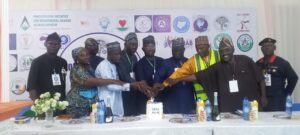
Also speaking, the immediate past Chairman of KONGONET, Amb. Idris Ozovehe, expressed satisfaction with the continued growth and activities of the network, describing the AGM as an opportunity to review progress and make decisions that would advance societal development.
Ozovehe said KONGONET coordinates the civic space in Kogi State and provides a platform for organisations working across various thematic areas to engage government and amplify the voices of citizens.
He explained that the network had been rejuvenated about six years ago after experiencing a period of reduced activity, adding that its continued growth demonstrated the importance of sustained civic engagement.
He reiterated that civil society organisations should not be perceived as adversaries of government.
Civil society is not an adversary to the government; “we are partners in progress. We bring the voice of those who are back there in the community. We are closest to the people. We project their voice and make their voice heard”, Ozovehe said.
The keynote paper, titled “Election, Civil Society and Governance: The Need for Sustainable Partnership,” was presented by the Head of the Department of Political Science, Faculty of Social Sciences, Federal University Lokoja, Prof. Abraham Peter.
Prof. Peter said credible elections, active civil society and good governance were mutually reinforcing pillars of democratic development. He warned that regular elections alone could not be equated with democratic consolidation, noting Nigeria’s experience since 1999 had exposed the gap between procedural democracy, centred on voting and competition for office and substantive democracy, which includes social justice, human development, accountability and responsive governance.
Elections are necessary, but they are not sufficient, he said, cautioning that a country could hold regular polls and still suffer corruption, exclusion and weak institutions.
He stressed that civil society’s role should not be limited to election season, but should extend to monitoring governance, public spending and legislative performance throughout. He also cautioned that technology alone could not guarantee credible elections, arguing that stronger, more independent electoral institutions were still needed to curb vote buying and political intimidation.
Among his recommendations were regular government-civil society dialogue, permanent electoral accountability mechanisms, stronger civic education and closer university-civil society partnerships. He also warned against calls for military intervention as a response to Nigeria’s governance challenges, urging democratic reform instead.
“Democracy is a daily responsibility,” he said, calling on the government, political parties, electoral institutions, civil society, the media, universities and citizens to each play their part in building sustainable partnership.