From Taiye Joseph, Ilorin
A governorship aspirant’s repeated promise to sustain the administration of Governor AbdulRahman AbdulRazaq, has come under criticism, with concerns raised over the absence of a clearly articulated independent vision and policy blueprint for Kwara State ahead of the 2027 election.
In an opinion article titled, “Danladi, Enough of the Continuity Rhetoric: Where Is Your Own Vision and Blueprint for Kwara?”, Adeniyi Ìṣhọlá questioned the All Progressives Congress (APC) governorship candidate, Salihu Yakubu Danladi’s reliance on the achievements of the outgoing governor rather than presenting a distinct development agenda for the state.
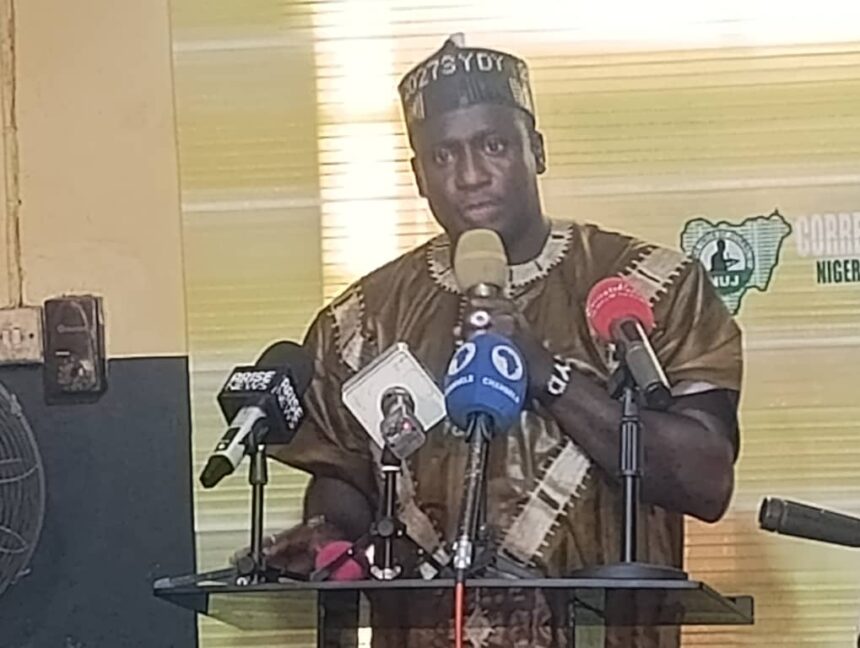
Danladi had reiterated his commitment to sustaining and building on AbdulRazaq’s administration during a recent engagement with journalists organised by the Correspondents’ Chapel of the Nigeria Union of Journalists (NUJ), Kwara State Council.
However, Ìṣhọlá described the position as a familiar campaign message, arguing that the APC candidate had yet to demonstrate what he intended to achieve independently if elected governor in 2027.
Related News

He maintained that with the election approaching, Kwarans deserved to know Danladi’s priorities, policy direction and strategies for addressing the state’s developmental challenges beyond his promise of continuity.
The writer drew comparisons between Danladi and Lagos State APC governorship candidate, Kadri Obafemi Hamzat, who, despite serving as deputy governor, had presented an independent vision through a 100-point manifesto covering transportation, healthcare, education, housing, security, employment and accountability.
He also cited the Peoples Democratic Party (PDP) governorship candidate, Engr. Kale Kawu, who recently unveiled his manifesto, titled “The SBK Compact: Kwara People First”, outlining his proposed programmes and commitments to the people.
According to Ìṣhọlá, the two examples demonstrate the importance of presenting specific policy proposals that voters can use to assess candidates and hold them accountable if elected.
He argued that Danladi’s repeated emphasis on continuity, without a comparable blueprint, raises questions about his preparedness to lead the state.
The writer further questioned the records of the AbdulRazaq administration, particularly in the areas of insecurity, poverty, healthcare delivery, infrastructure, public spending and respect for democratic rights.
On security, he alleged that banditry, terrorism and kidnapping had worsened in parts of Kwara, resulting in the loss of lives and displacement of residents, including traditional rulers.
He argued that the situation had exposed weaknesses in the government’s response to security challenges, insisting that the state needed a leadership with clear strategies to protect lives and property.
On poverty, Ìṣhọlá referenced the 2026 Global Multidimensional Poverty Index published by the Oxford Poverty and Human Development Initiative (OPHI) and the United Nations Development Programme (UNDP), which he said put Kwara’s multidimensional poverty rate at 37.4 per cent.
He questioned why poverty remained a major concern despite increased government revenue, arguing that rising public earnings should translate into improved living conditions for ordinary residents.
The article also raised concerns about healthcare delivery, particularly the alleged shortage of medical personnel, inadequate facilities and the reported migration of doctors and other health professionals from the state.
Ìṣhọlá claimed that Kwara had fewer than 100 doctors serving a population of more than four million people, describing the situation as a major challenge to access to quality healthcare.
He further alleged that diagnostic services remained inadequate, claiming that only one medical facility in Ilorin operated a functional CT scan machine, while patients requiring MRI services were referred to neighbouring states, including Ogbomoso in Oyo State and Ekiti State.
He also questioned the alleged abandonment of the Harmony Advanced Diagnostics Centre, arguing that the facility’s condition reflected what he described as misplaced priorities in the healthcare sector.
On infrastructure and public expenditure, the writer criticised the administration’s emphasis on large-scale projects and prominent structures, arguing that such investments should be matched with improvements in rural roads, basic amenities and essential services.
He maintained that development should be measured by its impact on citizens rather than the visibility or grandeur of government projects.
The article also accused the administration of insufficient transparency in public financial management, particularly regarding federal allocations to the state and local governments, contract costs and the implementation of government projects.
Ìṣhọlá argued that citizens should have access to relevant fiscal information to enable them to scrutinise public expenditure and demand accountability from elected officials.
He further expressed concern over what he described as the administration’s intolerance of criticism, alleging that journalists, activists and government critics had faced intimidation, harassment, arrest and detention.
According to him, a democratic government should accommodate dissenting opinions rather than treat criticism as an attempt to undermine its authority.
He warned that Kwarans would not benefit from another administration that, in his view, continued the alleged practice of using state power against critics and political opponents.
The writer maintained that Danladi’s governorship ambition should be anchored on his personal leadership capacity, policy direction and ability to offer solutions to the problems confronting the state.
He argued that identifying with an incumbent governor’s achievements was not enough to convince voters, stressing that candidates seeking public office must present measurable commitments and explain how they intend to deliver them.
“Leadership is not about blindly inheriting another person’s political record; it is about having the courage and capacity to chart a better course,” he stated.
Ìṣhọlá concluded that the 2027 governorship election should provide Kwarans with an opportunity to demand accountability, assess competing policy proposals and determine the future direction of the state.
He urged the APC candidate to move beyond the rhetoric of continuity and present a comprehensive development blueprint that would enable voters to understand his plans for Kwara.
According to him, the electorate deserves a governor with an independent vision, practical solutions and a demonstrable commitment to improving the welfare of residents rather than one whose campaign is built principally around sustaining the legacy of his predecessor.
He maintained that the choice before Kwarans in 2027 should be about the future of the state and the quality of leadership capable of addressing its challenges.