By Samuel Atulukwu
A Professor of Science Education at Prince Abubakar Audu University (PAAU), Anyigba, Lawrence Achimugu, has urged the Federal Government to prioritise innovative teaching methods in educational institutions, describing them as strategic investments in nation-building.
Achimugu made the call while delivering the university’s 30th inaugural lecture, titled “Monkey De Work, Baboon De Chop: Dark Shadow Over Innovative Teaching Methods in Science Education,” at Anyigba, Kogi State.
The Professor explained that the popular West African expression, “Monkey de work, baboon de chop,” captured a socioeconomic paradox in which those who perform the work do not necessarily benefit from its outcomes.
He argued that teachers generate significant value through their labour, but the benefits are often appropriated by policymakers, administrators and other societal actors, leaving teachers economically marginalised.
Related News
Achimugu described innovative teaching methods as creative, modern and learner-centred approaches that go beyond traditional lecture-based instruction. He said their adoption in science education would equip students with critical thinking and problem-solving skills essential for economic growth and social progress.
According to him, the need for innovative teaching methods has become more urgent in the 21st century, given rapid technological advancements, globalisation, climate change and digital transformation.
He, however, identified inadequate funding of education, poor welfare and low professional status of teachers, as well as the absence of interdisciplinary approaches to teaching, as major obstacles to the effective implementation of innovative methods.
Expressing concern over Nigeria’s education funding, the inaugural lecturer noted that budgetary allocations to the sector had consistently fallen below international benchmarks.
He, therefore, called on the Federal Government to urgently increase funding for education and improve teachers’ remuneration and welfare.
He also advocated the adoption of student-centred teaching approaches and the introduction of the Postgraduate Diploma in Education (PGDE) for teachers to facilitate the effective implementation of curriculum reforms.
In his remarks, the Vice-Chancellor of the University, Professor Salisu Ogbo Usman, described the lecture as remarkable and commended Achimugu for what he called a thorough presentation.
Usman said the university’s inaugural lectures remained an important platform for promoting research, scholarship and intellectual discourse. He added that, based on the existing schedule, the institution should have delivered 50 inaugural lectures by the following year.
The VC also highlighted efforts by his administration to improve campus security, staff welfare and the physical environment of the university.
He said additional private security personnel had been engaged to support the university’s internal security unit in protecting lives and property on campus.
On staff development, Usman disclosed that employees who had acquired higher qualifications but were previously denied promotion or conversion were being considered for appropriate placement.
“How can a staff have approval for study leave and, on submission of results, be told that the qualifications are not relevant? No, this is wrong. Such certificates should be recognised, provided the staff were granted study leave,” he said.
He added that the affected staff had been interviewed and would be placed accordingly.
On campus development, the VC said the university management had restored the aesthetics of the campus by relocating shops previously scattered across the premises to designated marketplaces in line with the institution’s master plan.
The event attracted political representatives, labour leaders led by the Kogi State Chairman of the Nigeria Labour Congress, Comrade Gabriel Amari, who represented the State Deputy Governor, Comrade Joel Salifu; representatives of academic unions, religious leaders, traditional rulers and other well-wishers.
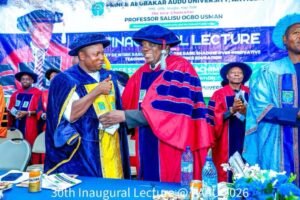
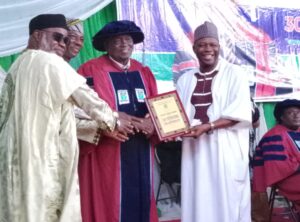
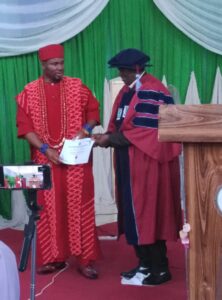
The highlight of the event was the presentation of a certificate to the inaugural lecturer.