From Taiye Joseph, Ilorin
For years, electricity supply in Oke-Oyi community, Ilorin East Local Government Area of Kwara State, was more than a household convenience. It was a missing ingredient in the growth of small businesses, artisans and other productive activities.
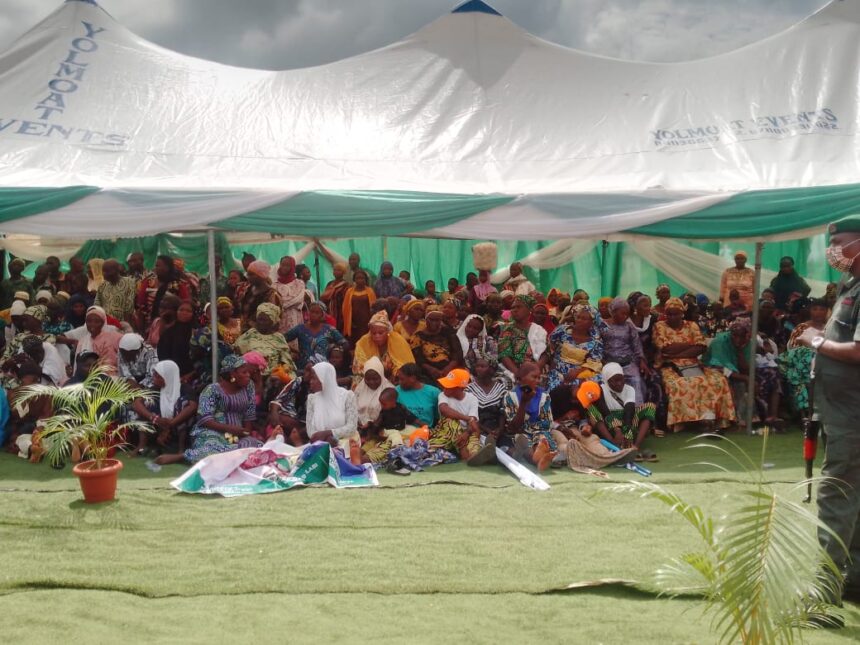
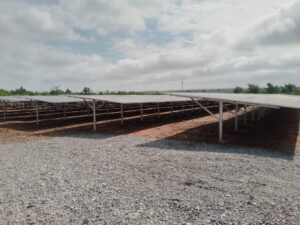
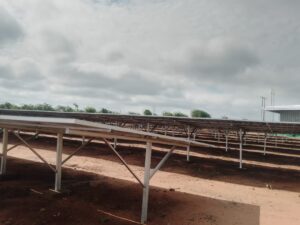
That reality is beginning to change. The commissioning of a 581-kilowatt peak (kWp) interconnected solar mini-grid in the community has brought renewed expectations among residents and business owners, with several enterprises already emerging or expanding on the strength of improved electricity supply.
The project, implemented by the Rural Electrification Agency (REA), under its Rural Electrification Fund–Interconnected Mini-Grid Acceleration Scheme (REF-IMAS), was developed by Nayo Tropical Technologies Limited with support from the German Cooperation and the European Union through the Deutsche Gesellschaft für Internationale Zusammenarbeit (GIZ).
Related News

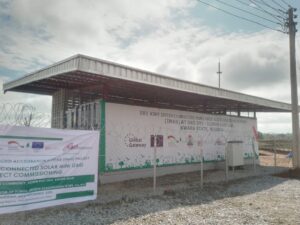
With an estimated population of about 13,000 people, Oke-Oyi now has an electricity infrastructure comprising 1,336 solar panels, 84 batteries, about 10 kilometres of distribution cables and transformers connecting residential and productive users.
But beyond the figures and technical specifications, the real story of the project is beginning to emerge in workshops, mills, cold rooms and other businesses across the community.

Twelve welding businesses, two pure water companies, four grain mills, four aluminium artisan businesses, an ice-block production business and a cold-room/ice-fish depot are already operating in the community. Three electricity vendors are also providing services, while three additional vendors, including a female entrepreneur, are expected to be registered.
For residents, the development represents a shift from seeing electricity merely as a basic social service to recognising it as an important tool for economic advancement.
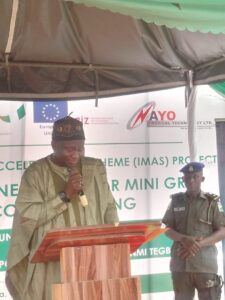
The Executive Governor of Kwara State, Mallam AbdulRahman AbdulRazaq, represented at the commissioning by the Speaker of the Kwara State House of Assembly, Rt. Hon. Yakubu Salihu-Danladi, described reliable electricity as essential to creating an environment where businesses and communities can thrive.
“For Kwara State, every intervention that expands reliable electricity access to our communities is an important step towards creating a more conducive environment for enterprise, employment and improved livelihoods,” he said.
The governor appreciated the Federal Government, REA and the development and private-sector partners involved in the project, adding that the state looked forward to its continued contribution to the development of Oke-Oyi.
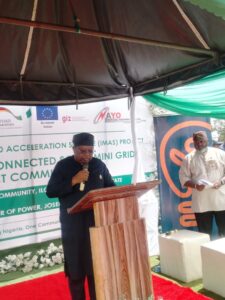
The Minister of Power, Chief Joseph Tegbe, placed the project within the broader objective of using electricity access to unlock productive capacity in communities.
“The purpose of electrification is ultimately to improve lives and create opportunities,” Tegbe said.
“What we are commissioning today in Oke-Oyi is an investment in the productive capacity of the community. When electricity enables a welder to expand his business, a grain miller to operate more efficiently or a new enterprise to emerge, we are seeing the direct connection between energy access and economic development.”
For the REA, the emergence of new businesses is an important measure of the project’s impact.
The Managing Director/Chief Executive Officer of the agency, Abba Abubakar Aliyu, said electrification should be assessed not only by the infrastructure delivered but also by the opportunities created for the people who depend on it.
“The real measure of an electrification project is not only the infrastructure we commission, but the opportunities that reliable electricity creates for the people who use it,” Aliyu said.
“In Oke-Oyi, we are already seeing new businesses emerge, productive activities expand and livelihoods being supported. This is precisely the kind of impact we seek to achieve through the Rural Electrification Agency and our partnership with the private sector and development partners.”
The project has also created opportunities beyond its operational phase.
During construction, residents benefited from jobs involving painters, welders, bricklayers, iron benders, tilers, plumbers, borehole diggers and excavation labourers, providing an additional economic benefit to the community.
The Chairman of Ilorin East Local Government Area, Mallam Garba Agbelere, said the challenge now was to ensure that the facility was protected and put to productive use.
“The provision of reliable electricity remains an important driver of economic and social development. For communities such as Oke-Oyi, access to electricity provides an opportunity for businesses to grow, new enterprises to emerge and our people to improve their livelihoods,” Agbelere said.
He called on residents to regard the mini-grid as a collective community asset and protect it against vandalism, misuse and other activities capable of undermining its sustainability.
“As a Local Government, we make a clear commitment today to work with the Oke-Oyi community, the Rural Electrification Agency, the developer and other stakeholders to ensure that this investment is protected, sustained and put to productive use,” he said.
Agbelere said the local government would support community mobilisation and sensitisation, encourage responsible use of the infrastructure and facilitate engagement between residents and relevant stakeholders whenever challenges arise.
He stressed that the commissioning should be regarded as the beginning rather than the end of Oke-Oyi’s expected economic transformation.
“Our expectation is that it will continue to support new businesses, create more livelihood opportunities and contribute to the development of Oke-Oyi and other communities within Ilorin East Local Government Area,” he added.
The importance of collaboration was also highlighted by the Head of Development Cooperation at the German Embassy, Dr Karin Jansen, who commended the Federal Ministry of Power, REA, Kwara State Government, Ibadan Electricity Distribution Company (IBEDC), Nayo Tropical Technologies, the European Union, GIZ and the Oke-Oyi community for their respective contributions.
“Today is more than connecting a community to electricity; it is about demonstrating what is possible when government, development partners, utilities, private-sector developers and communities work together towards a common objective,” Jansen said.
She expressed the hope that the experience from Oke-Oyi would provide useful lessons for future interconnected mini-grids and other distributed energy solutions across Nigeria.
For IBEDC, the integration of the mini-grid into the existing distribution network demonstrates the potential of partnerships in improving electricity services.
The company’s Managing Director/Chief Executive Officer said the project would provide customers with greater access to reliable electricity while supporting businesses and productive activities.
“The successful integration of the Oke-Oyi interconnected mini-grid into the distribution network demonstrates what can be achieved when key stakeholders work together to improve electricity supply,” the IBEDC chief executive said.
The community’s leadership has also pledged to play its part.
The Community Leader of Oke-Oyi, Alhaji Oseni Olarewaju Elemoso, expressed appreciation to the Federal Government, REA and development partners for bringing the project to the community.
“Today is a day of joy for the people of Oke-Oyi. We have longed for reliable electricity to improve our lives and economic activities, and we are already seeing new businesses emerge in our community,” Elemoso said.
He assured stakeholders that residents would cooperate in protecting the infrastructure and ensuring that it continued to serve the community.
For Oke-Oyi, the significance of the solar mini-grid may ultimately be measured not in the number of panels installed or kilometres of cables laid, but in what residents are able to do with the electricity.
A welder can work for longer hours. A grain mill can operate more efficiently. A cold-room operator can preserve more products. An entrepreneur can consider starting a business that previously depended on costly or unreliable power sources.
That is the broader promise of the 581kWp project: turning electricity access into productive opportunities.
The Oke-Oyi intervention is part of the Federal Government’s wider effort, through REA, to expand electricity access to unserved and underserved communities and promote renewable energy solutions as a pathway to economic and social development.
With the infrastructure now commissioned, the responsibility has shifted towards sustaining the investment, protecting the facilities and ensuring that the economic activities emerging around the mini-grid continue to grow.
For residents of Oke-Oyi, the expectation is straightforward: that the arrival of more reliable electricity will translate into more businesses, more jobs and better livelihoods.