From Taiye Joseph, Ilorin
The Chairman of the Economic and Financial Crimes Commission (EFCC), Ola Olukoyede, has vowed to intensify the agency’s crackdown on illegal mining by targeting financiers, mineral buyers, compromised public officials and other collaborators benefiting from the illicit exploitation of Nigeria’s mineral resources.
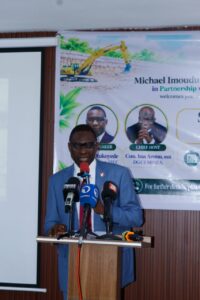
Olukoyede said the commission would move beyond arresting illegal miners to dismantling the financial networks and influential individuals sustaining the criminal enterprise.
He made this known while delivering a keynote address at a joint conference on Illegal Mining, Corruption and Climate Implications organised by the Michael Imoudu National Institute for Labour Studies (MINILS), Ilorin, in partnership with the Human and Environmental Development Agenda (HEDA).
Related News
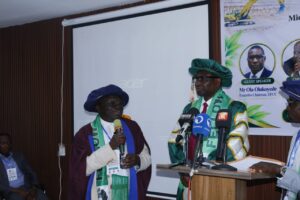
Speaking on the theme, “Uprooting the Roots of Resource Theft: A Zero-Tolerance Approach to Mining Corruption and Increasing Insecurity in Nigeria,” the EFCC chairman, lamented that despite Nigeria’s abundant mineral deposits, including gold, lithium, tin, lead and zinc, the country is yet to fully harness their economic potential because of corruption, illegal exploitation and insecurity.
He maintained that the country’s mineral wealth could only become an economic blessing if properly managed and protected against criminal activities.
According to him, illegal mining is not limited to individuals operating mining pits but involves sophisticated networks of local and international financiers, mineral buyers, compromised government officials, transporters and beneficiaries of illicit proceeds.
He stressed the need for an enforcement strategy that targets the sponsors and beneficiaries of illegal mining rather than focusing solely on those physically involved in extracting minerals.
“A serious enforcement strategy must move from the pit to the purse,” Olukoyede declared, assuring that the EFCC would continue to follow the money, investigate financiers and facilitators, trace illicit proceeds and prosecute offenders based on available evidence.
Giving an account of the commission’s efforts, he disclosed that between October 2023 and July 2026, the EFCC recorded 52 illegal-mining cases under its specialised enforcement portfolio, resulting in investigations, prosecutions and convictions.
He further revealed that the commission had secured the forfeiture of 102 tonnes of solid minerals.
Olukoyede warned that illegal mining was not merely an economic crime but also a driver of extortion, smuggling, violence and other criminal activities capable of worsening insecurity in affected communities.
He called for stronger collaboration among mining regulators, law enforcement agencies, financial intelligence institutions, customs authorities, revenue agencies and host communities to effectively combat the menace.
The EFCC chairman emphasised that information sharing, intelligence gathering and coordinated operations were critical to identifying the financiers and ultimate beneficiaries of illegal mining.
He also urged organised labour, traditional institutions, civil society organisations and the media to support efforts to promote transparency, decent work and accountability in Nigeria’s extractive industry.
Earlier, the Director-General of MINILS and chief host, Comrade Issa Aremu, said the institute was established in 1983 and named after the renowned labour leader, Pa Michael Imoudu, whose contributions to Nigeria’s labour movement remain significant.
Aremu extolled the legacy of the late labour icon and commended the EFCC under Olukoyede’s leadership for its efforts to curb illegal activities and promote accountability in the country.
He also highlighted the importance of the conference in advancing labour education and addressing emerging challenges affecting workers and the environment.
In his remarks, the Chairman of HEDA Resource Centre, Olanrewaju Suraju, described illegal mining, corruption and climate degradation as interconnected challenges requiring collective action.
He stressed that organised labour must play a central role in Nigeria’s transition to clean energy to ensure that workers are not excluded from the process.
Suraju explained that the three-day engagement was designed to equip labour leaders with advocacy, skills development and collective bargaining tools, while promoting a joint action plan for monitoring suspicious mining activities and a Green Accountability Campaign.
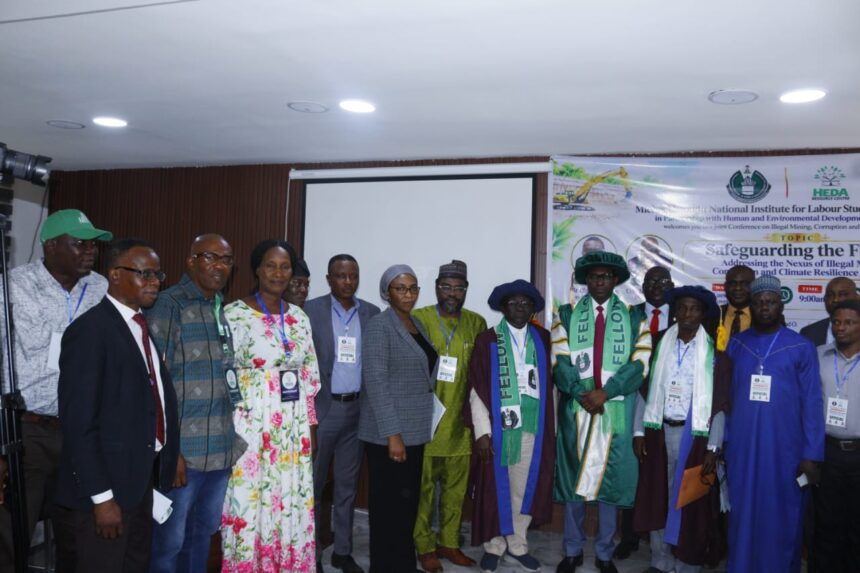
The high point of the event was the conferment of a Fellowship Award on Olukoyede by MINILS in recognition of his contributions to the fight against corruption and related economic crimes