By Abdulkarim Omuya Adubi Abdulmalik
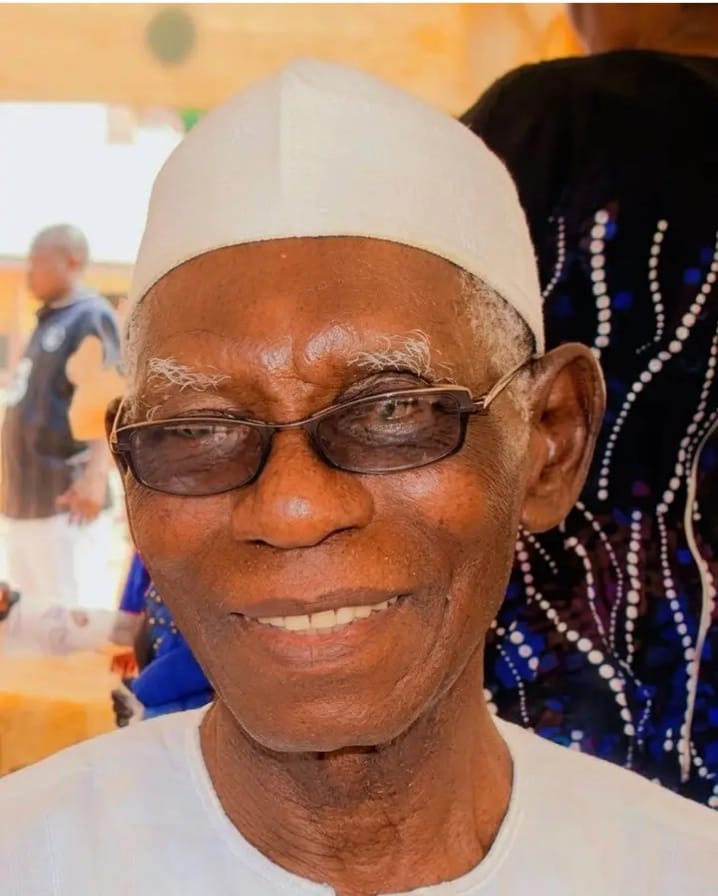
There are people whose lives can be measured by the positions they occupied, the titles they acquired, or the awards displayed on their walls. There are others whose true legacy is found in the people they influenced, the institutions they helped build, and the communities they served. Chief Isaac Ajayi Jegede belongs to the second category.
Born May 30, 1941, into the family of Pa David Jegede Onozutu and Julianah Aiyedun Onyeneku Jegede, both late, he was named Anagwureyi Ajayi, on the eighth day after his birth and later christened Isaac at baptism. More than eight decades later, the story of his life reads less like a personal biography; it is more like the history of a generation that believed education, faith, discipline, and community service were instruments for building a better society.
His journey began in Otta, Ogun State, where he started his education at St. Joseph’s Catholic School in 1949. A decisive turning point came in January 1950, when his maternal uncle, the late Pa George Ozigi, took him to Ikuehi-Ihima in present-day Kogi State. That relationship would later shape the rest of his life.
Pa Ozigi, a lay-reader at St. Peter’s Anglican Church, Ikuehi, did not merely provide Isaac with a home. He nurtured him as a son. So closely did he care for the boy that many people in the community believed Isaac was his biological child.
Related News

Under his guidance, Isaac progressed through education and later attended Bishop Smith Memorial Teachers’ College, Ilorin. He completed his Grade III Teachers’ Certificate in 1961, and began teaching in primary school in January 1962, thus marking the beginning of an enduring 35-year journey in educational services.
From Classroom Teacher to Director of Education
Chief Jegede’s story is particularly significant because it mirrors the evolution of Nigeria’s education system during the post-independence era. He did not remain confined to the classroom. From a Grade III teacher, he rose through educational administrative positions serving as Assistant Zonal Inspector of Education Secretary of Local Schools Management Board and Secretary of Zonal Education Boards covering several Local Government Areas.
He also taught in several secondary schools among which was the famous Government Secondary School, Omu-Aran, in the old Kwara State, where he was English Language teacher in 1976/77. He became the pioneer principal of Okehi Community Secondary School, Ikuehi from December 1980 to May 1983. Later, he served as Principal, Ihima Community Secondary School from September 1985 to January 1992.
His tenure at Ihima Community Secondary School became particularly memorable. The school was known for discipline, effective administration and impressive student performance. His contribution was subsequently recognised by the Ihima Patriotic Club, which honoured him as a “Distinguished Educationist” in 1997.
Jegede’s quest for further educational development is instructive. After obtaining his Grade II Teachers’ Certificate in 1968, he continued his classroom work while in September 1971, he gained admission at the University of Lagos College of Education for the NCE programme. His performance earned him the opportunity to proceed for studies and subsequently obtained a B.A. (Honours) in Education with English and History as major subjects, in 1978. And he was mobilised for the National Youth Service Corps programme during the 1978/79 service year.
His professional competence also took him beyond school administration. He served as a West African Examinations Council examiner in English Language for both the West African Examinations Certificate and Grade II Teachers’ Certificate examinations between 1979 and 1983. He also served as a self-supervising principal for WAEC/O’Level examinations and as a custodian for the Junior Secondary Certificate Examination.
After 35 years of service, he retired as Director of Education effective, January 1, 1997. But retirement for him was never retirement from service.
A Life Anchored in Faith
If education formed one pillar of his life, Christianity formed another. Although his parents belonged to the Cherubim and Seraphim Church, his uncle introduced him to the Anglican. Thus, his commitment to the Anglican Church subsequently developed into decades of leadership and institutional service.
Early in his life, 1964–1966, he served as Choirmaster and Pastor’s Warden at St. Andrew’s Church, Okene, now the Cathedral Church of St. Andrew. From 1982, he became increasingly involved in the structures of the Church serving at various times as a member of Synod, the Diocesan Board and Diocesan Council in the Dioceses of Kwara, Lokoja and Okene. He was also elected a delegate to the General Synod of the Church of Nigeria Anglican Communion on occasions.
Perhaps, the revealing evidence of his commitment to the Church is not the number of ecclesiastical positions he occupied but the physical institutions associated with his service. At St. Peter’s Church, Ikuehi he chaired the New Church Building Project Committee from 2006. The resulting church building was dedicated on December 22 2015.
He also chaired the Education Committee for the development of St. Peter’s Model Nursery/Primary School, Ikuehi; helping to transform it from its foundation into a full-fledged primary school approved by the State Ministry of Education. He was similarly involved in the development of the church vicarage, church hall, perimeter fence and school building. In recognition of his contributions, the church conferred on him the chieftaincy title “Odovidi Iragu” meaning Leader of the Church in 1998.
Beyond Church Walls
What makes Chief Jegede’s story compelling is that his service was never restricted to the classroom or church. He became deeply involved in community affairs during periods when communal tensions threatened the peace of Ihima and surrounding communities.
In December 2005 he served as Secretary of a peace committee constituted by four clans when tensions between two others threatened to escalate. Later as Chairman of the Ihima Council of Elders he participated actively in discussions surrounding the creation of the Ohi Stool and the need to promote peace and unity among the various clan heads.
His leadership journey also took him into politics. On August 18 2006, he became leader of the People’s Democratic Party (PDP) in Okehi Local Government Area of Kogi State, at a particularly difficult period for the party. According to his recollection, the experience was challenging but he believed that God helped him “hold the fort” until those who had left the party eventually returned to find an organisation still standing. He later relinquished party leadership when he became Regent of Ihima following the death of the Ohi of Ihima, His Royal Highness, Alhaji Yahaya Ozomata Sadiq on July 10, 2008.
For those months he carried the weight of authority as His Highness before successfully handing over to the newly crowned Ohi of Ihima, His Royal Highness, Alhaji Ahmed Abdulraheem Ogido on December 31 2008.
A Bridge Builder in Difficult Times
Chief Jegede’s life also included service beyond Ihima. He was a member of the Kogi Central Elders’ Forum, which later evolved into the Supreme Council of Elders of Ebiraland. He also served on the Ohis and Chairman of Kingmakers Forum while he was Chairman, Ihima Council of Kingmakers.
Between 2009 and 2010 he was a member of the 13-member ad hoc committee established by the then Kogi State Governor, Alhaji Ibrahim Idris to help address violence affecting Okengwe, Idoma and Obehira/Ageva communities.
These roles reveal a recurring theme in his life: he was repeatedly called upon when institutions needed people trusted enough to mediate or rebuild. And remarkably, until he breathes last, he was the leader of Ohueta clan in Ihima district.
A Life of Recognition
Over the years, his selfless contributions to humanity attracted several recognitions. Among them were the Distinguished Educationist award from Ihima Patriotic Club; Fellowship of the Institute of Corporate Administration; Diocesan Merit Awards from the Dioceses of Okene and Lokoja; recognition from the Association of Primary School Headmasters of Nigeria; and the African Theological Education Networks “Noble Leadership Laureate” award.
He was also listed among the American Biographical Institutes 500 Men of Influence in its 2001 edition for contributions to community development. In 2018, he was appointed Diocesan Historian of the Diocese of Okene an appointment formalised in 2021 in recognition of his service to the Diocese and mission work in Ebiraland.
The Man Behind the Titles
Perhaps, the most revealing part of Chief Jegede’s story lies not in his official biography but in how those who know him describe him. He is roundly described as a disciplined, hardworking and forthright man who was deeply committed to truth.
His sense of justice has sometimes been so uncompromising that it has created discomfort. Even his critics would struggle to accuse him of indifference. He has also been described as a man who does not distinguish between his children and other children under his care.
His family life has had its share of both joy and pain. He has been married to Victoria Maria Jegede (née Jatto), now a retired Chief Nursing Officer at the Ministry of Health, Kogi State. He described his soul mate to be an exceedingly caring and generous woman, not just to the family, but the entire community.
Together they were blessed with children; although the family suffered the loss of one child, who died in 1994 at the age of 23, shortly before completing a university degree.
A Legacy Larger Than a Biography
Chief Isaac Ajayi Jegede, has traversed: from the classroom to the education ministry, from the choir loft to church administration, from community meetings to leadership, and from political crisis management to the preservation of institutional memory.
He has travelled outside Nigeria including a pilgrimage to Israel with his wife in 2006. But behold! His most important journey has been the one he has made through the lives of people and institutions.
His story is ultimately not about how many positions he occupied. It is about what he left standing after occupying them. Schools were built. Churches were completed. Children were educated. Communities were mediated. Institutions were strengthened. Records were preserved. People were encouraged.
In an age when public service is sometimes reduced to the pursuit of advantage, Chief Isaac Jegede offers a different narrative: that a teacher could become an institution builder, a churchman could become a community bridge-builder, and an elder could continue serving humanity long after formal retirement.
At 85, his biography is therefore more than a catalogue of achievements. It shows how the potency of educational development could impact, how important faith is, how important discipline is, and how enduring community cohesion could be. Maybe, these are the virtues that could be learnt from Chief Isaac Ajayi Jegede as he transits the Great Beyond.