From Taiye Joseph, Ilorin
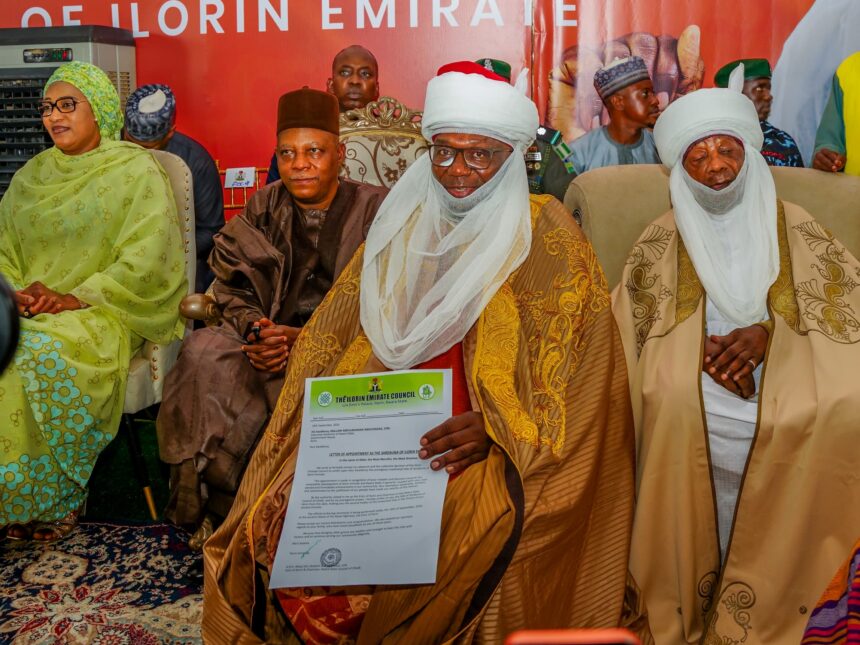
Ilorin, the Kwara State capital, stood still on Wednesday as the Emir of Ilorin, Alhaji Ibrahim Sulu-Gambari, conferred the traditional title of Sardauna of Ilorin Emirate on Governor AbdulRahman AbdulRazaq, in a ceremony that brought together top political leaders, traditional rulers, businessmen and dignitaries from across Nigeria.
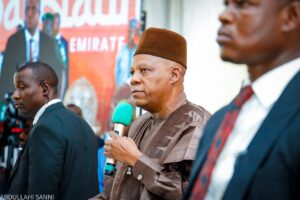
The colourful ceremony, held at the Emir’s Palace, also became a platform for Vice President Kashim Shettima, to call on politicians to put bitterness aside, forgive one another after political contests and remember that public office is temporary.
Shettima, who was the lead guest at the ceremony, arrived in Ilorin at about 1:05 p.m. and was received by Governor AbdulRazaq, alongside governors, ministers and other dignitaries.
Related News
At least eight aircraft landed at the General Tunde Idiagbon International Airport, Ilorin, as guests arrived for the event, which also featured the commissioning of the state’s iconic Garment Factory and the multi-storey Revenue House along Ahmadu Bello Way, GRA.
Among those who attended were the governors of Niger, Kaduna, Imo, Kebbi, Katsina, Ogun and Gombe states, as well as representatives of several other states. The Attorney-General of the Federation and Minister of Justice, Prince Lateef Fagbemi; Minister of Industry, Trade and Investment, Dr Jumoke Oduwole; Chairman of BUA Group, Alhaji Abdulsamad Rabiu; Chairman of the Nigeria Revenue Service, Dr Zacch Adedeji; former Niger State Governor, Senator Abubakar Sani Bello; Emir of Zazzau, Ambassador Ahmed Nuhu Bamalli; and the Soun of Ogbomoso, Oba Afolabi Ghandi Laoye II, were also present.
Speaking at the palace, Shettima described AbdulRazaq as a humble public servant who, in his words, “speaks less and does far more” for the people.
He congratulated the governor on the conferment of the title and said the honour represented another chapter in the relationship between the AbdulRazaq family and the Ilorin Emirate.
“As Governor AbdulRazaq receives his turban, we remember those who preceded him and offer prayers for the generations who will encounter this occasion through the stories their elders preserve,” Shettima said.
“My presence here today carries the affection of a friend. Governor AbdulRazaq and I have shared conversations and responsibilities beyond ceremonial occasions.”
The Vice President urged public office holders to serve with conscience, humility and the fear of God, stressing that political power was temporary.
“As public office holders, we spend more of our lives outside public offices than we do in public offices. Let us embrace each other. Let us have the courage to serve with humility,” he said.
Shettima said political differences should not permanently destroy relationships, urging politicians in Kwara and across the country to play politics without bitterness as preparations for the 2027 general elections gather momentum.
“Let us embrace one another, let us have the courage to forgive one another. What brings us together supersedes what separates us,” he said.
The Vice President also recounted the political challenges that preceded the 2023 presidential election, saying only six of the 19 northern governors supported the presidential ambition of President Bola Tinubu at the time.
He said Tinubu refused to be discouraged despite the opposition and eventually won the election, adding that the President later embraced politicians who had opposed him.
“After the 2023 election, President Tinubu hugged and forgave all other northern governors that did not support him. That is a mark of a good leader,” Shettima said.
He urged Kwara politicians, particularly those who participated in the recent political contests within the ruling All Progressives Congress, APC, to emulate the President’s approach by reconciling after elections.
The appeal came against the backdrop of disagreements within the Kwara APC following the party’s governorship primary, with some aggrieved aspirants forming the G-15 group.
Shettima also used the occasion to defend the Tinubu administration’s response to the economic difficulties it inherited, saying the government faced a challenging situation when it assumed office but chose to confront the problems rather than spend its time apportioning blame.
According to him, the administration inherited about $3.9 billion in the country’s coffers and subsequently directed its economic team to work towards changing the economic direction of the country.
“The economic team forged ahead to turn the economy around,” he said.
Earlier, Shettima inaugurated the Garment Factory and Revenue House, describing the latter as “one of the most beautiful edifices I have ever seen.”
He commended AbdulRazaq for his administration’s infrastructure projects and his contribution to the implementation of federal government policies and programmes aimed at providing relief to Nigerians.
The Vice President also thanked the Emir of Ilorin for recognising the governor, noting that the AbdulRazaq family had left enduring footprints in Ilorin Emirate and Nigeria.
He prayed for the Emir’s continued good health, long life and prosperity, while seeking peace and progress for the emirate and the state.
Also speaking, the Matawalle of Ilorin Emirate and elder brother of the governor, Dr Alimi AbdulRazaq, described the Sardauna title as well deserved.
He thanked the Emir for finding Governor AbdulRazaq worthy of the honour and urged him to regard the title as a fresh call to provide more dividends of democracy to people across the state.
The ceremony was attended by the Emir, members of the Ilorin Emirate traditional council, traditional rulers from within and outside the emirate, members of the Council of Ulamas, Governor AbdulRazaq’s wife, Ambassador Olufolake AbdulRazaq, Deputy Governor Kayode Alabi, Speaker of the Kwara State House of Assembly and APC governorship candidate, Rt. Hon. Yakubu Salihu Danladi, as well as wives of governors and other dignitaries.
For Ilorin Emirate, the event combined royal tradition, public recognition and political fellowship, while the Vice President’s message placed emphasis on reconciliation and the responsibility of leaders to preserve relationships beyond the contests and privileges of public office.