By Abdulkarim Abdulmalik
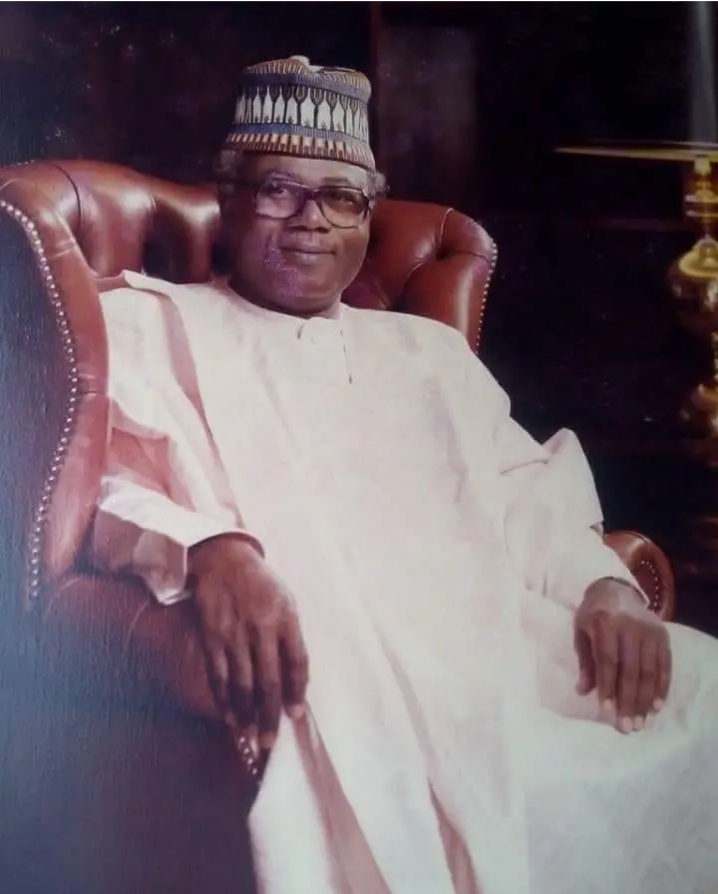
It was on a quiet morning twelve years ago, the news filtered through homes, mosques, and offices with a solemn finality: Alhaji Adamu Atta, was gone. For many, it felt as though a towering tree – one that had stood through storms, sheltered generations, and shaped a people’s direction – had finally bowed to time.
May 1, 2014, he transited to join the majority in the Great Beyond. In remembering him this year, we embark on an excursion into his life. We revisit a legacy that has stubbornly refused to fade. And we ask, perhaps more urgently than ever: what does leadership look like in an age that often forgets the meaning of service?
The Making of a Statesman
Alhaji Adamu Atta’s story did not begin in the corridors of power. It began in Okene, in present-day Kogi State, where he was born on October 18, 1927, into a family that understood authority not as privilege, but as duty.
Related News
His father, Warrant Chief Ibrahima Atta who later became the first paramount ruler of Ebira land was a respected figure within the Native Authority system; a man whose administrative discipline and sense of order quietly shaped his son’s worldview.
Young Adamu absorbed those lessons early. Yet, he did not remain confined by geography. His academic journey took him beyond Nigeria’s borders: first to the famous Achimota College, Ghana in 1947 for advanced studies, and then to London, where he read Law. At a time when such opportunities were rare, his admission to Lincoln’s Inn and subsequent call to the English Bar in 1960 marked not just a personal achievement, but a milestone for Ebira land.
He returned home not merely as a lawyer, but as a pioneer; one of the earliest legal minds from his community, carrying with him both knowledge and a deep sense of responsibility.
*Service Before Politics*
Before politics beckoned, Atta had already built a reputation for competence and integrity. In the Electricity Corporation of Nigeria (ECN), he served as Legal Adviser, navigating the complexities of a young nation’s evolving infrastructure.
Those were formative years for Nigeria’s power sector, and Atta was at the heart of it. He approached the role not as an administrator chasing prestige, but as a builder; someone who understood that national development rests on the quiet, consistent work of institutions.
It was here that many first glimpsed the traits that would later define his political life: discipline, foresight, and an unusual commitment to the collective good.
*A Governor with a Vision*
When Alhaji Adamu Atta entered partisan politics under the platform of the National Party of Nigeria (NPN), he did so at a pivotal moment in Nigeria’s history. The country was transitioning into civilian rule, and expectations were high. In October 1979, he emerged as the first civilian governor of the old Kwara State; a vast and diverse region whose complexities demanded both political tact and developmental clarity.
His victory, following his role in the 1977 Constituent Assembly, was not merely electoral. It was symbolic. It represented the arrival of a leader who combined intellectual depth with grassroots connection.
What followed was a tenure that many still describe as transformative, particularly for Ebira land.
*Rewriting the Story of Education*
Perhaps the most enduring pillar of Atta’s legacy lies in education. At a time when access to secondary schooling in Ebira land was painfully limited – just six schools – his administration embarked on an ambitious expansion. By the end of his tenure, that number had grown to thirty-eight. This was not just a statistic. It was a revolution.
It meant that children who would have otherwise been denied formal education suddenly had classrooms to walk into. It meant that families could dare to dream beyond subsistence. It meant that a generation was being quietly prepared for leadership.
The establishment of the School of Nursing in Obangede (now the College of Nursing) further demonstrated his foresight. In a country grappling with healthcare challenges, Atta understood that investing in human capital was as crucial as building physical infrastructure.
Even the foundation he laid for what would become the Osara Campus of Kogi State Polytechnic speaks to a man who was always thinking beyond his tenure.
*Building Beyond the Present*
Atta’s governance extended into healthcare, hospitality, and administrative development. The Specialist Hospital in Obangede was not merely a building; it was a lifeline. The expansion of Kwara Hotels and the construction of the Civil Service Clinic reflected an understanding that governance must touch both the elite and the everyday citizen.
In Ilorin, the development of Secretariat Phase III strengthened the administrative backbone of the state, ensuring that governance itself could function more efficiently.
Perhaps, his most visible contributions lay in roads and electrification. The Okene-Kuroko-Itakpe Road became more than a transport route. It became a connector of lives, markets, and opportunities. Electrification projects lit up communities that had long been left in darkness, both literally and figuratively.
*Leadership that Empowered*
What set Atta apart was not just what he built, but who he lifted. His administration introduced empowerment initiatives that gave ordinary people a stake in their own progress. He sponsored numerous indigenes for the Holy Pilgrimage to Mecca, recognizing the spiritual aspirations of his people alongside their material needs.
He also pursued grassroots governance with conviction, creating local government areas such as Adavi Ihima and Ageva among several others. Though later dissolved by subsequent administrations, their creation remains a testament to his belief that governance must be brought closer to the people.
*The Quiet Years*
After leaving office in 1983, Alhaji Adamu Atta did something rare among political figures: he embraced quietude. There were no loud attempts to reclaim the spotlight, no desperate bids for relevance. Instead, he lived with dignity, allowing his work to speak long after his voice had faded from public discourse.
Generous to a fault, his compassionate heart kept speaking through his hands; especially in educational support. He was characteristically offsetting educational bills of children school fees at all levels. Provide evidence of your child’s tuition evidence and you’ll walk out of his house with broad, very broad smiles. He never said no to genuine appeal for children school fees or tuition. Even when he was down with critical optical health challenge, he remained favour-seekers destination.
September 18, 2010, the Kogi Central Media Practitioners Association (KOCEMPA), organized a public lecture/Award ceremony to honour Alhaji Adamu Atta while he was still alive. The event held at the auditorium of the Federal College of Education, Okene. My humble self was the President of the association.
In the build-up to the event, the initiator and member of KOCEMPA, Prince Emmanuel Omadivi and I led a deligation to the head of Atta family, Dr Abdulmumin Atta in Kaduna for his blessing. And he graciously did.
In Dr Atta’s speech, he acknowledged his younger brother’s uncommon disposition towards those who approached him for financial assistance, especially educational request. He remarked that Adamu has an infectious desire for supporting educational development and that he would not care where the favour seeker came from. Further more, he said that even in sick bed, he was still assisting people adding that “amazingly, his wife – Rose – was exceptionally tolerant and cooperating.” He commended her for being there for his brother tirelessly.
May 1, 2014, in Abuja, Alhaji Adamu Atta passed away peacefully at the age of 86. It was, in many ways, a gentle exit for a man who had lived a life of purpose.
*A Legacy That Speaks*
Twelve years later, his absence is still felt, but his presence endures: in schools filled with students, in roads that continue to carry commerce, in institutions that still serve the public.
At a time when leadership is often measured by noise rather than impact, Atta’s life offers a quiet rebuke. He reminds us that true leadership is not about visibility. It is about vision. It is not about rhetoric. It is about results.
For Ebira land, he remains a symbol of what is possible when opportunity meets preparation. For Nigeria, he stands as a reminder that public office can, indeed, be a platform for genuine service.
*Reflections*
As prayers rise for his soul today, one is compelled to reflect not just on who Alhaji Adamu Atta was, but on what he represents. He represents a generation that believed in building without boasting and without shouting from the rooftops. He represents a politics anchored on purpose. He represents a legacy that does not beg to be remembered but insists on being felt.
“Inna Lillahi Wa Inna Ilayhi Raji’un.” From God we come, and to Him we return.
But some lives, like that of Alhaji Adamu Atta, leave behind footprints too deep to be erased by time.
– Abdulkarim Abdulmalik is an Abuja-based Journalist and can be reached on: nowmalik@gmail.com