By Joy Salami
The Kogi State Commissioner for Finance, Budget and Economic Planning, Hon Asiwaju Idris, has called for stronger citizens’ participation in the preparation of the 2027 budget, stressing the need to align government spending with the needs and aspirations of the people.
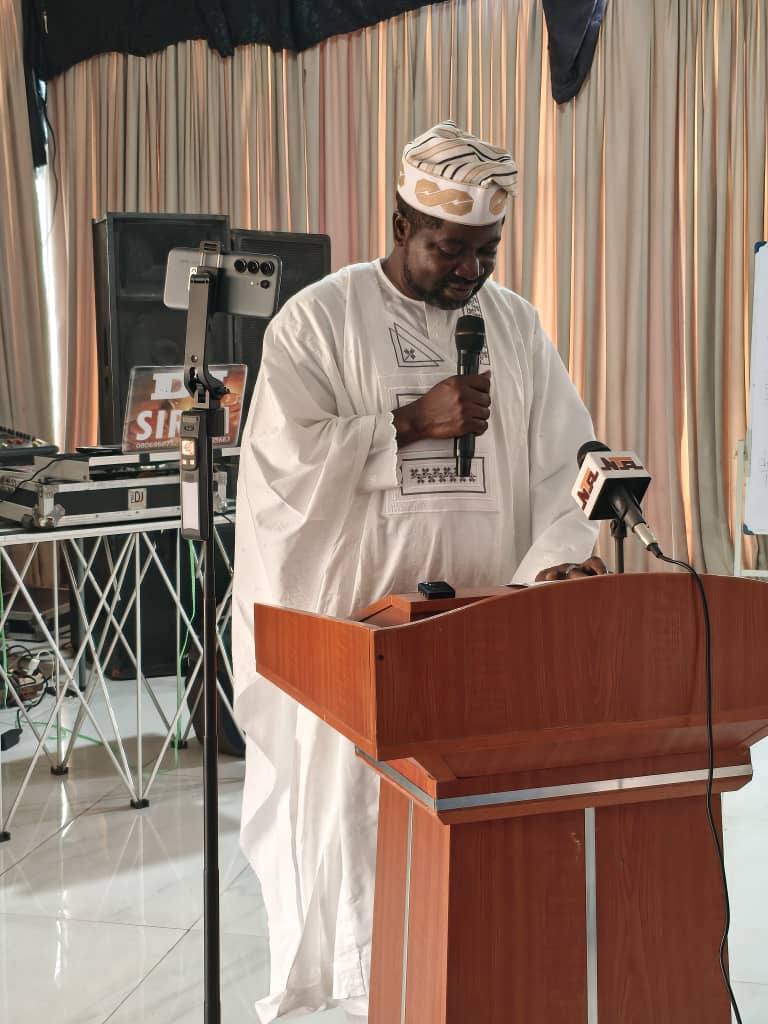
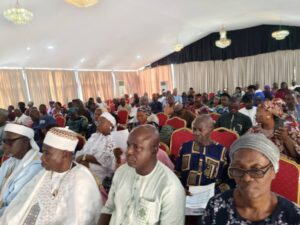
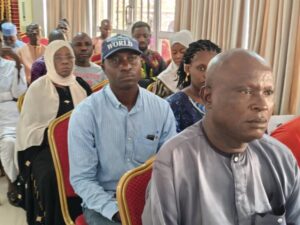
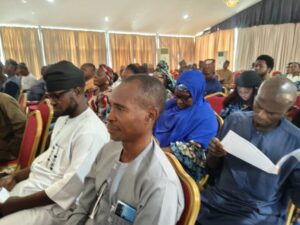
He made the call at a stakeholders’ town hall meeting on the 2027 Kogi State Budget, held at Edge Drive Hotels, Lokoja, recently, where civil society organisations, community leaders and other stakeholders discussed development priorities, budget performance and ways of improving public service delivery.
The Commissioner described the budget as more than a financial document, saying it is the principal instrument through which the government turns its policies and vision into programmes, projects and measurable results. “We are here to listen, understand the priorities of our people, examine what has worked, identify what has not worked sufficiently, and determine where government resources should be directed to achieve the greatest possible impact,” he said.
Reviewing the State’s fiscal performance, he disclosed that the 2026 half-year budget performance report showed total revenue, including opening balance, of about ₦308.22 billion, representing 37.6 per cent of the revised annual budget. Total expenditure stood at about ₦259.97 billion, or 31.7 per cent of the revised budget.
Related News
He added that internally generated revenue (IGR) reached about ₦26.22 billion, representing 59.6 per cent of the annual target. According to him, this underscores the growing importance of domestic revenue mobilisation, and the government must continue to improve revenue administration, widen the revenue base and block leakages.
The Commissioner said the true measure of a budget lies in the results it delivers rather than the amount appropriated. He listed job creation, education, healthcare, infrastructure, agriculture and opportunities for young people as key considerations for 2027, and called for stronger project monitoring and evaluation.
In his presentation, the Executive Director of Renaissance Care and Empowerment Foundation (RECEF), Amb Idris Muraina, urged the State Government to move beyond treating budget preparation as an annual routine.
He said the town hall should allow citizens to influence priorities before the budget is finalised, and that its success should be measured by how many of their recommendations are reflected in the budget presented, passed and implemented.
Muraina called for stronger alignment between the 2027 budget and the Kogi State Development Plan 2024–2056, with cost sector plans, measurable targets, clear timelines and defined institutional responsibilities.
He identified access to potable water as an area requiring serious attention, advocating a comprehensive assessment of public water infrastructure, rehabilitation of viable treatment and transmission systems, repair of damaged networks and extension of services to underserved communities.
On transportation, he called for a sustainable mass transit system to ease costs for workers, students, traders and low-income households. This, he explained, should go beyond buying vehicles to include route planning, professional management, transparent operations and an expansion plan covering Lokoja and other major towns.
Also speaking, the Chairman of Kogi NGOs Network (KONGONET), Barr Hamza Aliyu, presented findings of a citizens’ perception survey on selected Ministries, Departments and Agencies (MDAs). He said about 2,200 questionnaires were distributed, with roughly 105 allocated to each local government area, and that the survey, first conducted the previous year, was repeated to determine whether citizens had observed improvements.
Aliyu disclosed that the Ministries of Education, Health, and Finance, Budget and Economic Planning were among the three leading MDAs, with the Finance Ministry recording the most improved public perception. He attributed this to its improved engagement with civil society.
He, however, expressed concern that sanitation-related services under the Ministries of Water Resources and Environment remained among the lowest-performing areas, and called for their concerns to be addressed in the 2027 budget.
According to him, the findings, read alongside the half-year budget performance, raise questions about whether inadequate funding and delayed releases are weakening service delivery. He urged the authorities to pay closer attention to releases and implementation, stressing that appropriations alone would not produce results without timely execution.
Aliyu also advocated the institutionalisation of citizens’ budget engagements through a legal framework, so that the practice outlives individual officeholders. He expressed hope that future town halls would see greater participation by government officials.
The meeting forms part of the preparatory process for the 2027 Kogi State Budget, with citizens’ input expected to inform the priorities and spending decisions for the coming year.