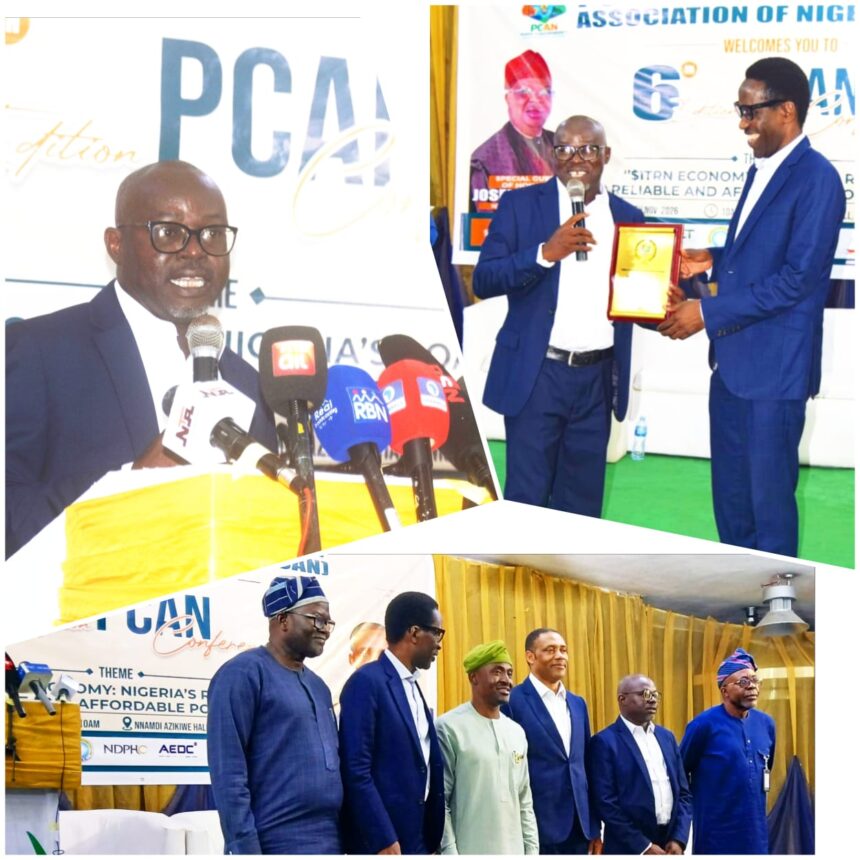
From David Onuoja, Abuja
The Chairman, Power Correspondents Association of Nigeria (PCAN), has said that, reliable and affordable electricity is fundamental to achieving the Federal Government’s ambition of growing the Nigerian economy to one trillion dollars by 2030.
The PCAN Chairman, Mr. Obas Esiedesa, stated this on Thursday in Abuja at the 6th Annual Conference of the association held at the Nicon Luxury Hotel.
The conference, with the theme “$1trn Economy: Nigeria’s Roadmap to Reliable and Affordable Power Supply,” brought together policymakers, regulators, operators, investors, industry experts and journalists covering the power sector.
Welcoming guests to the event, Esiedesa said what started as a modest gathering in November 2021, has evolved into an important annual platform for constructive engagement on the challenges confronting the sector and practical solutions for a more reliable, affordable and sustainable electricity supply.
Related News

He said there is no gainsaying that no economy can sustainably attain significant growth without adequate and dependable power supply to support industries, businesses and households.
Esiedesa added that discussions at the conference must go beyond identifying challenges, to interrogating existing policies and reforms, examining investment opportunities, addressing infrastructure gaps, exploring sustainable financing options and developing workable strategies for improving supply across the country.
He identified the recurring seasonal decline in electricity generation, particularly between November and March, as one critical issue that deserves urgent attention. He explained that reduced water inflows into hydroelectric power stations often affect generation, while gas supply constraints to thermal plants further compound the problem.
The Chairman, therefore, called on the government, regulators, generation companies and gas suppliers to strengthen collaboration and develop sustainable arrangements that will guarantee adequate gas feedstock for thermal plants, especially during periods of reduced hydro generation.
Esiedesa also listed inadequate transmission and distribution infrastructure, liquidity challenges, investment gaps, regulatory uncertainties and the need for improved efficiency across the electricity value chain as major issues to be addressed.
He noted that the decentralisation of the electricity market under the Electricity Act 2023, presents opportunities for increased investment, innovation and improved service delivery, but said these must be matched with effective coordination, clear regulatory frameworks and necessary infrastructure to translate into tangible benefits for consumers.
The PCAN Chairman expressed delight at having the Minister of Power, Chief Joseph Tegbe, as Chairman and Special Guest of Honour, saying his presence provided an opportunity for stakeholders to hear directly from government on its priorities and roadmap. He also welcomed the presentation by the Managing Director of FGN Power Company Limited, Mr. Kenny O. Anuwe, on “FGN Power: Progress, Priorities and the Road Ahead.”