By Grace Ben Kato
The Kogi State Government, in collaboration with Malaria Consortium, will distribute over 3,141,485 Insecticide-Treated Nets (ITNs), free to households across the state as part of efforts to reduce the malaria burden.

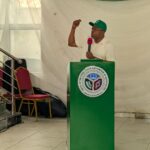
The Commissioner for Health, Dr Abdulazeez Adeiza, disclosed this in Lokoja recently, during the Insecticide Treated Net (ITN), universal coverage campaign orientation for media.
The Commissioner, who was represented by the Permanent Secretary in the Ministry, Maji Enoch, said, the distribution of the free nets will hold from November 8 to 15, 2026.
Related News

He noted that Kogi State has not had a free mass distribution of ITNs in the last nine years, making the current exercise a rare opportunity for residents.
To address the challenge, he said, the Kogi State Government, through the State Ministry of Health Malaria Elimination Programme, in collaboration with the National Malaria Elimination Programme (NMEP) and Malaria Consortium, is implementing a statewide Net Campaign to distribute over three million ITNs to every household.
“The government has urged residents to ensure a representative of each household is at home during the exercise to register and collect the nets. Beneficiaries are advised to air the new nets for 24 hours in the shade before hanging, and to sleep inside the nets with the edges well-tucked over the sleeping area every night, all year round”, he said.
He maintained that sleeping inside an Insecticide-Treated Net, remains one of the most effective ways to prevent malaria, with studies showing that ITN use reduces malaria incidence by 50 per cent in sub-Saharan Africa, which accounts for over 90 per cent of global cases.
Malaria, which is transmitted through the bite of infected female Anopheles mosquitoes, he said, remains a life-threatening disease and a major public health challenge.
“The 2025 Nigeria Malaria Indicator Survey (NMIS) shows a decline in national malaria prevalence from 22 per cent in 2021 to 15.2 per cent in 2025.
“In Kogi State, the current prevalence stands at 8.9 per cent. Despite the reduction, malaria remains the most common cause of absenteeism from schools, offices, farms and markets, resulting in low productivity and huge social and economic losses running into billions of naira annually in treatment costs, prevention and loss of man-hours.”
“Let us win the fight against malaria in Kogi State by sleeping inside the Insecticide-Treated Net every night. For a malaria-free Kogi State, play your part.”
Earlier in her presentations, the Social and Behavioural Change(SBC) snd External Communication Adviser, Malaria Consortium, Olubumi Ojelade, disclosed that about 500 million ITNs have been distributed in Nigeria since 2004, adding that WHO, recommended one ITN for every two people in a household.
According to her, the ITN campaign which commenced in May 2004, in Kano and Anambra as pilot states, has the goal of scaling up coverage and utilisation of ITNs as a strategy for Malaria control. “mass distribution is done every three to four years in each state to maintain universal coverage due to lifespan of the net.”
She maintained that Malaria is a leading cause of illness and death in Nigeria and untreated can result to anemia, organ failure and death. “Nigeria has one of the highest burdens globally, accounting for about 24.3% of all Malaria cases worldwide and 30.3% of global Malaria death.
She called on the media to keep Malaria issues in the front burner of health news, provide adequate publicity of all campaigns, subsidise nedia placements fir ITN promotions and promote use of ITNs and hunan interest stories.
The meeting, she emphasised, will provide journalists an insight into ITNs campaign, re-orientate them on malaria promotion and control and motivate them to develop interests in the reporting on all campaigns activities.