…70% job for host Communities
From David Onuoja, Abuja
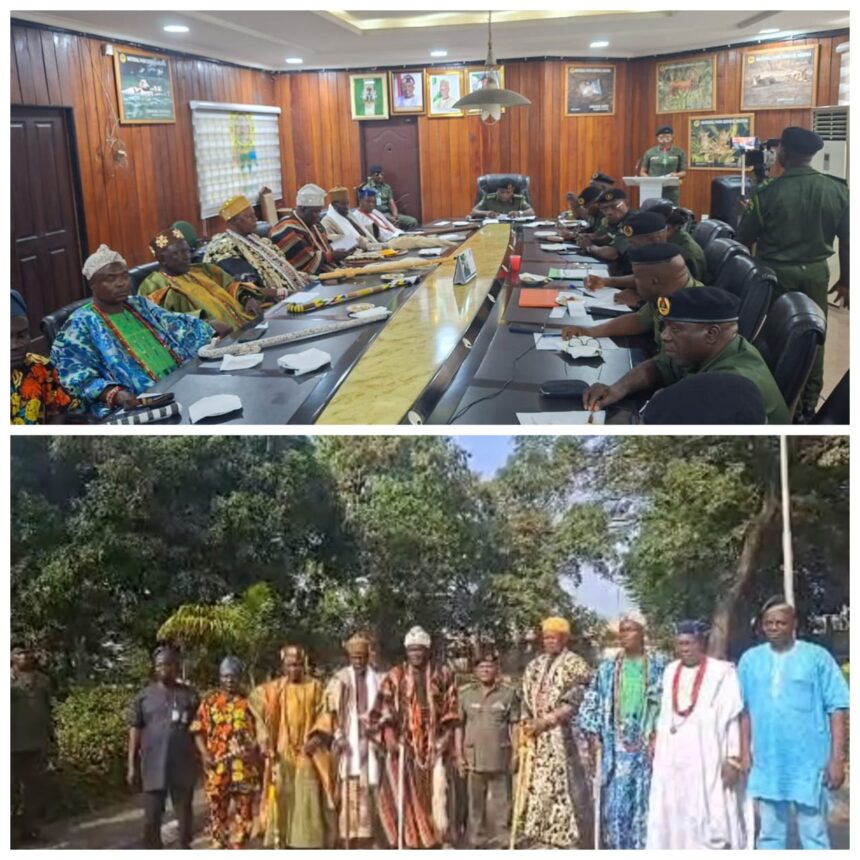
The Traditional rulers of host Communities surrounding the Oba Hills National Park in Osun State, on Wednesday, paid a courtesy visit to the Conservator General of the National Park Service, Dr. Muhammad Ibrahim, at the Service Headquarters in Abuja, to strengthen park-community relations and discuss issues arising from the upgrade of the forest reserve to a national park.
Welcoming the delegation, Dr. Ibrahim described the visit as a golden opportunity for interface under the Service’s Park-Community Relations Programme, which he said uses town hall meetings to reduce conflict and promote peace.
He noted that land management is a sensitive issue globally and commended Osun State Governor, Senator Ademola Adeleke, and former President Muhammadu Buhari for facilitating the takeover of the reserve in 2020 as one of 10 new national parks. He traced the history of Oba Hills to 1923, with its declaration as a forest reserve in 1953, before its upgrade in 2020.
Related News

The Conservator General outlined the multifold benefits of a national park, including direct and indirect gains such as climate change mitigation, erosion and pollution control, improved rainfall and employment. He disclosed that staff of the former forest reserve who opt for federal service are being absorbed, but cautioned that employment must reflect federal character, appealing to the communities to manage whatever quota is given in the spirit of sacrifice, citing his own community’s sacrifice for the Kainji Dam.
Goni also announced that the park’s Governing Board has been constituted by President Bola Ahmed Tinubu, with a chairman from Oyo State, and that the Park Management Committee and Local Advisory Committee will include traditional rulers and community nominees.
On issues raised by the communities, Dr. Ibrahim said the Service has submitted a report to the Minister of Environment for approval to remove exotic trees in line with the National Park Act and replace them with indigenous species.
He said restoration has commenced, noting that sustainable use of non-timber forest products like bush mango will be allowed under guidance. Adding that in line with UN advice, structures such as rangers’ barracks will be sited at entry points on the park boundary to minimise ecological damage, while urging communities to allow wildlife to multiply for tourism. He assured that smart agriculture and agroforestry planting yam, cassava, maize and groundnut under trees without felling them would be introduced to ensure farming continues.
In a joint address presented by the Secretary of Oba Hills Traditional Council, Mr. Shedrack Adebayo Adelakun, the traditional rulers said the visit was more than a courtesy call, but a reaffirmation of commitment to peaceful coexistence and sustainable conservation. They commended the Federal Government for upgrading Oba Hills, describing it as a new chapter to safeguard natural heritage, with prospects for wildlife protection, ecological restoration, research, nature-based tourism, employment and livelihood initiatives.
The council lauded the ongoing restoration programme involving the planting of 11,000 indigenous seedlings, with contributions from FRIN, IHS Towers and Polaris Bank facilitated through the Nigerian Conservation Foundation, as well as the professionalism of the Acting Conservator of Park, DCP Olakunle Azeez and his team. They stressed that restoration is about recovering lost vegetation, protecting soil and water, creating wildlife habitats and building climate resilience, and called for attention to seedling survival, fire and grazing protection and long-term monitoring.
The traditional rulers respectfully tabled seven requests, including regular stakeholder engagement, fair consideration for employment, training and restoration jobs with 70 percent slot for host communities, transparent boundary demarcation to address mining interests around Akinleye Town, budgeting for traditional rulers, prioritisation of physical development of host communities, continuous farming to sustain new seedlings, and urgent feedback on modalities for destroying exotic trees.
Speaking separately, the Olu of Akinleye Town, Oba Nafiu Abiodun Taofeek, said the visit had given the people rest of mind, recalling initial fears that upgrading to a national park would displace farmers and stop entry into the forest. He said enlightenment by park officials calmed the people, but appealed for urgent employment for jobless graduates who had resorted to farming and might otherwise engage in crime.
He described the Acting Conservator as a man of God, urged that offices be built near villages for joint monitoring, and pledged full support of all kings for conservation while seeking federal assistance.
In his remarks, the Acting Conservator of Park, Oba Hills National Park, Olakunle Azeez, thanked the Conservator General for granting express approval for the visit after the letter arrived on 25th October, and appreciated the management team and the traditional fathers for their cooperation and support, describing their relationship as warm and cordial.