From Taiye Joseph, Ilorin
Doctors in the service of the Kwara State Government, have commenced a seven-day warning strike over alleged arbitrary salary deductions, unpaid allowances, poor welfare conditions and other unresolved demands.
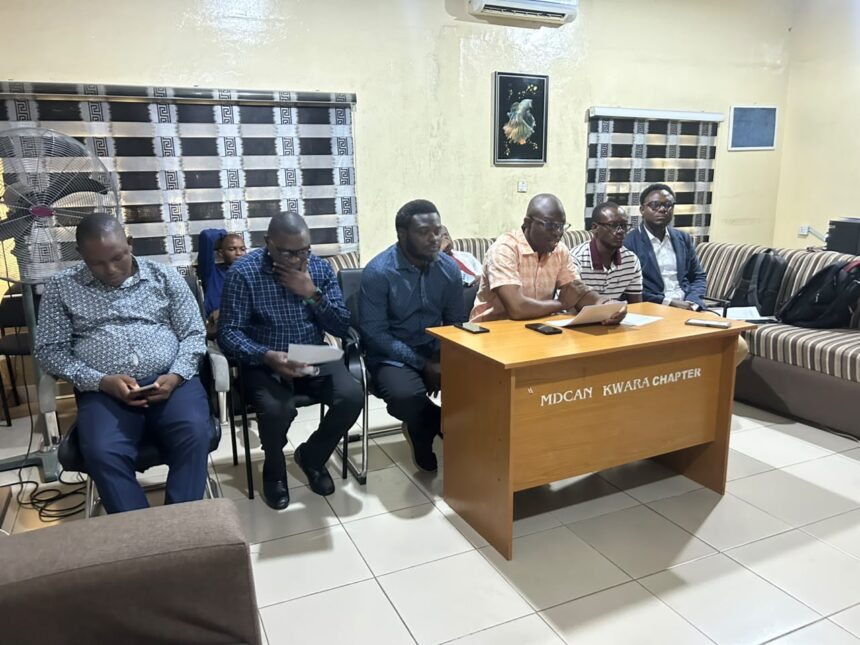
The industrial action, which took effect after the expiration of a 14-day ultimatum issued to the government, involves members of the Kwara Doctors Forum, comprising the Medical and Dental Consultants Association of Nigeria (MDCAN), the National Association of Government General Medical and Dental Practitioners (NAGGMDP) and the Association of Resident Doctors (ARD), KWASUTH.
Speaking at a news conference in Ilorin on Thursday, the Chairman of MDCAN, Dr Adeola Olasinde, said the decision to embark on the strike was reached at the forum’s congress on October 14 after the government failed to address the doctors’ demands within the ultimatum period of October 1 to 14.
Olasinde said the doctors were particularly concerned about the sudden deduction of two per cent from their salaries to finance the Kwara Health Insurance Scheme, also known as KwaraCare, without what they considered adequate consultation and clarification on the management of the funds.
Related News

He also listed the non-implementation of the Consolidated Medical Salary Structure (CONMESS), the outstanding 2025 and 2026 accoutrement allowance arrears, and inadequate staffing across government-owned healthcare facilities among the issues that prompted the industrial action.
The doctors are demanding an immediate reversal of the two per cent salary deduction, payment of the approved outstanding allowances and recruitment of house officers, medical officers, resident doctors and consultants to address manpower shortages in the state’s health facilities.
Other demands include the renovation of house officers’ quarters in teaching hospitals and the establishment of the Governing Board of the Kwara State University Teaching Hospital (KWASUTH), in line with its enabling law.
Clarifying their position on the health insurance scheme, Olasinde said the doctors were not opposed to health insurance or the government’s efforts to make healthcare more affordable and accessible to residents.
Rather, he stressed that workers’ contributions to the scheme must be backed by transparency, accountability and proper institutional oversight.
“The sudden deductions of two per cent of our salaries without prior agreement and satisfactory clarification on the processes and management of the contributed funds leaves us in serious doubts,” he said.
He maintained that the administration of public health insurance funds should be subjected to clearly defined institutional controls, collective oversight, transparent financial procedures, independent audits and appropriate legislative and regulatory supervision.
Olasinde also called for the involvement of relevant stakeholders in the formulation of policies, governance, monitoring and periodic review of the scheme.
According to him, such measures would ensure that the scheme serves the interests of the people and that workers’ contributions translate into accessible and quality healthcare services.