
From Taiye Joseph, Ilorin
Three condemned inmates have died, following an attempted jailbreak at the Oke-Kura Custodial Centre in Ilorin, Kwara State, with the Nigerian Correctional Service (NCoS), launching an investigation into the circumstances surrounding their deaths.
The development came amid reports that about 20 correctional officers had been subjected to investigation over the jailbreak, while some others were being queried in connection with the deaths of the inmates.
The Controller-General of the NCoS, Sylvester Ndidi Nwakuche, confirmed the deaths on Wednesday, during a visit to the facility, explaining that seven inmates attempted to escape, but only two succeeded, while five were intercepted by correctional officers.
He, however, expressed sadness that three of the five inmates who were prevented from escaping subsequently lost their lives.
Related News
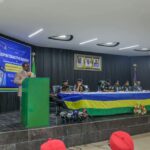
The Controller-General disclosed that a special team had been constituted to investigate the incident, assuring that any personnel found to have played a role in the deaths would be held accountable.
“If we find out that anybody was involved in that, naturally the law will take its course,” he said.
He added that the investigation would involve clinical, medical and intelligence processes to establish what actually transpired.
Nwakuche explained that the Minister of Interior, Olubunmi Tunji-Ojo, had directed him to reassess the situation at the custodial centre and submit a report on the incident.
He further disclosed that the two inmates who were intercepted during the attempted escape were receiving treatment at an undisclosed government hospital.
On the two fugitives who successfully escaped, the NCoS boss said security agencies were working together to ensure their arrest.
“We can assure Nigerians that they have no hiding place. It might take time, but we’ll get them,” he assured.
The incident has also drawn attention to the worsening congestion at the Oke-Kura facility, which currently accommodates about 685 inmates, including more than 70 condemned prisoners.
Nwakuche expressed concern that some of the condemned inmates had spent over 10 years awaiting the execution of their death sentences, describing the situation as a serious challenge to the correctional system.
“Some of them, unfortunately, have stayed over 10 years as inmates on death row. That is a terrible situation,” he said, describing the colonial-era facility as “terribly congested”.
The Controller-General also disclosed that Nigeria currently has more than 4,000 inmates on death row, urging state governors to consider commuting their sentences to life imprisonment, particularly in cases where death warrants have remained unexecuted for years.
According to him, such a move would ease congestion in custodial centres and create opportunities for inmates to undergo rehabilitation and vocational training.
“They can commute them into life sentences so that we’ll be able to distribute them to less congested facilities where we can also subject them to a treatment regime to learn a trade, to be useful to the society upon discharge,” he said.
He maintained that overcrowding in correctional facilities continued to place enormous pressure on personnel and infrastructure, while undermining effective inmate management, security and rehabilitation programmes.