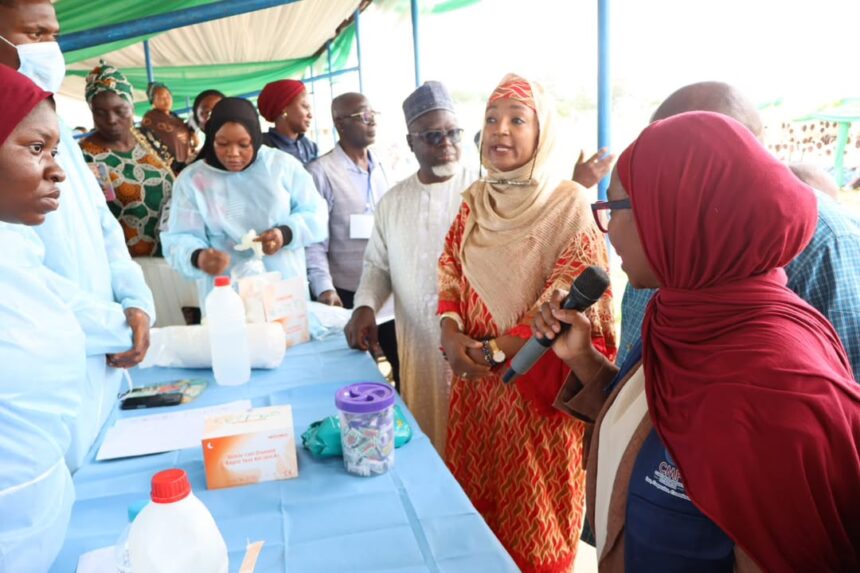
The Kwara State Government, has launched a statewide genotype screening and awareness campaign to reduce the burden of sickle cell disease and promote early detection across the state.
The programme, tagged “Know Your Genotype”, was organised by the Wife of the Governor, Ambassador Olufolake Abdulrazaq, in collaboration with the State Ministry of Health and Concerned Medics Foundation.
It is aimed at promoting early genotype screening and raising awareness about sickle cell disease, particularly among young people and adolescents.
Speaking at the flag-off ceremony, Ambassador Abdulrazaq, who was represented by the Commissioner for Health, Dr Amina Ahmed El-Imam, said Nigeria had the highest burden of sickle cell disease globally, with about six million people living with the condition and approximately 150,000 affected babies born annually.
She stressed the need to educate young people about the disease and encourage them to know their genotype early to enable them to make informed decisions about their health and future marriages.
Related News

The governor’s wife also called on traditional and religious leaders to intensify awareness campaigns among their followers and encourage regular genotype screening.
“I urge religious leaders, churches, mosques and all faith communities to use their sermons to encourage people to screen themselves and take informed decisions.
“Parents, please start taking responsibility for knowing the genotype of all your children, ensuring they have these documents with them as they go into adulthood,” she said.
Ambassador Abdulrazaq explained that the emotional, economic and physical challenges associated with sickle cell disease could be reduced through early genotype awareness and informed decisions.
She further disclosed that people living with sickle cell disease in Kwara State had access to free health insurance coverage, an intervention designed to ease the financial burden on affected individuals and their families.
Speaking at the event, the immediate past Chairperson of Concerned Medics Foundation and Consultant Paediatrician, Dr Sadiya Gumi-Bennett, said the initiative was inspired by the foundation’s commitment to improving care and support for people living with sickle cell disease.
Gumi-Bennett disclosed that 500 students had so far been screened across the state, adding that the exercise was expected to cover 1,000 students.
She explained that the screening was conducted with parental consent, while seven students identified with the disease had been referred to the hospital for further confirmation and appropriate management.
The consultant paediatrician appealed to the state government to make genotype testing compulsory for school-age children, stressing that early identification would help prevent complications associated with the disease.
In his remarks, the Permanent Secretary, Kwara State Ministry of Health, Dr Taoheed Abdullahi, highlighted various health programmes and interventions implemented by the state government.
He reaffirmed the ministry’s readiness to collaborate with relevant organisations to improve the health and well-being of adolescents across the state.
Earlier, the Principal of Queen Elizabeth Secondary School, Mrs Monisola Alanamu, commended the initiative, noting that the programme would contribute to improved health outcomes and enhance school attendance among students.