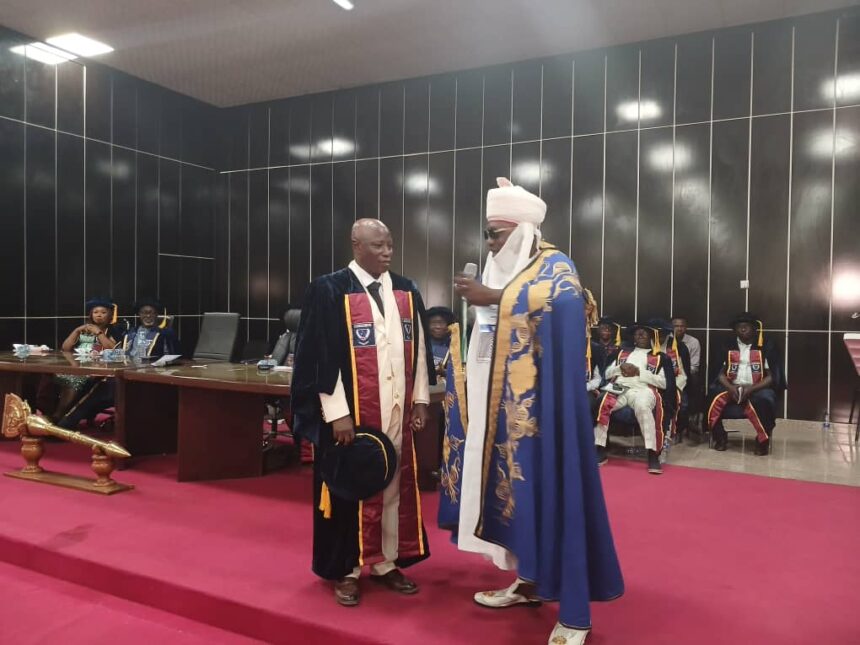
By Victoria Okpanachi
Professor Samuel Ibbi Ibrahim, of Geography department, Federal University Lokoja (FUL) has raised concerns over growing threats to Nigeria’s water quality, calling for stricter regulation of borehole drilling and routine water quality checks to protect communities from contaminated drinking water.
Professor Ibrahim made the call while delivering the university’s 47th Inaugural Lecture, with the topic, “Water Is Life. Is Our Water Living? Confronting the Water Quality Crisis in Nigeria’s Environment,” held recently in Lokoja.
He stressed the need for proper borehole siting, warning that boreholes should be drilled at a safe distance from septic tanks and soakaway pits to prevent faecal contamination of underground water.
Related News

The inaugural lecturer observed that although water covers approximately 71 per cent of the Earth’s surface, the abundance of water does not necessarily translate into access to safe drinking water, as only about 2.5 per cent which is available for drinking, is inaccessible or threatened by pollution.
He described the situation as a paradox in which water is found almost everywhere, yet millions of people struggle to access clean and safe water, stressing that the challenge goes beyond availability to include purity, accessibility and sustainable management.
Prof. Ibrahim raised concerns about the growing contamination of water sources, including rivers that have become dumping grounds for refuse, warning that water which appears clean is not necessarily safe for consumption.
He noted that the disparity in access to safe water between rural and urban communities remained a major concern, adding that Nigeria needed to move away from measuring water supply in terms of availability alone to prioritising water quality and safety.
The professor further called for the institutionalisation of community-based water supply plans for all community water schemes and the protection of water source zones through proper delineation and gazetting around boreholes, reservoirs, river intakes and critical groundwater recharge areas.
Other measures he proposed included increased investment in sanitation, faecal sludge management, sewerage, wastewater and solid waste management, as well as plastic recycling to reduce pollution and protect water sources.
He also advocated the integration of flood risk management into water, sanitation and hygiene planning, with post-flood safety measures, including the disinfection of wells and boreholes in flood-prone communities.
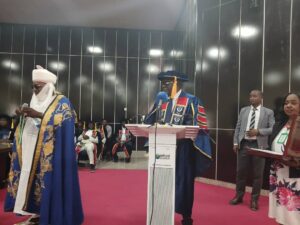
Earlier, the Vice-Chancellor of the University, Prof. Gbenga Ibileye, described the lecture topic as timely and thought-provoking, noting that water was essential to all living beings and remained a common resource that must be properly managed.
Prof. Ibileye commended the inaugural lecturer for his contribution to knowledge, saying he had done justice to the subject through his examination of water quality management and the need to ensure safe consumption.